Blazing Star quilt, or Patchwork quilt, or Eight-Point Star quilt, unknown maker from the United States
Artwork Overview
If you wish to reproduce this image, please submit an image request
Images

Label texts
Quilts are both a functional item and a form of artistic expression, offering comfort and warmth as well as meaningful connections. Quilting often requires many hands, encouraging people to come together, share creativity, and support one another. The tactile process also promotes mindfulness and focusing on the present moment.
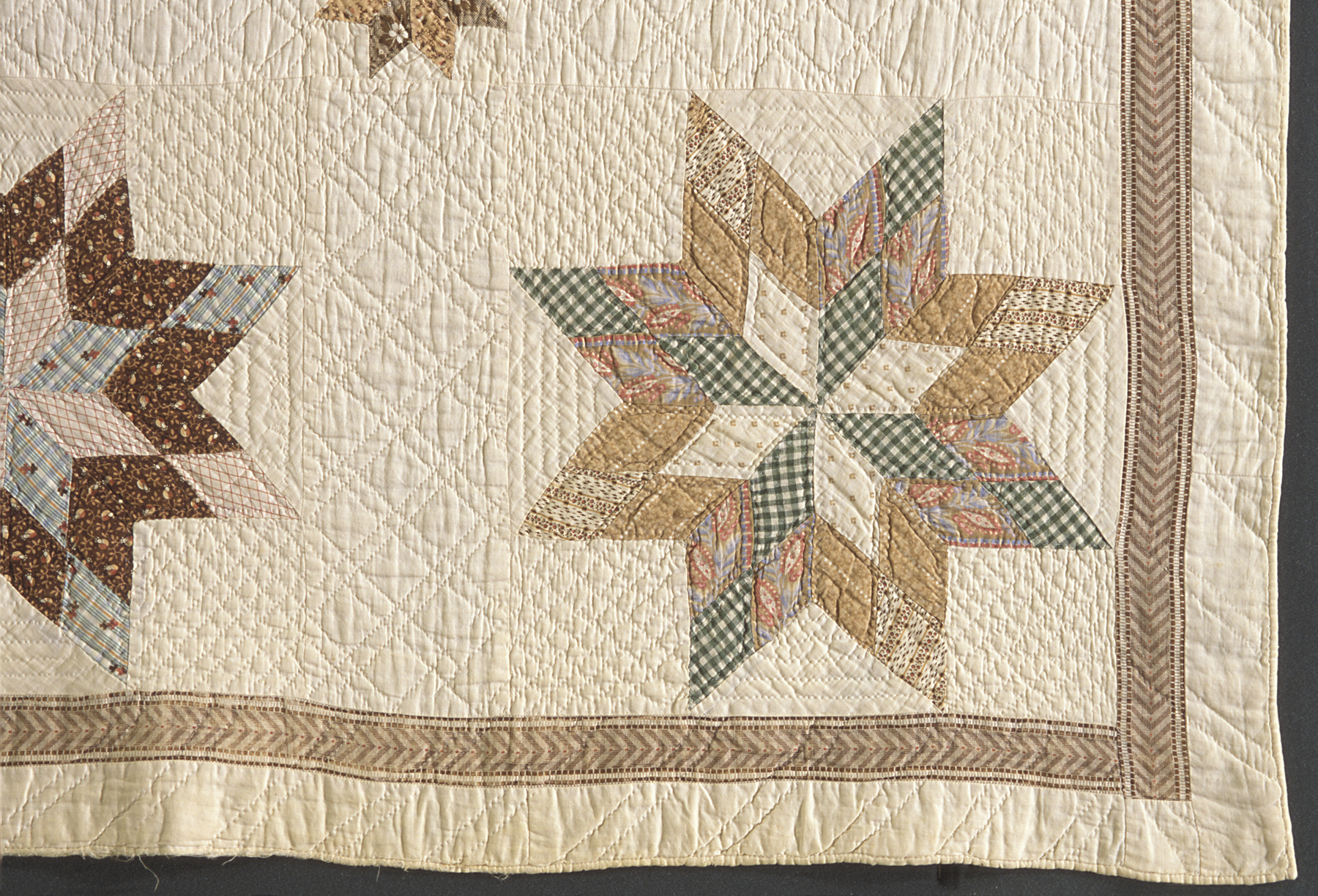
(No. 6)Star patterns are easily as versatile as Nine-patch ones, for the pieces which compose them can be cut into smaller shapes and then combined in a variety of fabrics and colors. This quilter filled in the white blocks with smaller, simpler stars. One of the more difficult tasks involved in Star patterns is the matching of points, which should meet precisely at their apexes. Greater numbers of pieces demand careful needlework, such as that displayed in this quilt.
Exhibition Label:
“Quilting Time and Space,” Jun-2010, Chassica Kirchhoff
This quilt is an elaborate and revealing variation
of the star patterned quilt that crossed cultural
boundaries in the late 19th century to become a ubiquitous fixture in the vocabulary of both Anglo-American and American Indian quilters.
The pattern of multiple, unique eight-pointed stars evolved from the older and more centralized Lone Star pattern. This quilt represents a style that is less rigid than its earlier predecessors, in which the stars were arranged within a grid of fabric.
During the post-Civil War period, when this
quilt was made, many patterns became more standardized and widespread through dissemination of patchwork patterns in national magazines, and new variations evolved from traditional patterns to reflect the immense changes that were affecting every region of the United States. Additionally, a broader range of calicos became more readily available throughout the country, replacing the “homespun” fabric that had been used in many
regions, such as the south, that had been far-removed from centers of textile production.
Exhibitions




Rachel Straughn-Navarro, curator