untitled sampler, Rosa Andreu (1800s)
Artwork Overview
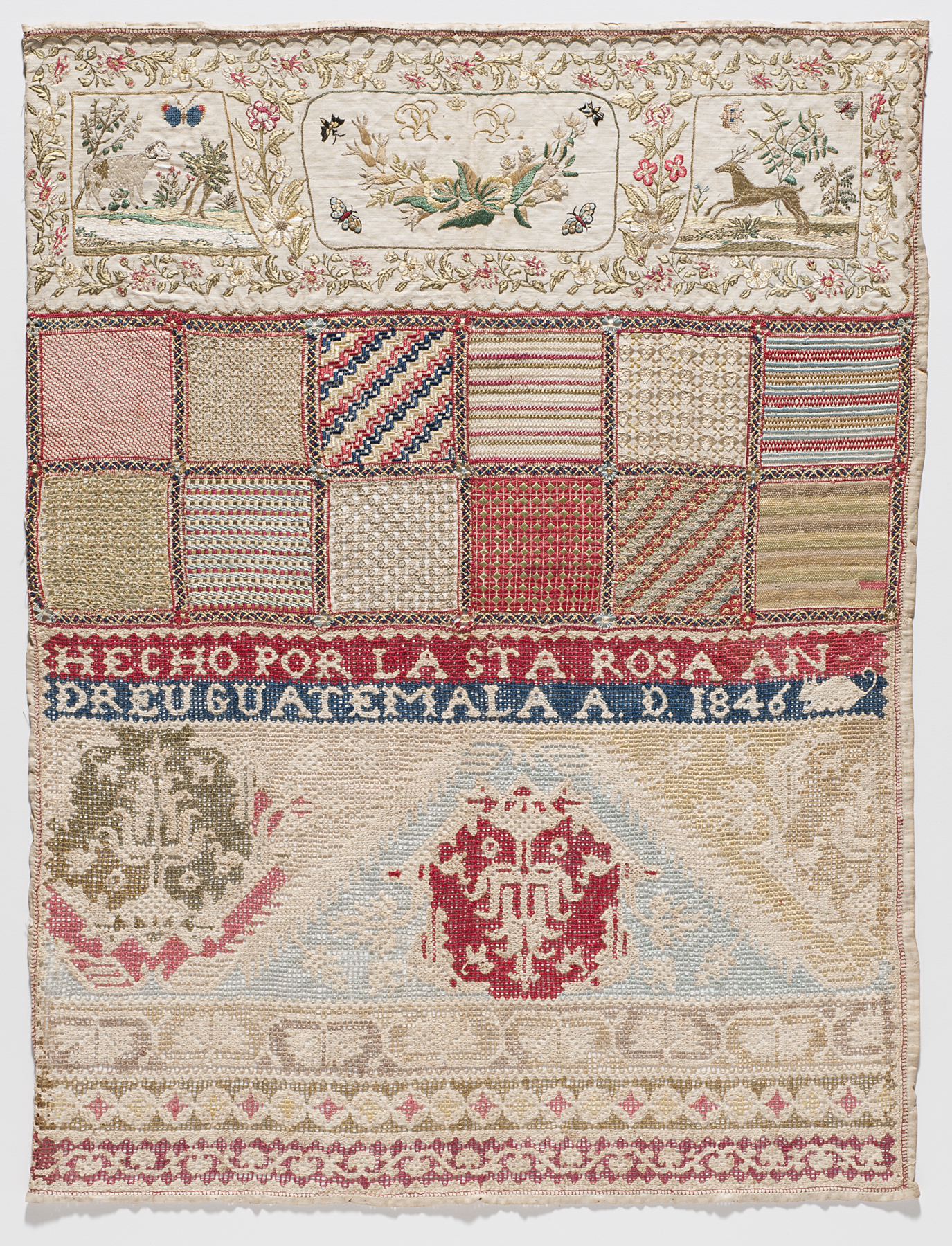
Needlework samplers constituted an important component in the lives and education of Western women from as early as the 16th century. Young girls were taught to sew by the age of five, and needlework was part of school curricula in Europe and the Americas. Samplers helped young girls improve their needlework by teaching them new stitches and motifs, but they also reinforced other educational priorities, such as learning the alphabet and memorizing Bible verses. By the 18th and 19th centuries when these particular examples were created, samplers served to demonstrate the stitcher’s knowledge, as well as her virtue and sense of industry. Many were signed by their makers, who often specified how old they were at the time of completion.