Teaching Gallery: Eyes on Icons: Exploring Japanese Buddhism at the Spencer Museum of Art
Exhibition
Exhibition Overview

Teaching Gallery: Eyes on Icons: Exploring Japanese Buddhism at the Spencer Museum of Art
April 22, 2008–May 17, 2008
White Gallery, Spencer Museum of Art, University of Kansas, Lawrence, Kansas
Student “exhibition” of items related to Sherry Fowler’s seminar on Buddhist icons. Many of the objects were selected by students as part of a mock exhibition assignment for the class.
Works of art
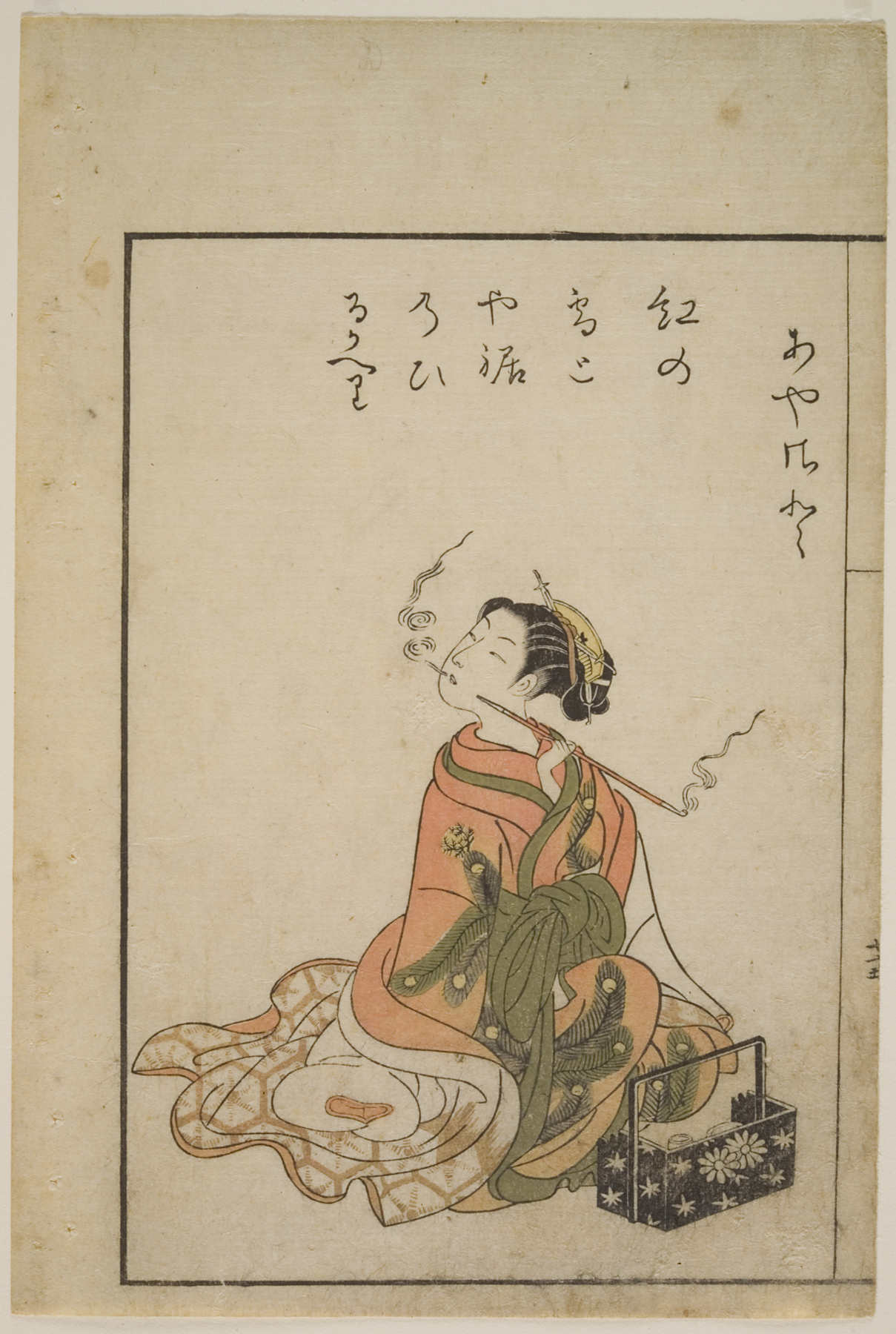
Suzuki Harunobu
Ayasato smoking a pipe,
1770, Edo period (1600–1868)

Suzuki Harunobu
courtesan offering a pipe to Bodhidharma,
1765, Edo period (1600–1868)
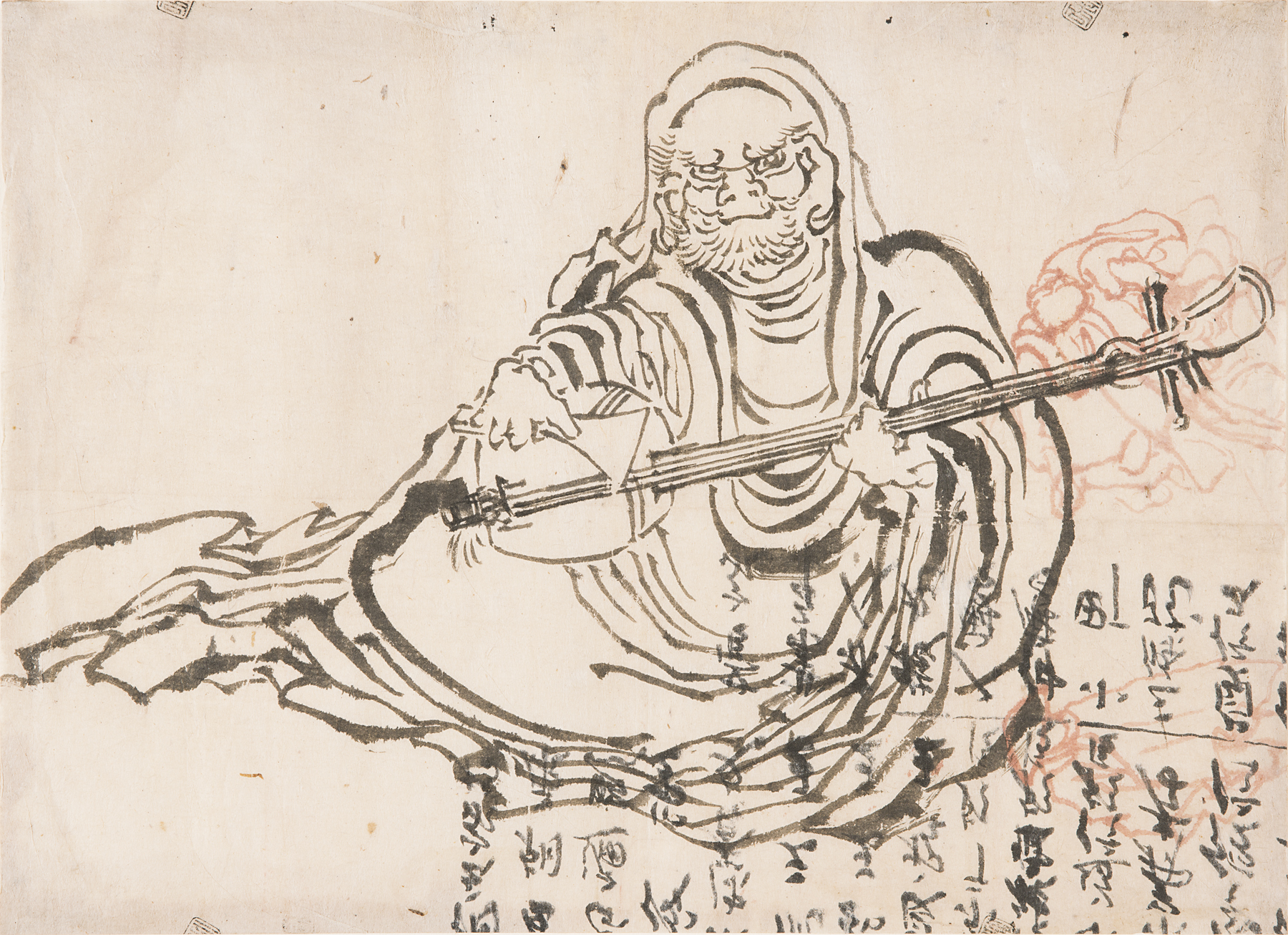
Katsushika Hokusai
Daruma Playing a Shamisen,
circa 1830s, Edo period (1600–1868)

miniature shrine,
early 1900s, Meiji period (1868–1912)

No. 536, Daibutsu at Kamakura,
circa 1880, Meiji period (1868–1912)
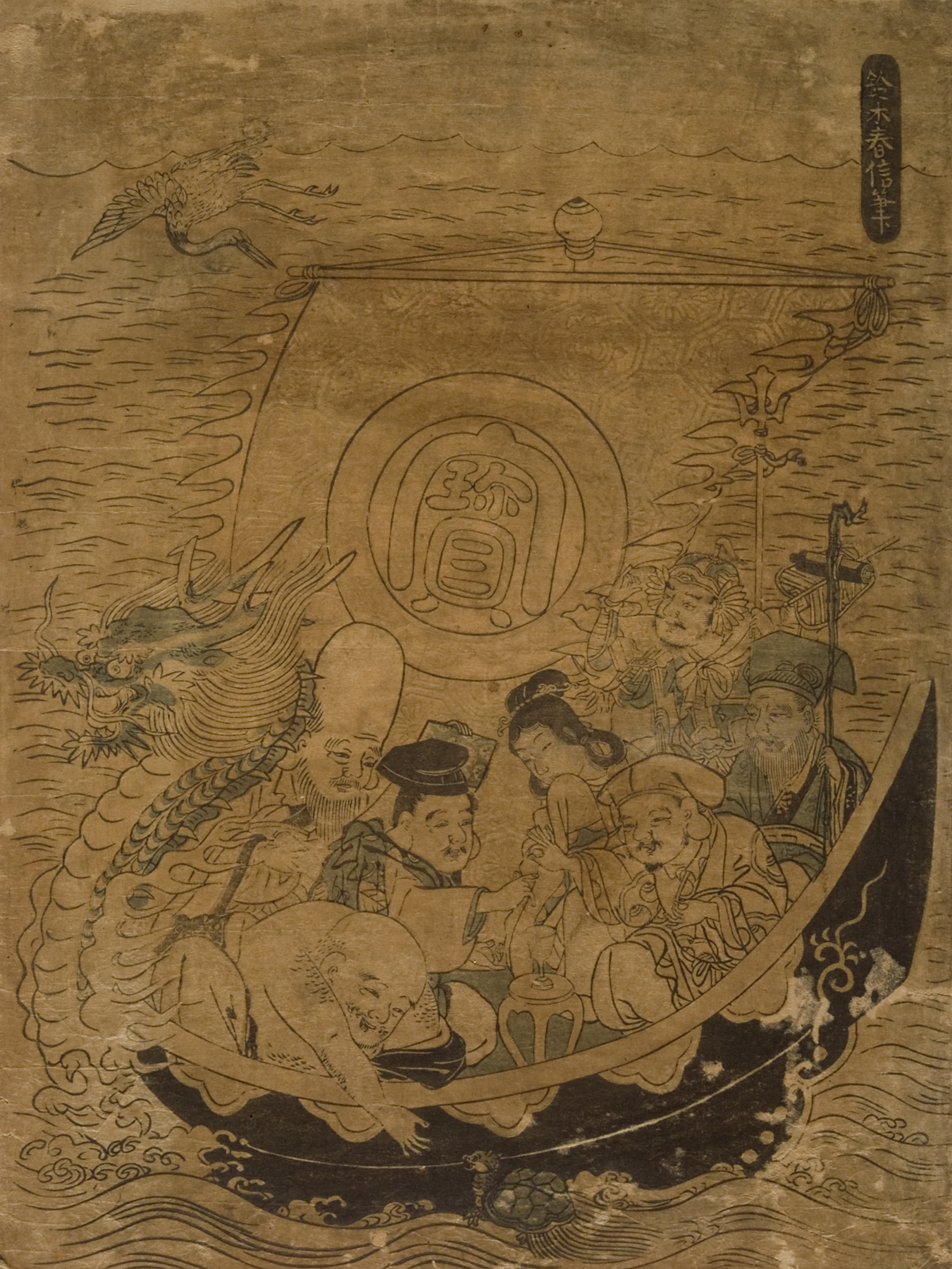
Suzuki Harunobu
The Seven Lucky Gods in a Treasure Ship,
late 1760s, Edo period (1600–1868)

Daihannya Haramitta kyō (Mahaprajnaparamita sutra) part 24,
1200s, Kamakura period (1185–1333)

Inbutsu (stamp print) of Fudō Myōō,
1200s–1300s, Kamakura period (1185–1333) or Muromachi period (1336–1573)

zushi (portable shrine) containing Aizen Myōō,
Meiji period (1868–1912)
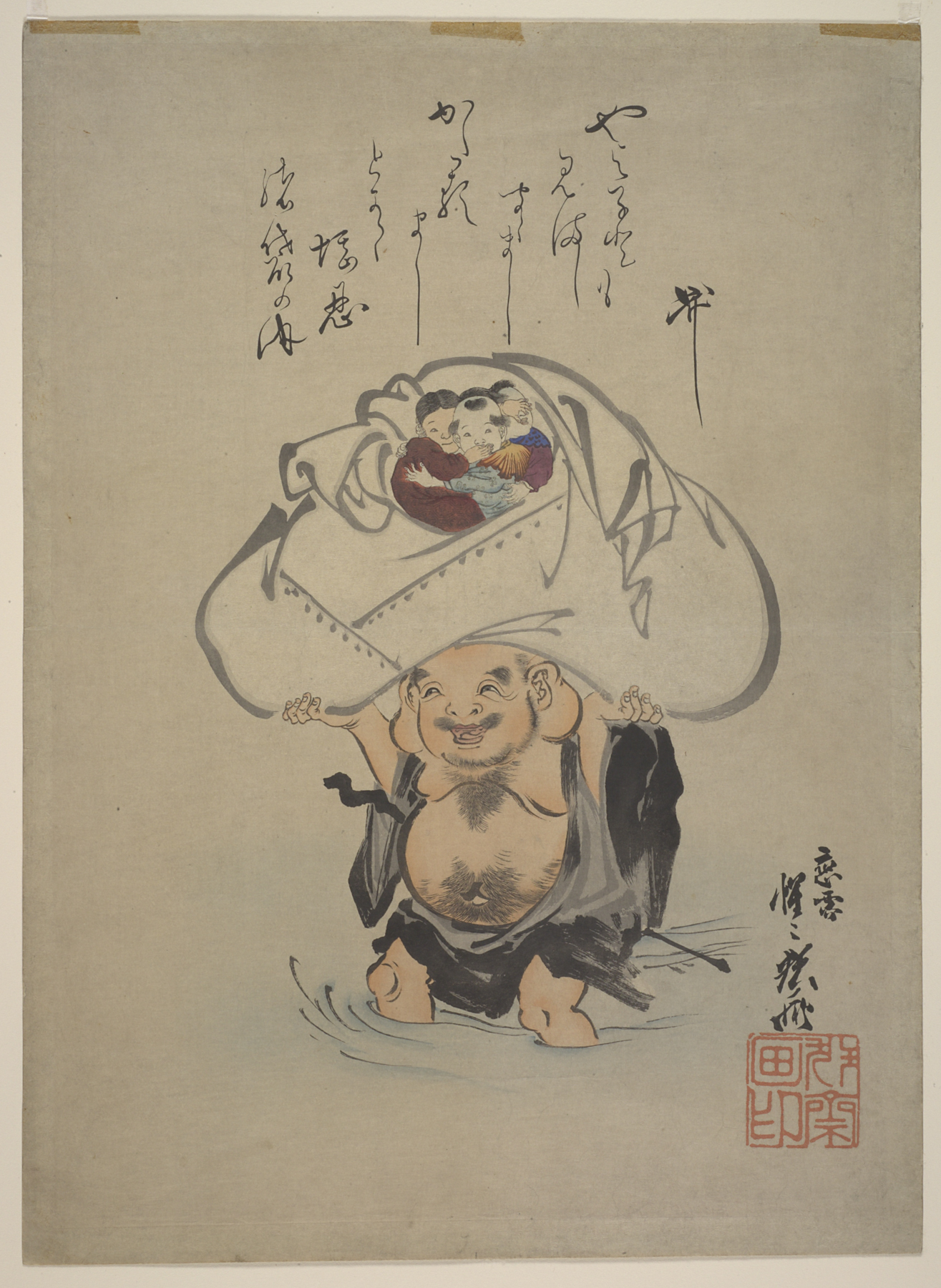
Kawanabe Kyōsai
Hotei carrying three children across a stream in a bag on his head,
circa 1880s or 1890s, Meiji period (1868–1912)

Hanabusa Itchō
Hotei with Karako Children,
late 1600s–early 1700s, Edo period (1600–1868)

布袋 (Hotei with two children),
1800s, Edo period (1600–1868) or Meiji period (1868–1912)
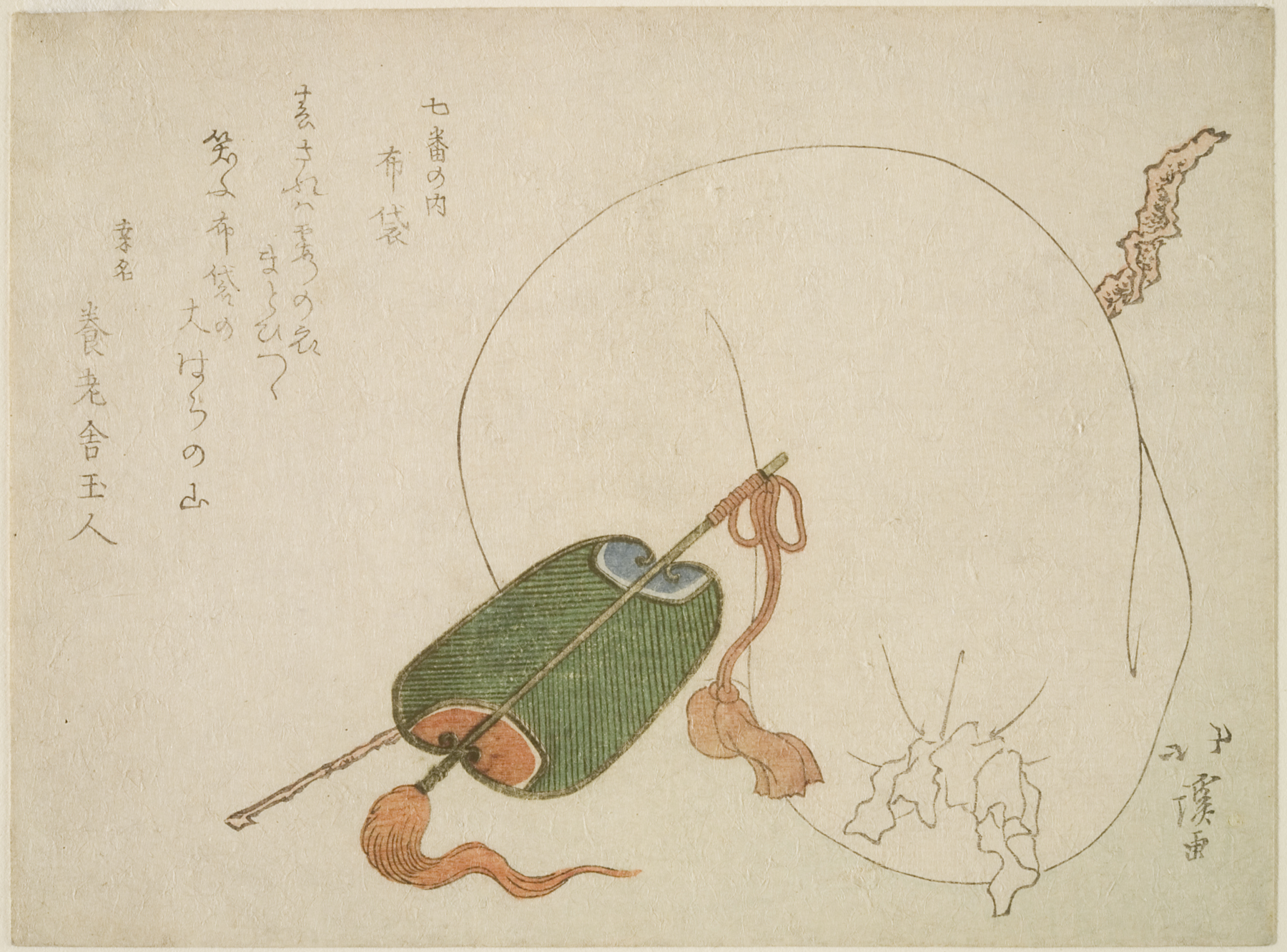
Totoya Hokkei
Hotei,
circa mid 1810s, Edo period (1600–1868)
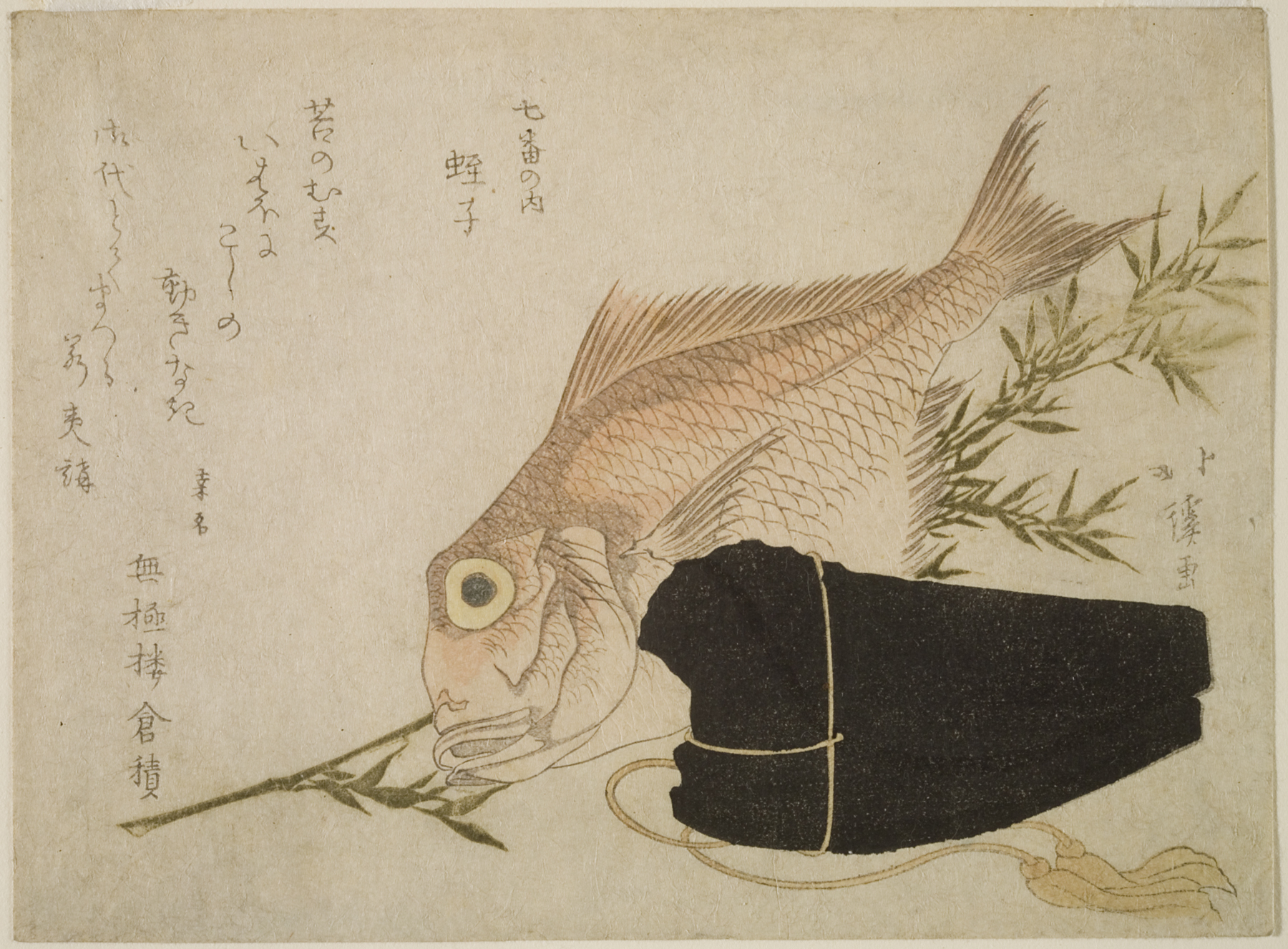
Totoya Hokkei
Ebisu,
circa mid 1810s, Edo period (1600–1868)
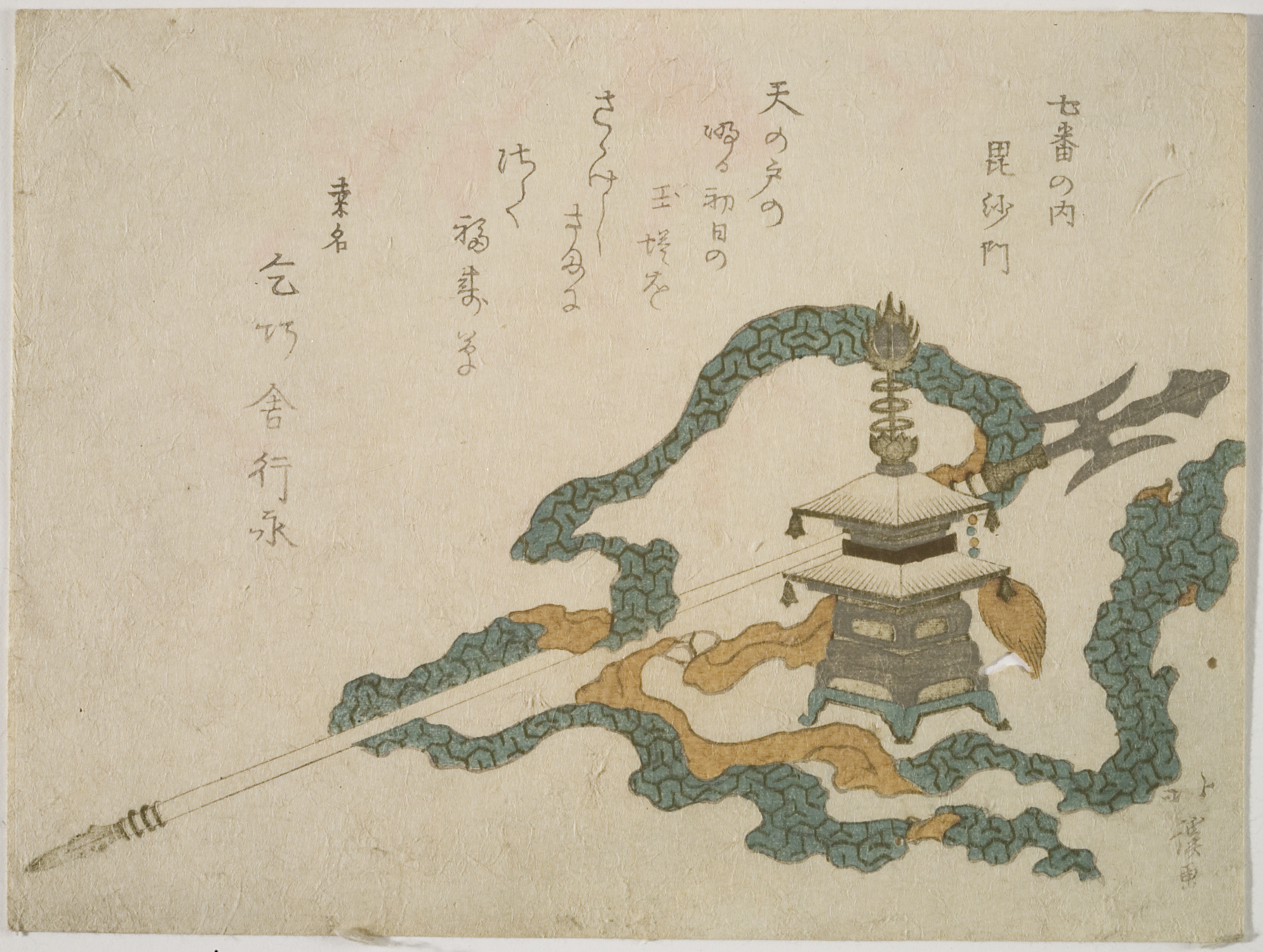
Totoya Hokkei
spear, pagoda and sash; emblems of the god Bishamon,
circa mid 1810s, Edo period (1600–1868)

Kawanabe Kyōsai; Sawamuraya Seikichi
Jigoku dayū (Hell Courtesan),
1874, Meiji period (1868–1912)

月岡芳年 Tsukioka Yoshitoshi
Priest Raigō of Mii Temple Transformed into a Rat,
1891, Meiji period (1868–1912)

Utagawa Kuniyoshi
(The miraculous gourd guarded by sacred snake which appeared in the garden of Emaro in Sanuki province around the time of the birth of Prince Shotoku),
circa 1840 (later printing), Edo period (1600–1868)
Hannya shingyo (Heart Sutra),
1924, Taisho period (1912–1926)