three tiles, unknown maker from Multan, Delhi Sultanate

Artwork Overview
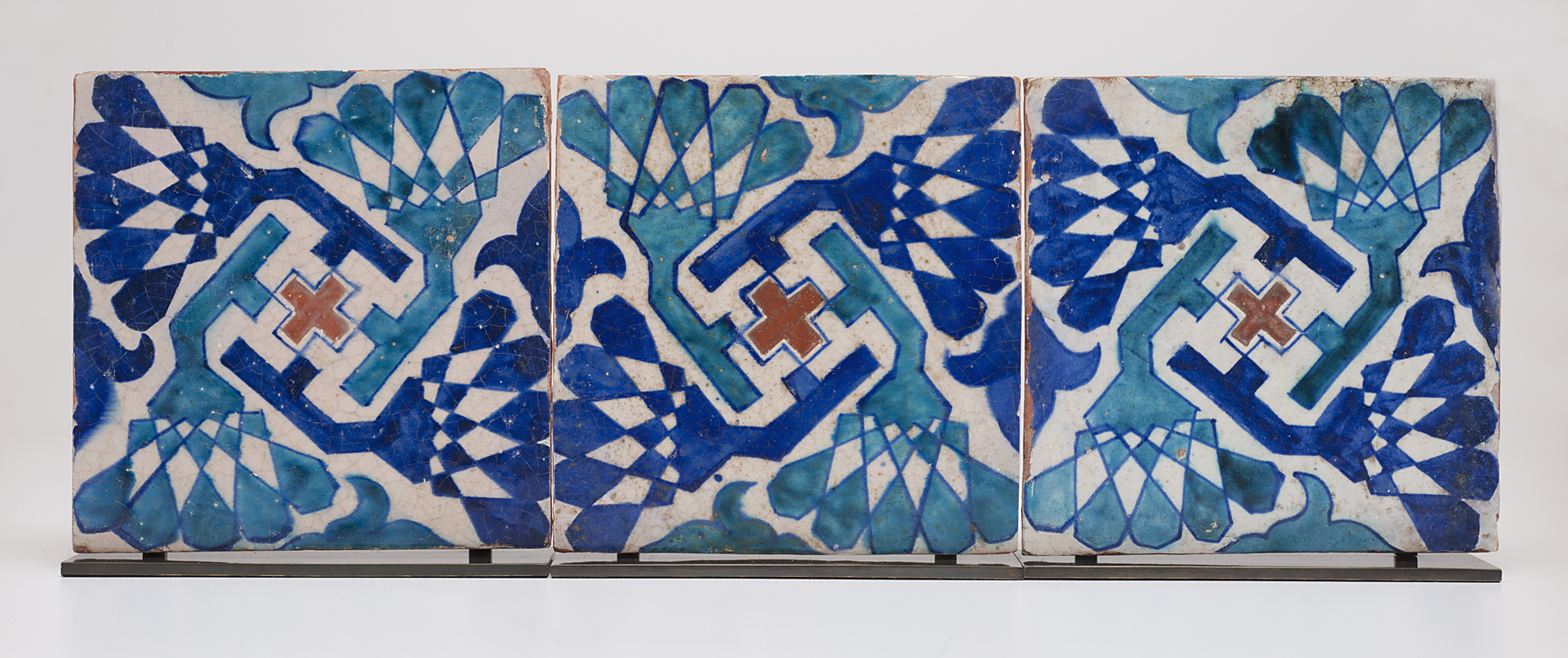
three tiles
late 1400s, Lodi dynasty (1451–1526)
three tiles , late 1400s, Lodi dynasty (1451–1526)
Where object was made: Multan, Delhi Sultanate (present-day Pakistan)
Material/technique: clay; slip; cobalt; glaze
Credit line: Museum purchase: Helen Foresman Spencer Art Acquisition Fund
Accession number: 2011.0045.01-3
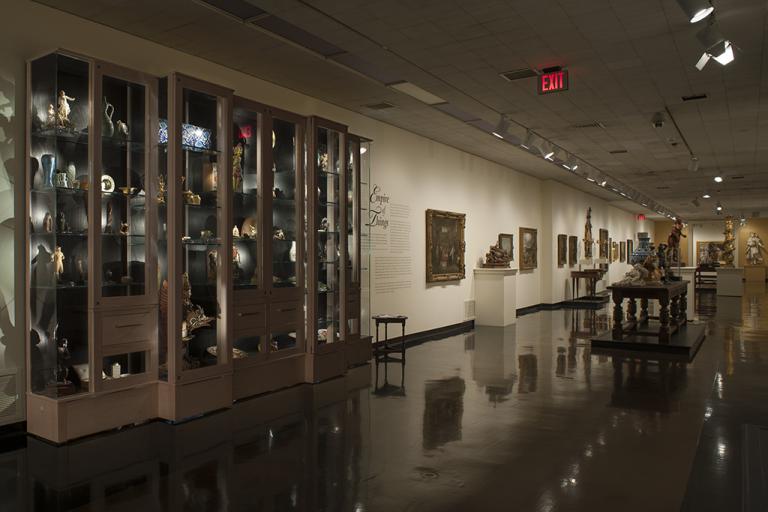
On display: Simons Gallery

If you wish to reproduce this image, please submit an image request

Images

Label texts

Looking After: Art and Care in Education Across Kansas

Cobalt oxide is a chemical compound used to create the brilliant blue hue seen in these tiles from 15th-century Multan. This color inspired merchants in ancient times to travel from as far as China to Persia (present-day Iran) to acquire it. The repeating and rotating design of floral elements, called an arabesque, is common in Islamic and Persian art. Today, cobalt is less often used as a pigment because it can be highly toxic.

Empire of Things

These three tiles form a beautiful mosaic that shows spiraling arabesques, or floral patterns, which were common during this era in India. The use of floral and plant decoration was popular because the portrayal of living beings was considered inappropriate for the ornamentation of spiritual buildings in Islam.

Cabinet of Curiosities

These three tiles form a beautiful mosaic that shows spiraling arabesques, or floral patterns, which were common during this era in India. The use of floral and plant decoration was popular because the portrayal of living beings was considered inappropriate for the ornamentation of spiritual buildings in Islam.

Empire of Things

These three tiles form a beautiful mosaic that shows spiraling arabesques, or floral patterns, which were common during this era in India. The use of floral and plant decoration was popular because the portrayal of living beings was considered inappropriate for the ornamentation of spiritual buildings in Islam.

Empire of Things

These three tiles form a beautiful mosaic that shows spiraling arabesques, or floral patterns, which were common during this era in India. The use of floral and plant decoration was popular because the portrayal of living beings was considered inappropriate for the ornamentation of spiritual buildings in Islam.

Exhibitions

Kris Ercums, curator
Kate Meyer, curator
2013–2015
Kris Ercums, curator
Kate Meyer, curator
2016–2021
Kristina Walker, curator
Rachel Straughn-Navarro, curator
2026–2027