William and Mary cabinet, unknown maker from England, United Kingdom

Artwork Overview

Image not available
William and Mary cabinet , circa 1690–1700
Where object was made: England, United Kingdom
Material/technique: walnut wood; pine wood
Dimensions:
Object Height/Width/Depth (Height x Width x Depth): 197.5 x 92.7 x 40.6 cm
Object Height/Width/Depth (Height x Width x Depth): 77 13/16 x 36 1/2 x 16 in
Credit line: William Bridges Thayer Memorial
Accession number: 1928.0561
Not on display

If you wish to reproduce this image, please submit an image request

Label texts

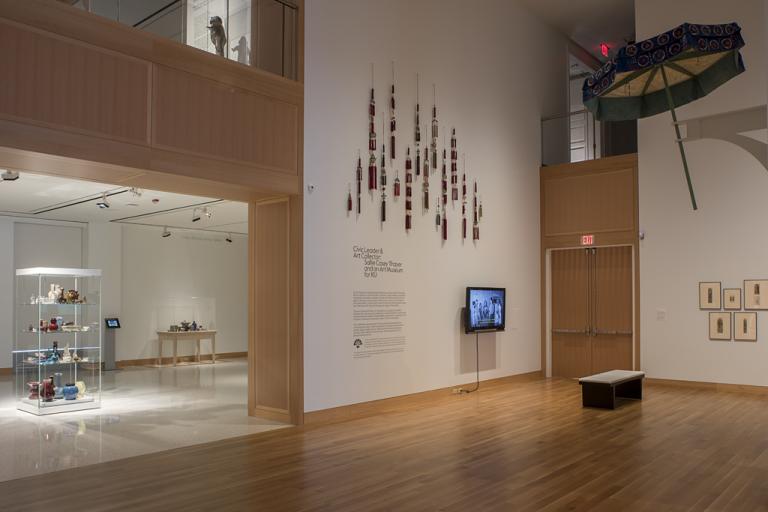
Civic Leader and Art Collector: Sallie Casey Thayer and an Art Museum for KU

In a 1916 guide to collecting lusterware, author W. Bosanko recommends these ceramics for their diversity of production, offering collectors a “rich bloom,” and praises works from Staffordshire potteries. The guide additionally emphasizes the importance of museum collections “to aid and equip” collectors to find “treasures of rejoicing for the eye.” Sallie Casey Thayer followed this guide and formed a representative collection of lusterware.
The 19th-century English pieces included in this William and Mary cabinet, also part of Thayer’s collection, display some of the various hues and techniques developed, primarily by Staffordshire workshops. Her collection also includes early Near Eastern lusterware, early modern Spanish and Italian works, and many more, some of which are featured in nearby cases and in the Cabinet of Curiosities in the Spencer’s upstairs collection galleries.

Civic Leader and Art Collector: Sallie Casey Thayer and an Art Museum for KU

In a 1916 guide to collecting lusterware, author W. Bosanko
recommends these ceramics for their diversity of production, offering collectors a “rich bloom,” and praises works from Staffordshire potteries. The guide additionally emphasizes the
importance of museum collections “to aid and equip” collectors to find “treasures of rejoicing for the eye.” Sallie Casey Thayer followed this guide and formed a representative collection
of lusterware.
The 19th-century English pieces included in this William and Mary cabinet, also part of Thayer’s collection, display some of the various hues and techniques developed, primarily by Staffordshire workshops. Her collection also includes early Near Eastern lusterware, early modern Spanish and Italian works, and many
more, some of which are featured in nearby cases and in the Cabinet of Curiosities in the Spencer’s upstairs collection galleries.

Exhibitions