Blossom and Decay, Frederick Stuart Church (1842–1924)
Artwork Overview
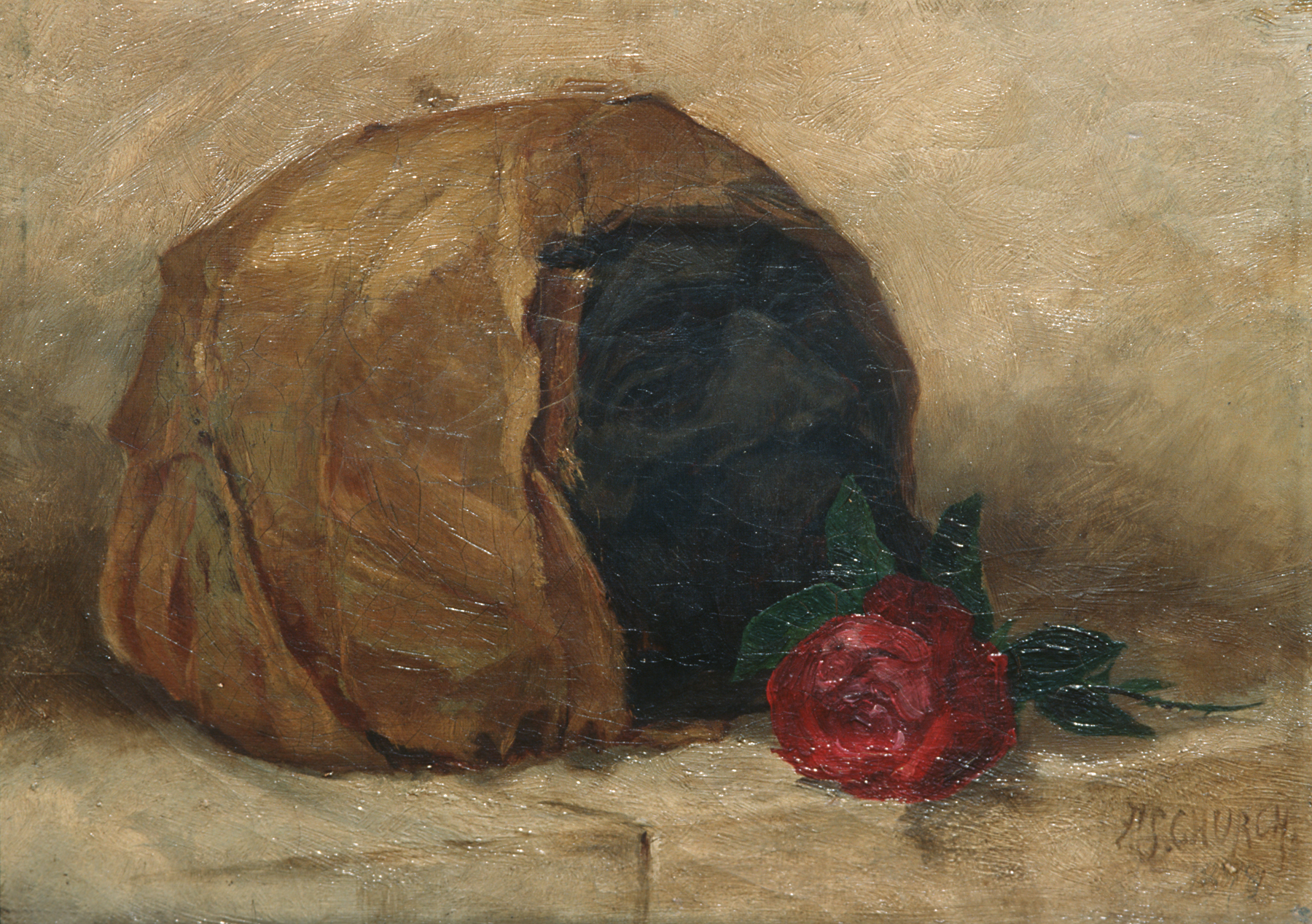
“… the artist... placed … close to that shriveled skull a rose. … then came the witchery. The girl is no longer a coagulated mass … shrouded in rotting cerements, forlorn, forgotten, unnamed, discredited, repulsive, profaned. She is alive, dainty, alert, perfumed … She is not mute, for she ripples over with sweet laughter. … It is the rose with its freshness, that bids the dead awake and inhale life’s delights.”
- Barnet Phillips, “F. S. Church in His Studio,” Harper’s Weekly, 1893.
The preceding excerpt outlines a visitor’s macabre musings upon visiting Frederick Stuart Church’s New York City studio. The American artist found inspiration in the gothic works of Edgar Allan Poe and the romantic exoticism of French painter Odilon Redon. Recent scholarship points to Church’s interest in reincarnation to explain his use of the dismembered head and rose as a repeated motif in his fictional writing, etchings, and paintings, as in the Spencer’s Blossom and Decay. Perhaps, it was a matter of proximity. Church was the proud possessor of one of these rarities at a time when even American museums had yet to display Egyptian mummies.