Surimono: Privately Published Japanese Prints

Exhibition

Exhibition Overview

Image not available
Surimono: Privately Published Japanese Prints
Roger Keyes, curator
April 26, 1986–June 15, 1986
Memphis Brooks Museum of Art, Memphis, Tennessee

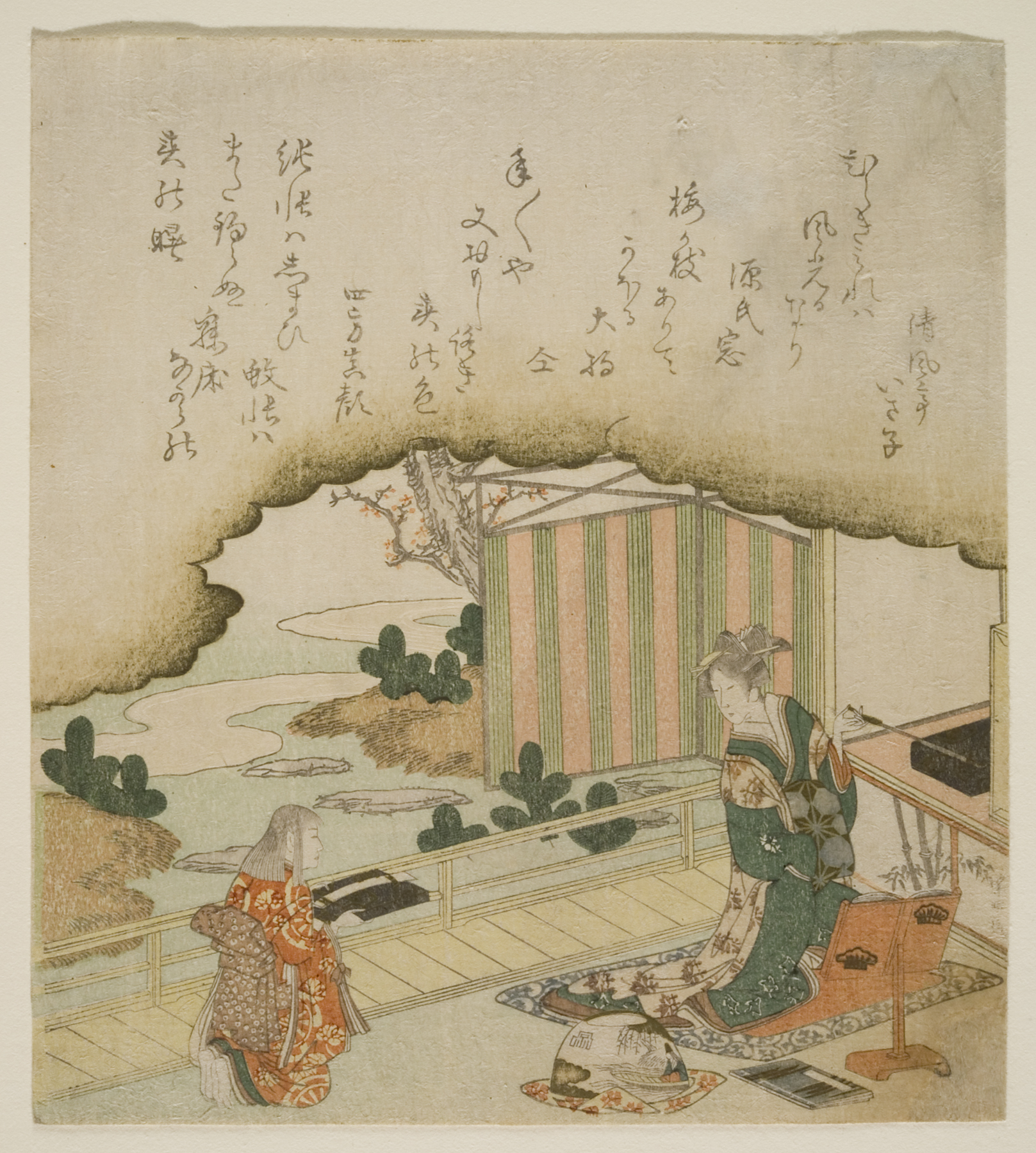
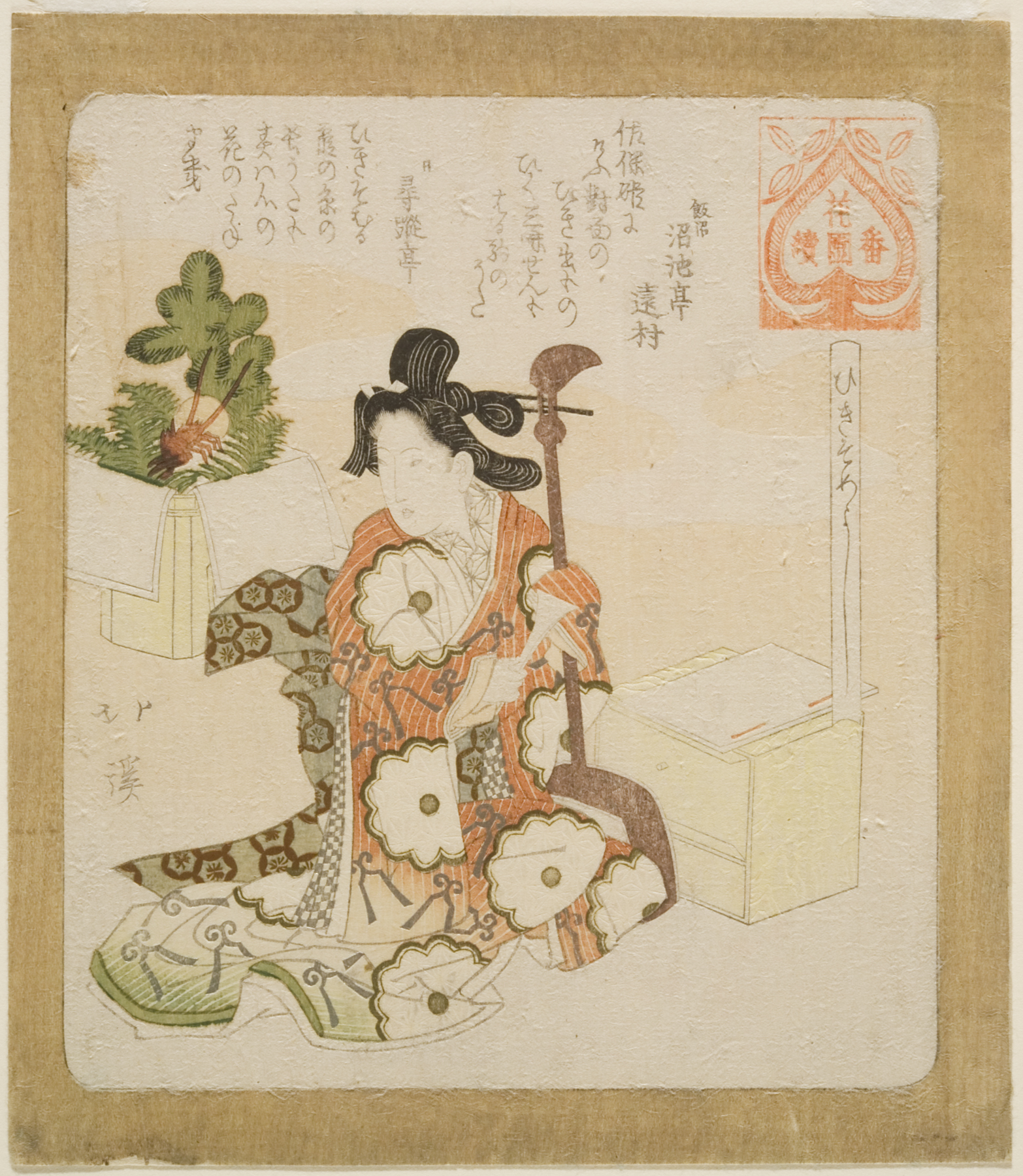
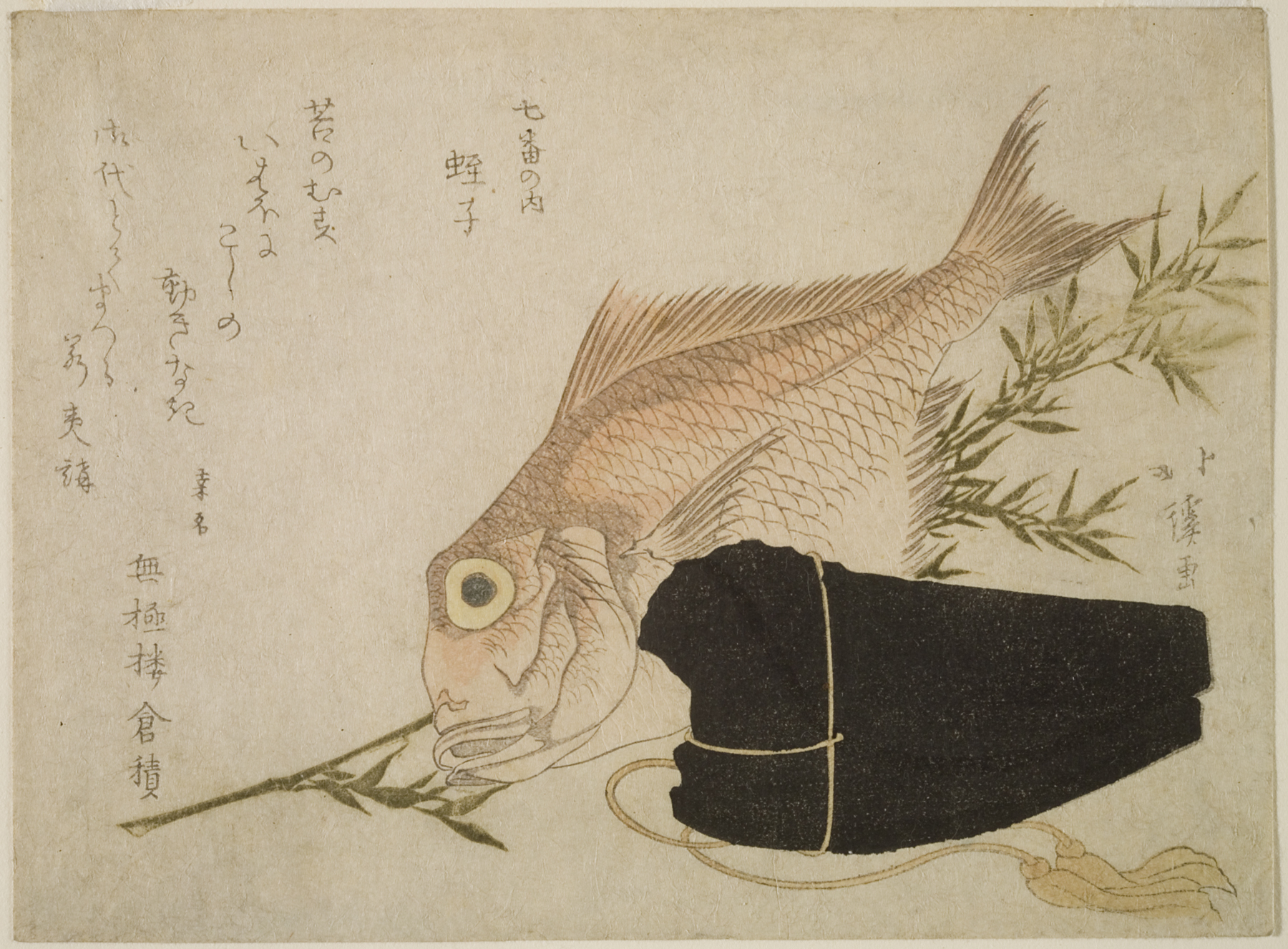
Surimono prints were often commissioned by poetry groups and designed both by leading ukiyo-e artists and by amateurs, to be given to friends as New Year's greetings and announcements of special events. In delightful essays on sixty prints, Roger Keynes, guest curator, draws upon his extensive familiarity with history and legends, language and literature, customs and culture, to reveal the fascination of a forgotten art. The catalogue of the exhibition includes a complete catalogue of the collection of prints at the Spencer Museum of Art (University of Kansas) with 60 color plates, 186 black and white reproductions, brief entries on 268 images and a comprehensive bibliography.

Surimono, the most elegant woodblock prints ever made, were sent as New Year's greetings in 19th century Japan. These were selected from the Museum's collection of 268 images.

Exhibition images

Works of art
Totoya Hokkei (1780–1850)
Ebisu, circa mid 1810s, Edo period (1600–1868)
Utagawa Hiroshige (1797–1858)
sparrow on rose branch, late 1830 or early 1840s, Edo period (1600–1868)
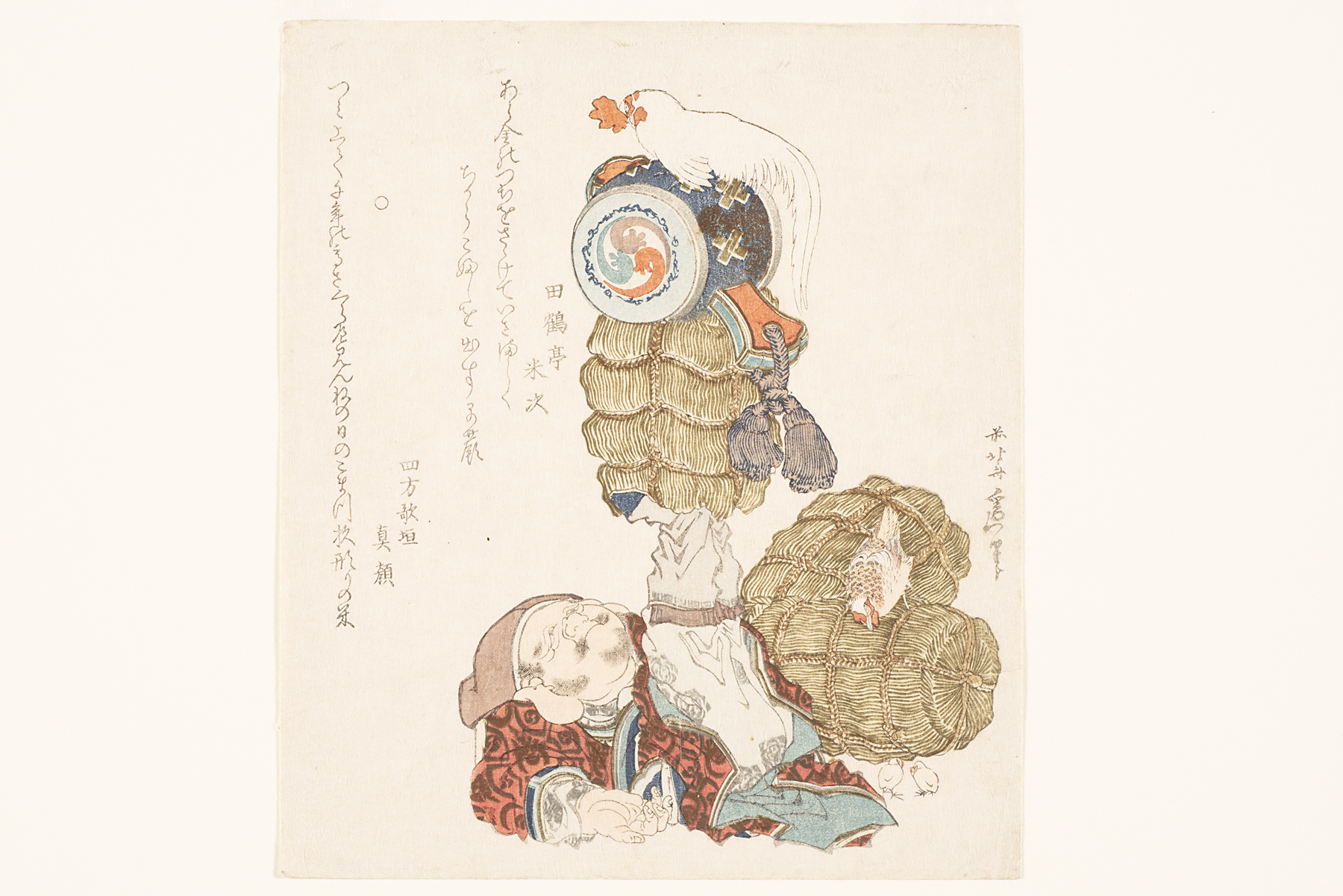
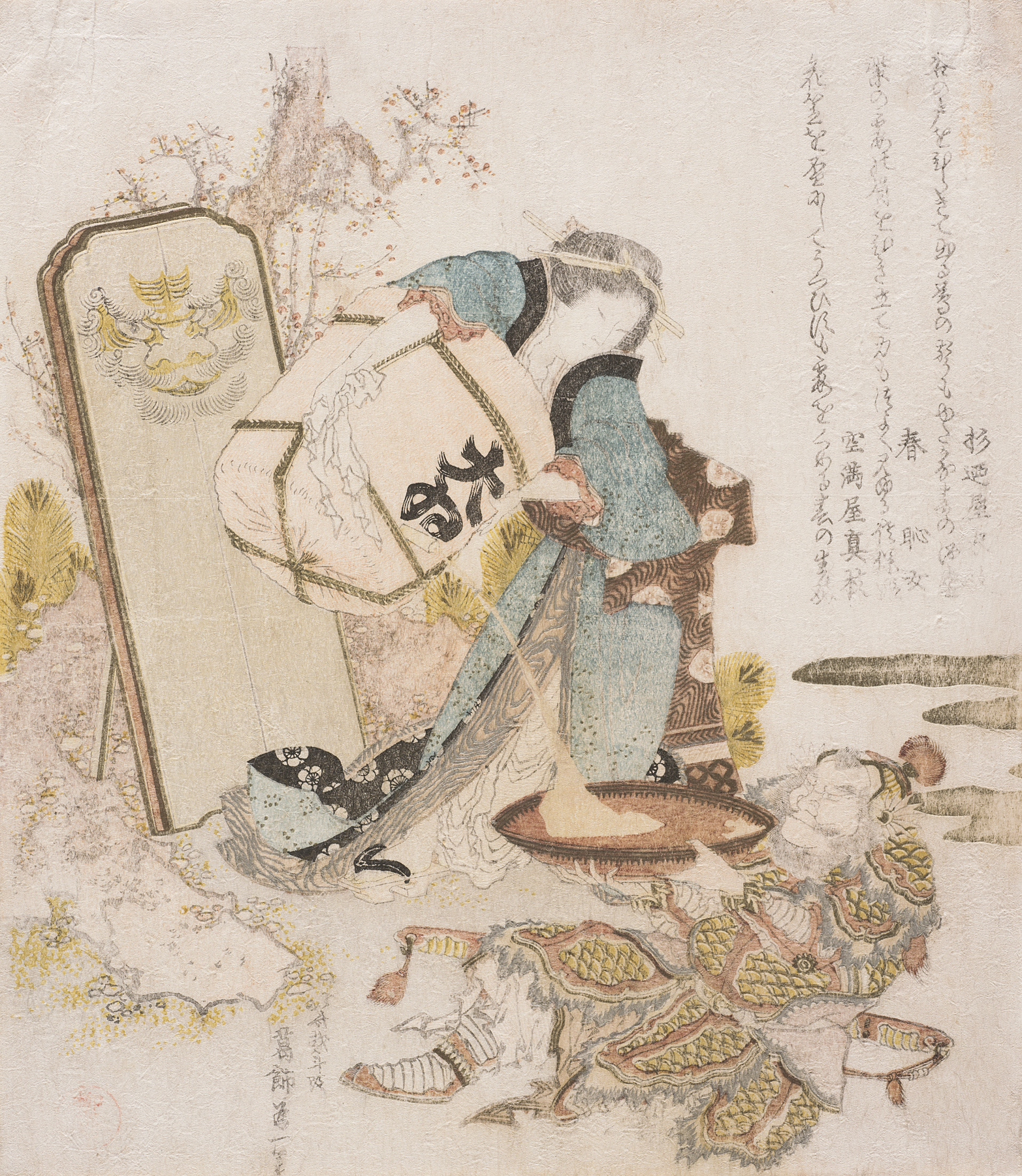
Katsushika Hokusai (1760–1849)
Daikoku lifting a rice bale, 1825, Edo period (1600–1868)
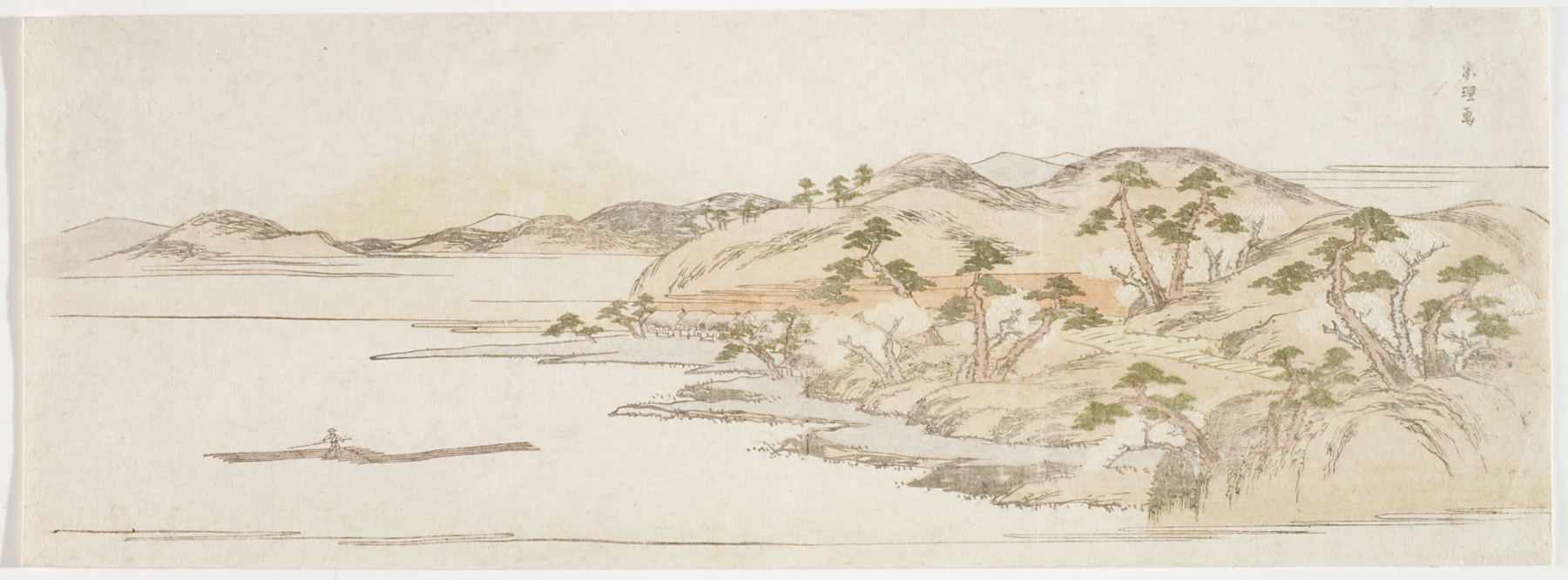
Hishikawa Sōri (active 1790–1810)
spring landscape, circa 1805, Edo period (1600–1868)
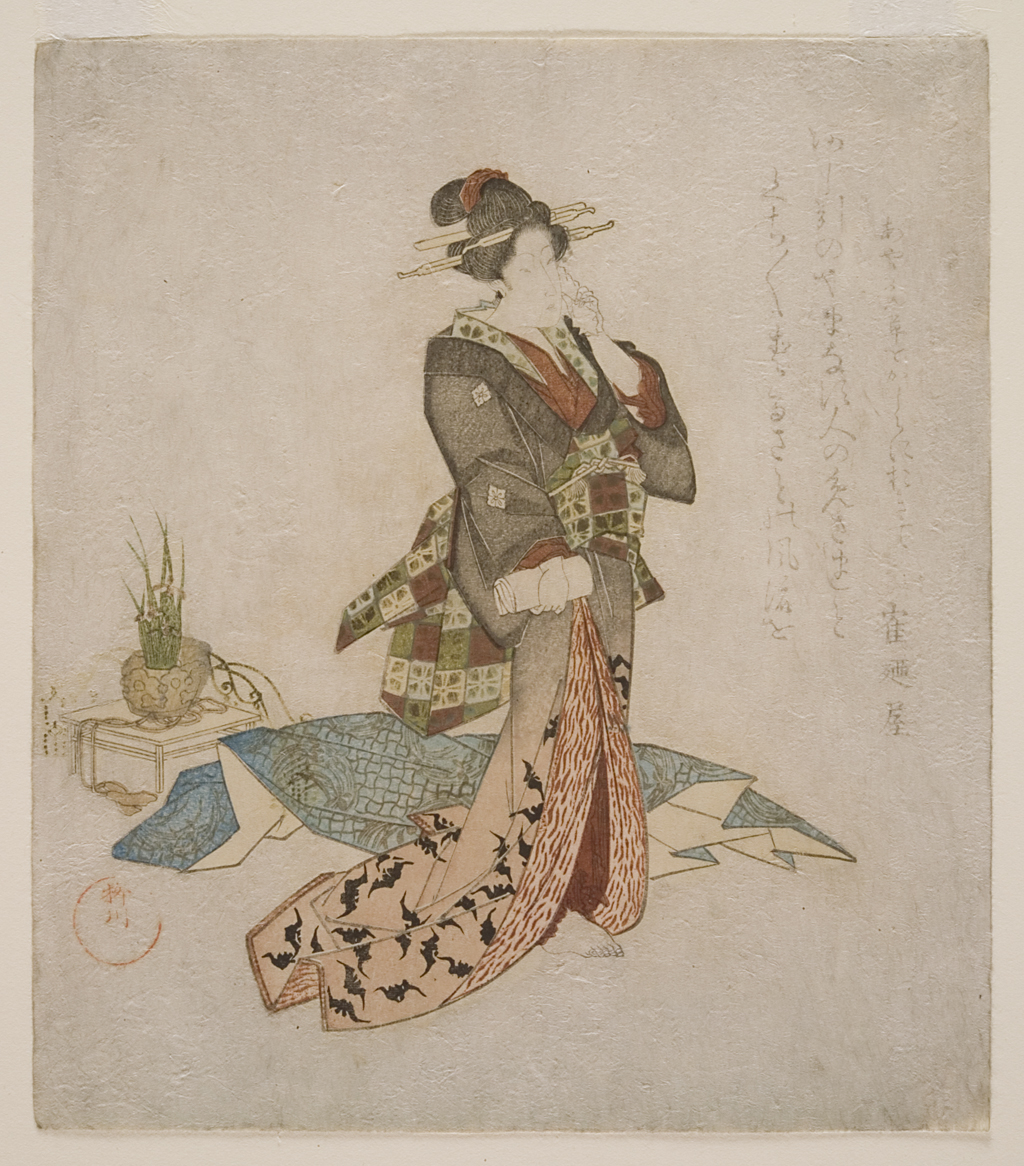
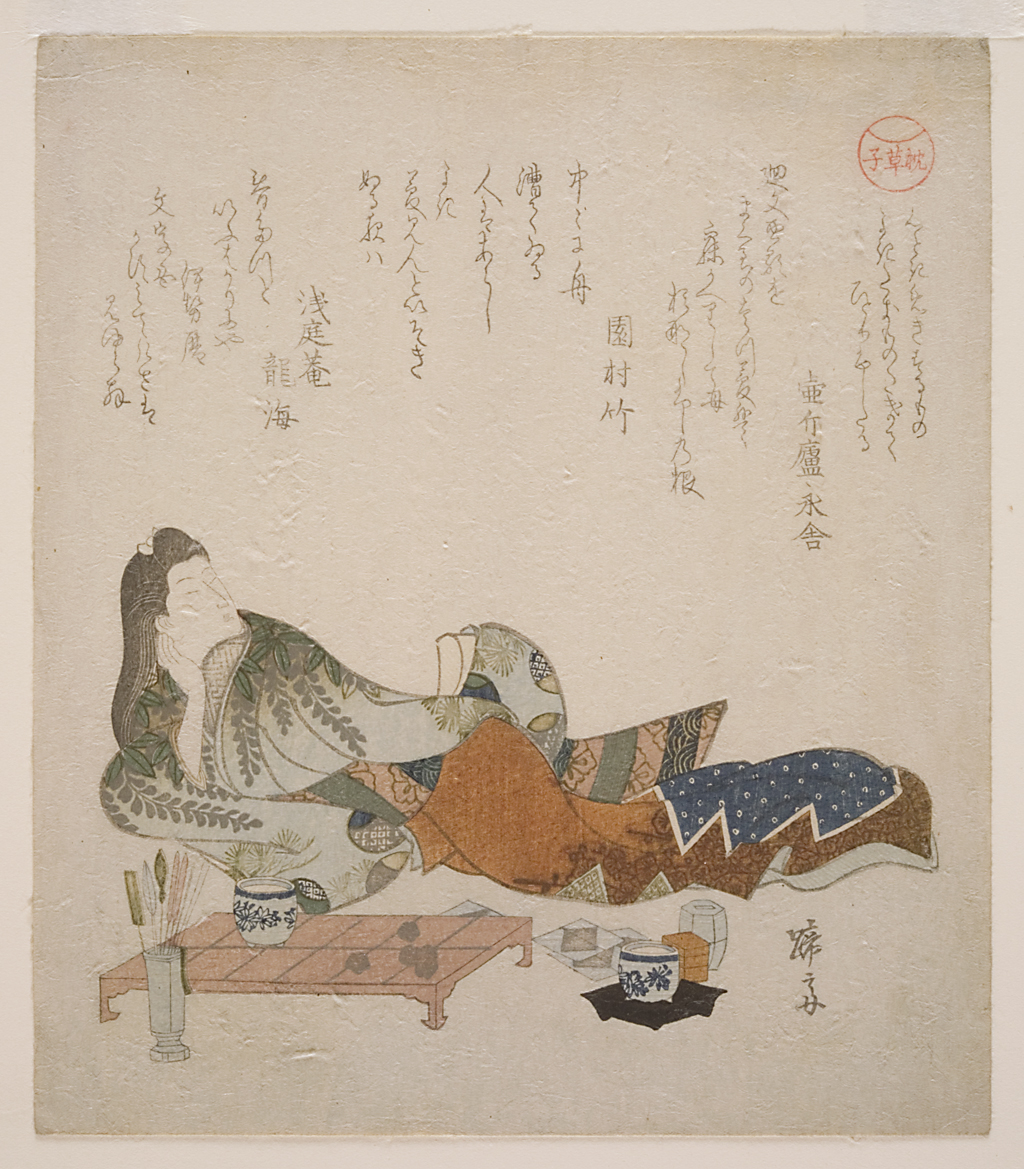
Yanagawa Shigenobu (1787–1832)
geisha with iris crown, early 1820s, Edo period (1600–1868)
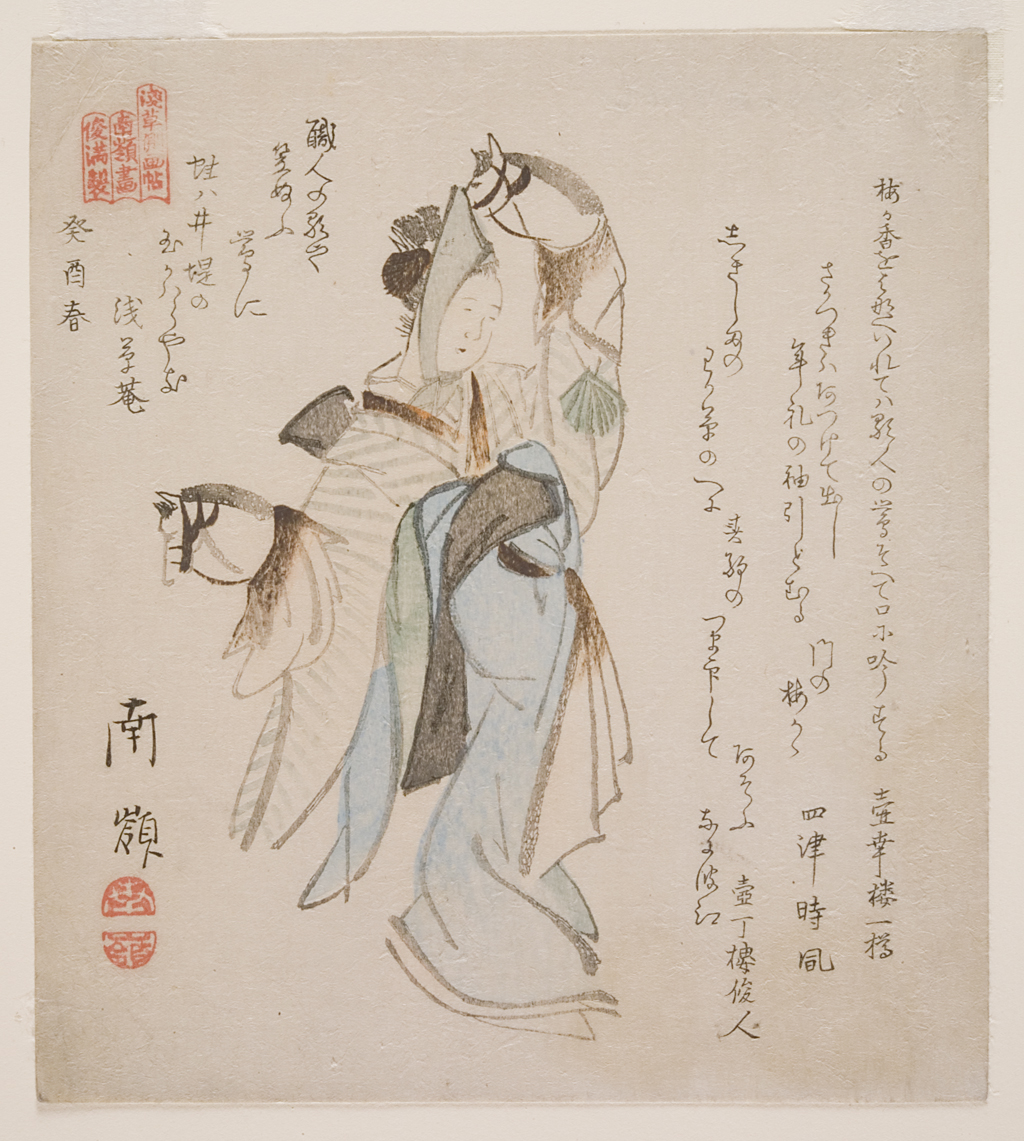
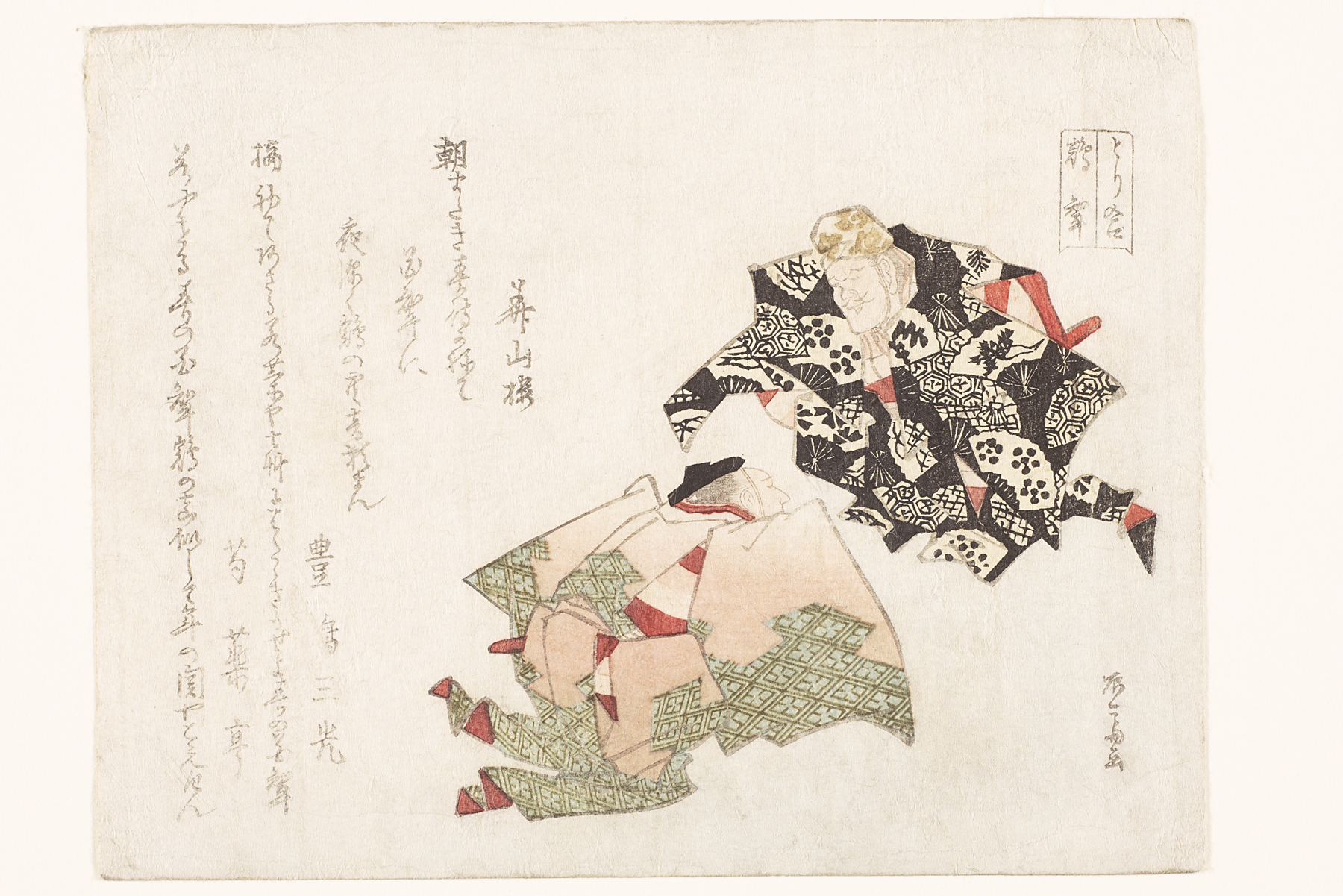
Suzuki Nanrei (1775–1844)
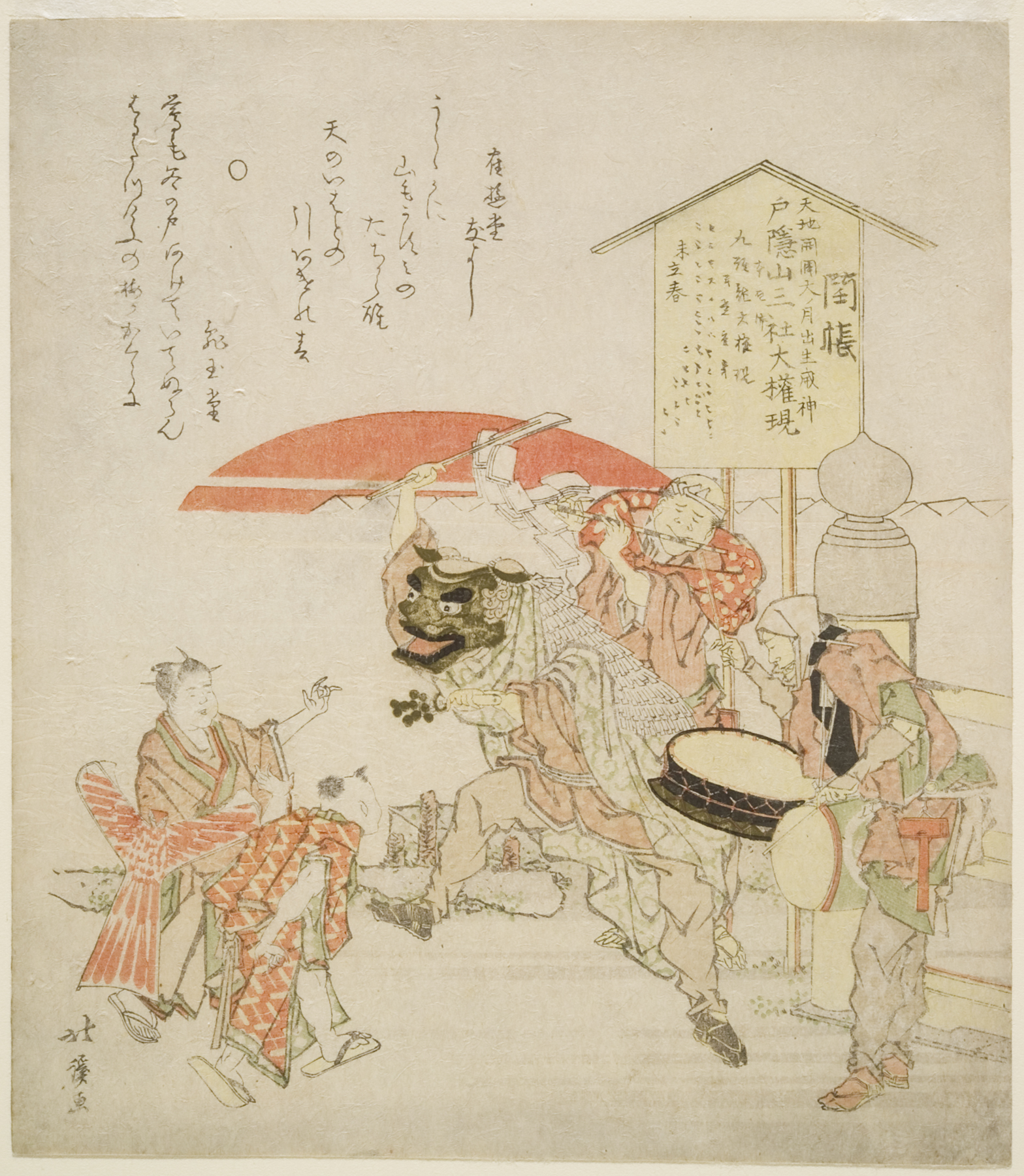
pony dancer, 1813, Edo period (1600–1868)
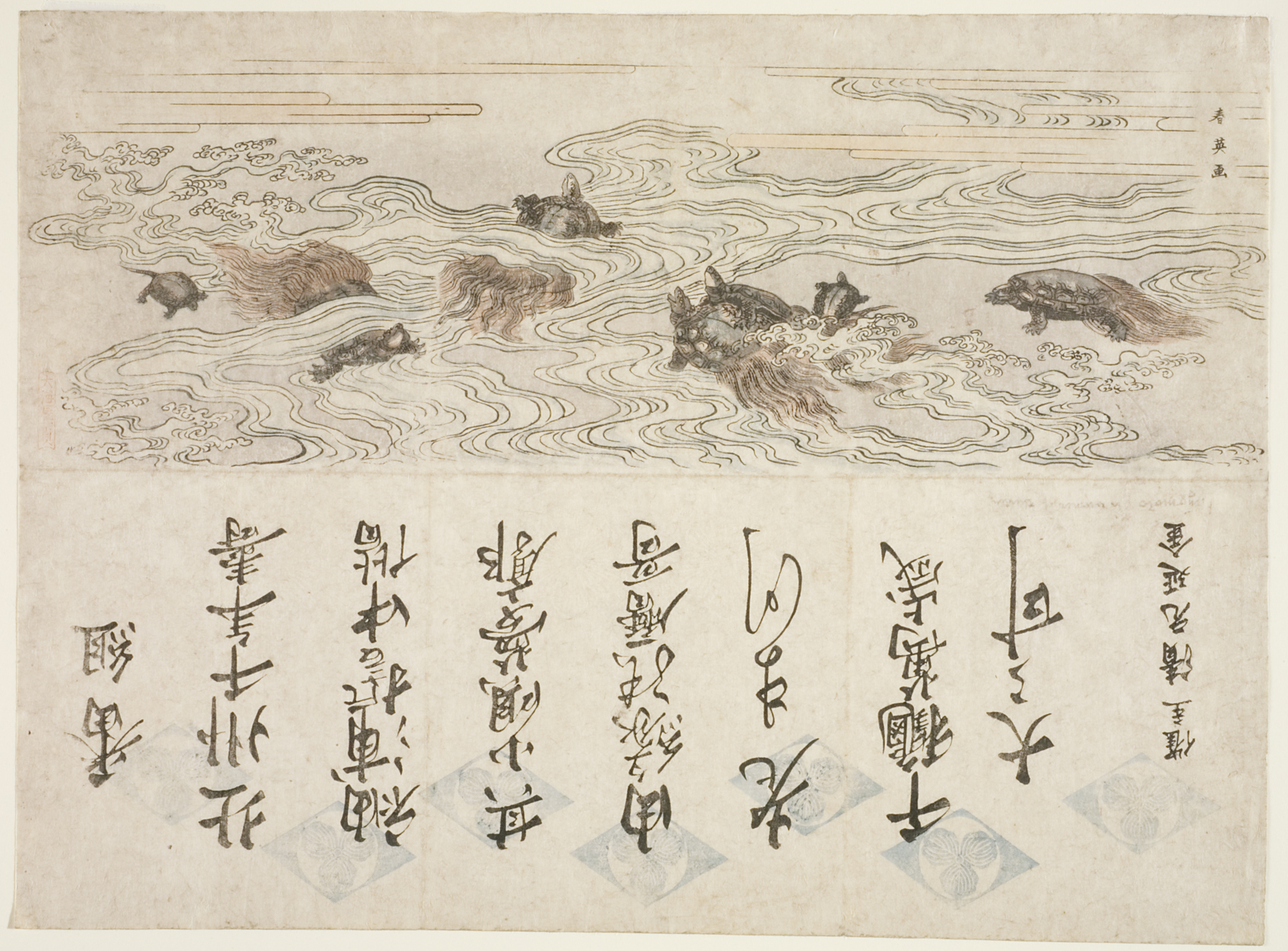
Katsukawa Shun'ei (1762–1819)
long-tailed turtles, late 1810s, Edo period (1600–1868)
Ryūryūkyo Shinsai (1764–1820)
Niwatori Muko (The Rooster Bridegroom), 1813, Edo period (1600–1868)
Utagawa Sadakage I (active circa 1818–1844)
Totoya Hokkei (1780–1850)
Ryūryūkyo Shinsai (1764–1820)
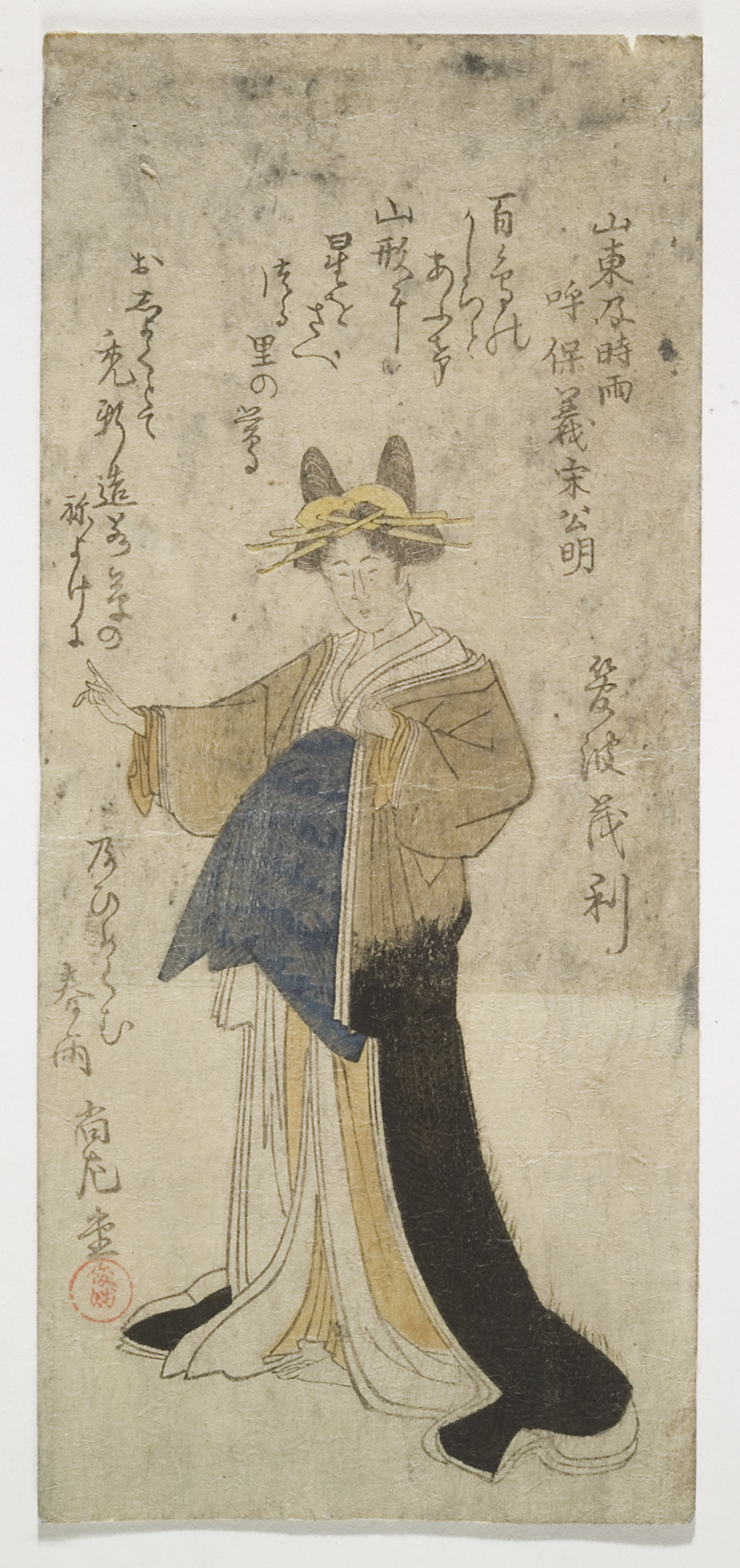
Kubo Shumman (1757–1820)
Kohōgi sōkōmei (Courtesan as the Opportune Rain), circa 1800, Edo period (1600–1868)
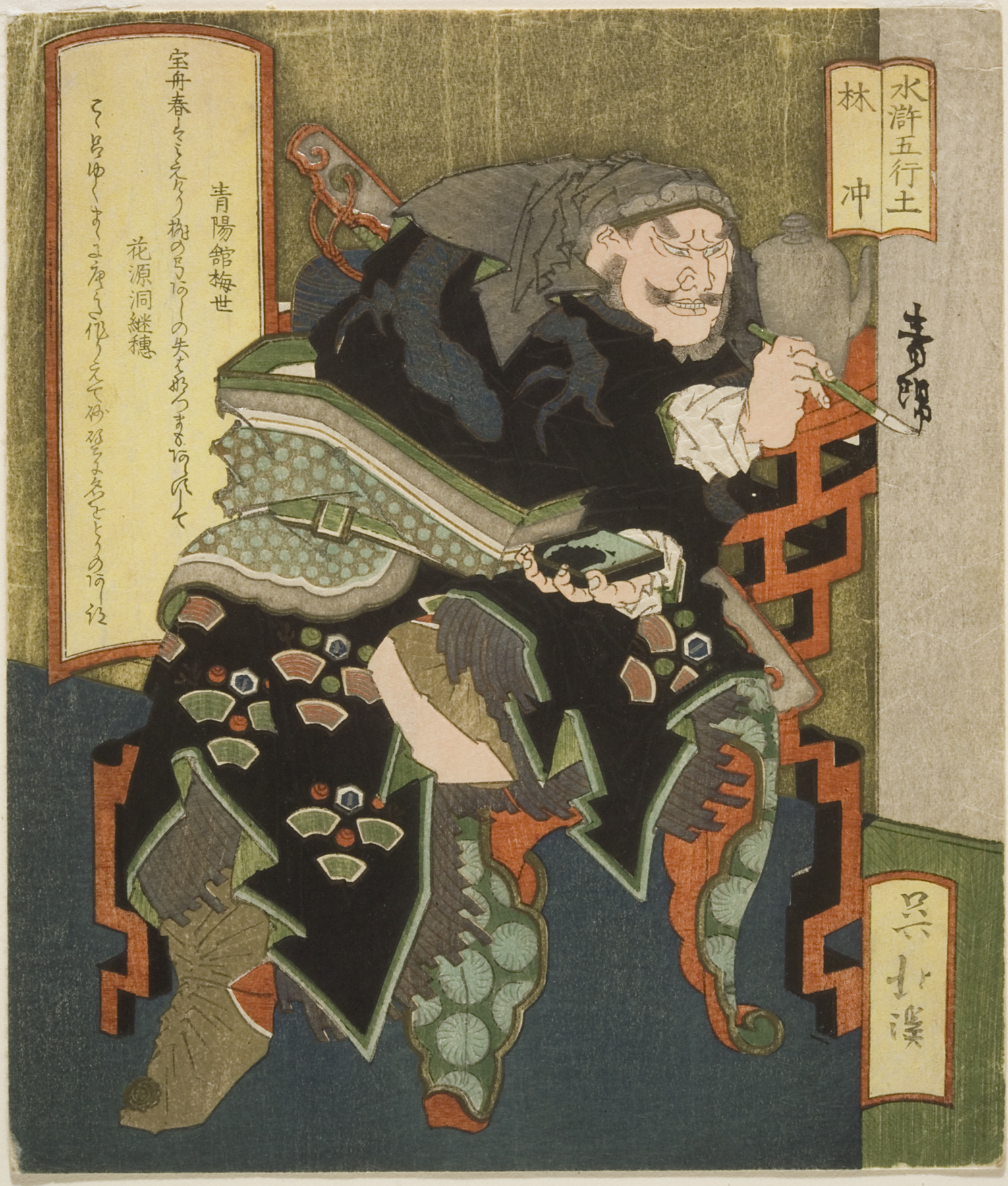
Totoya Hokkei (1780–1850)
Do (Earth), 1820s, Edo period (1600–1868)
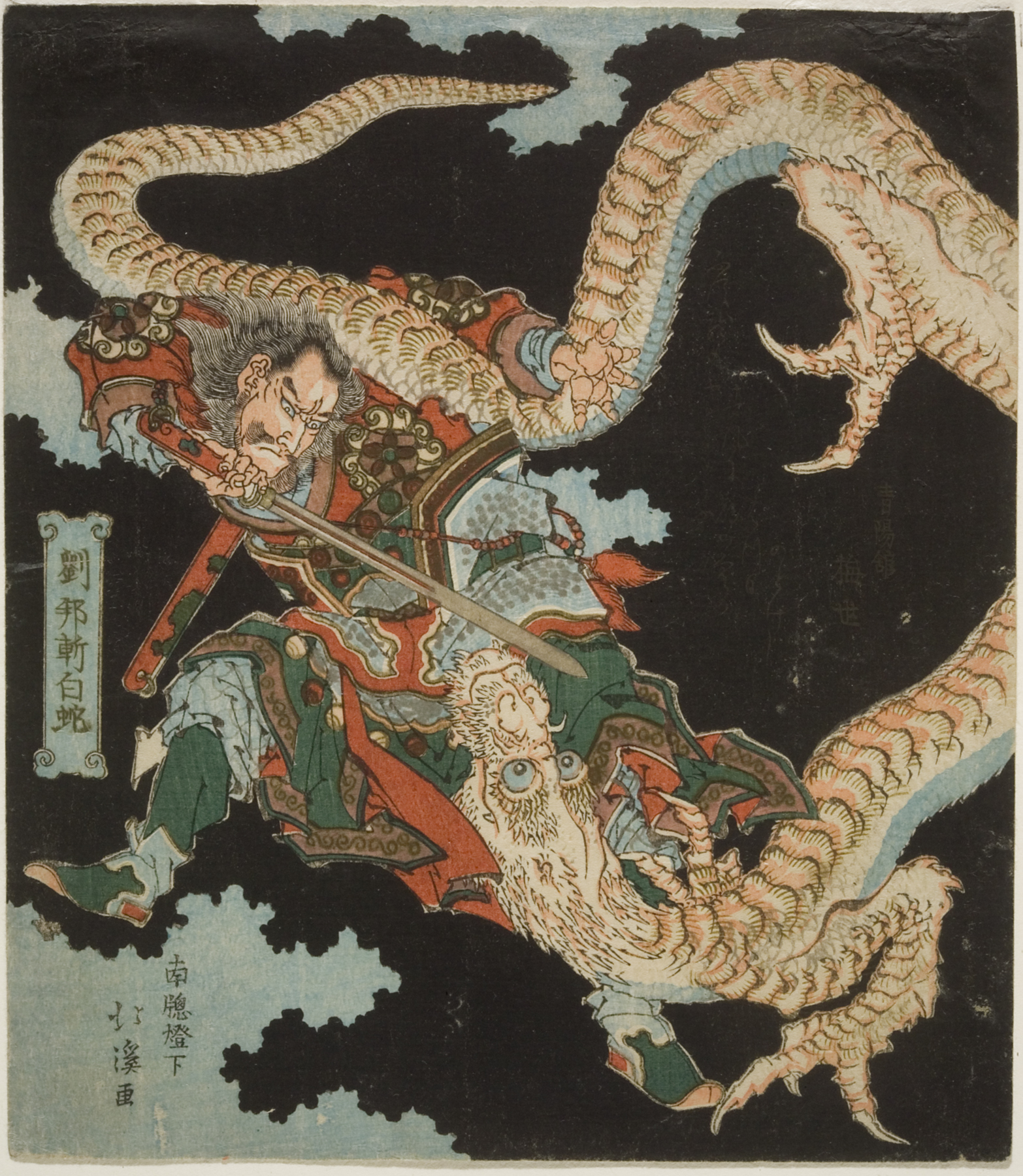
Katsushika Hokusai (1760–1849)
Ōiko and Fan Kuai, 1820, Edo period (1600–1868)
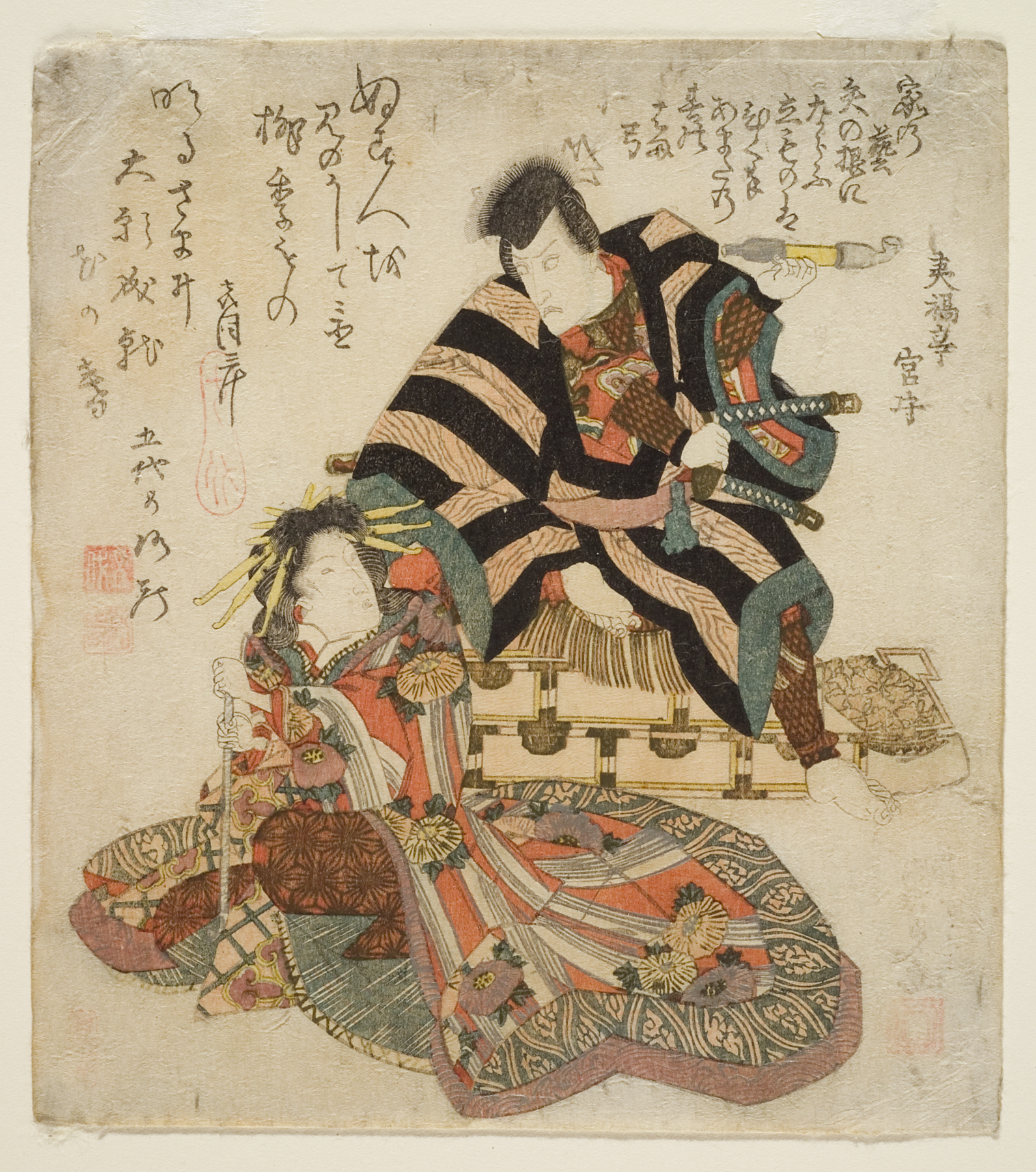
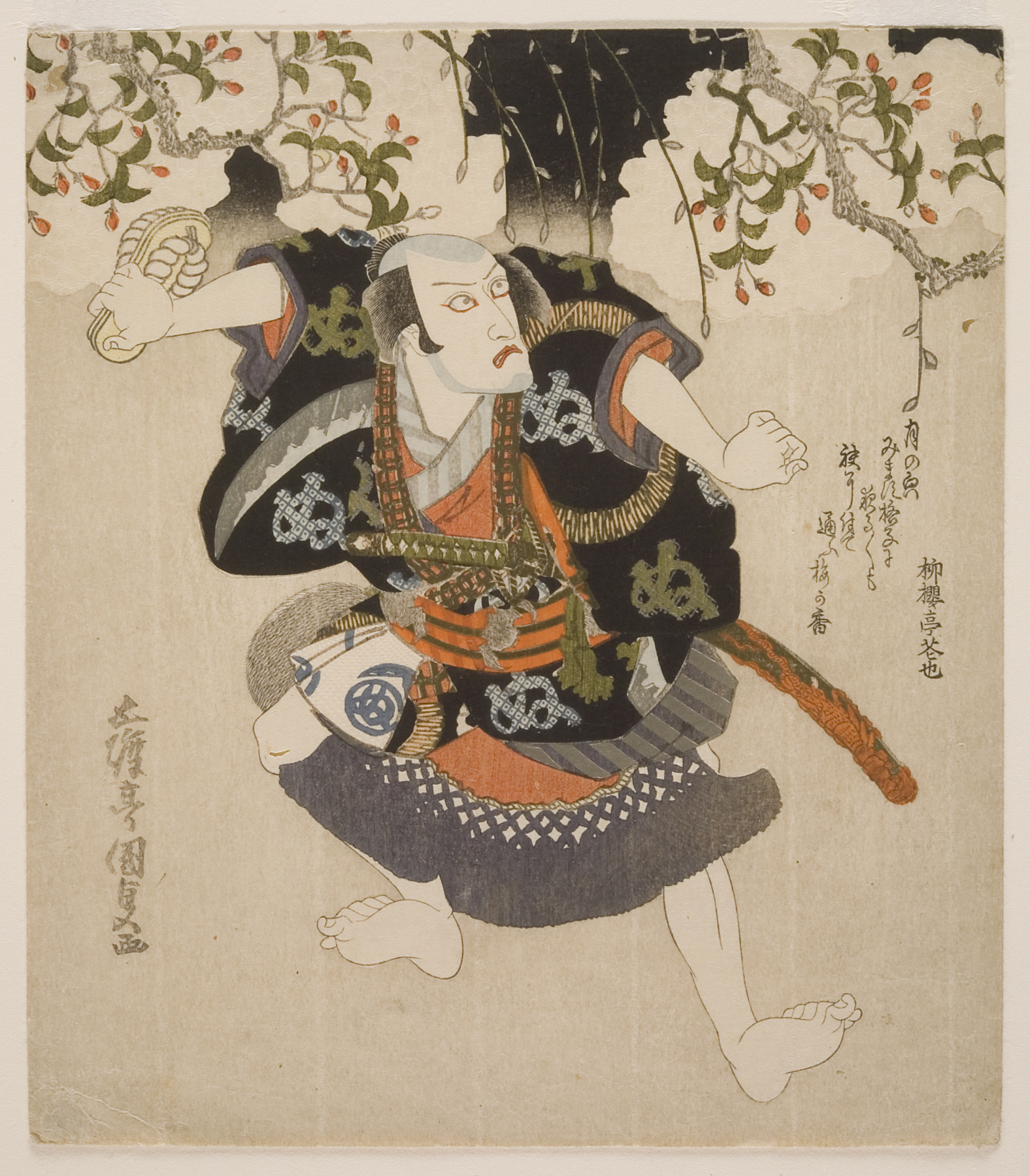
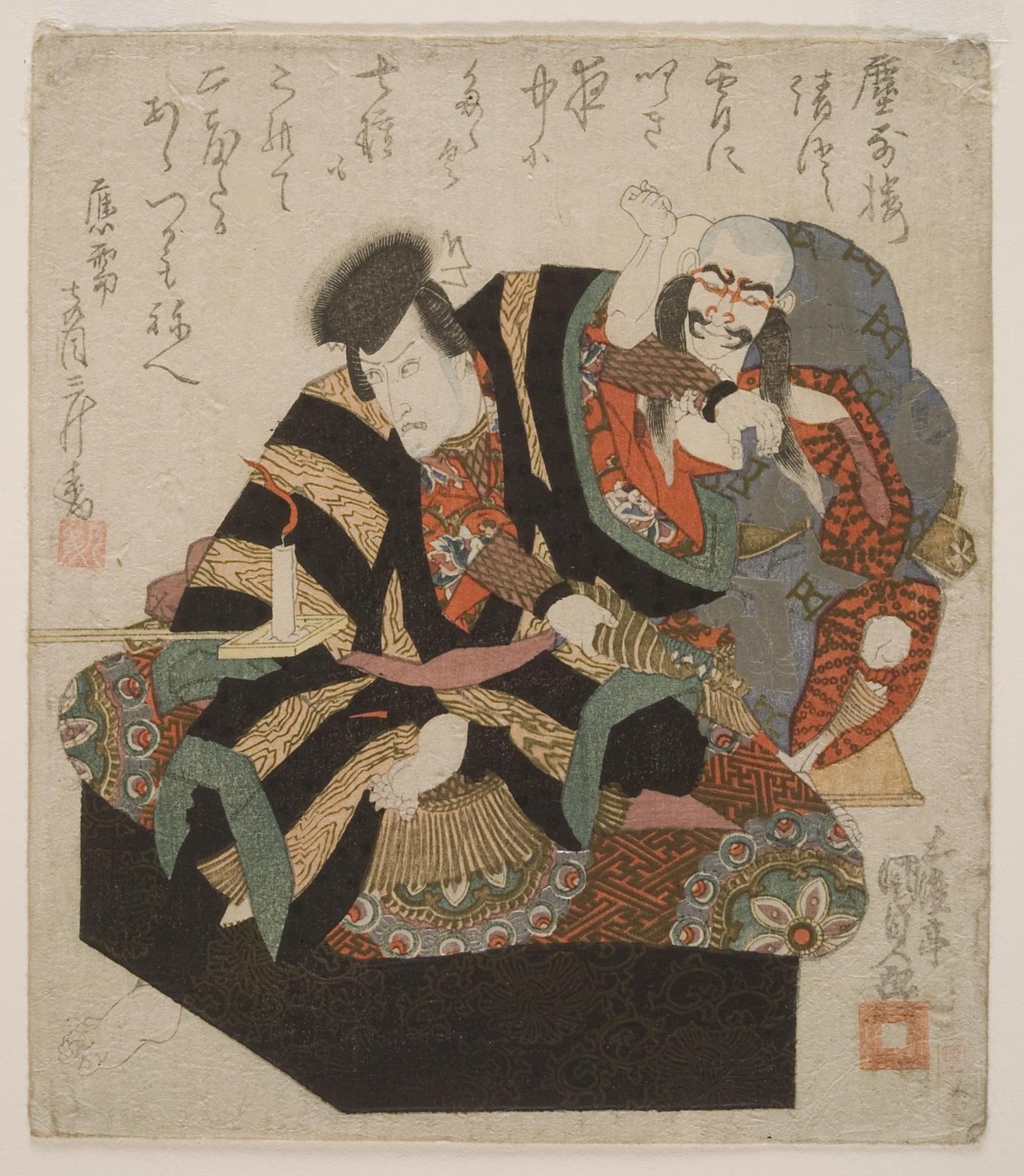
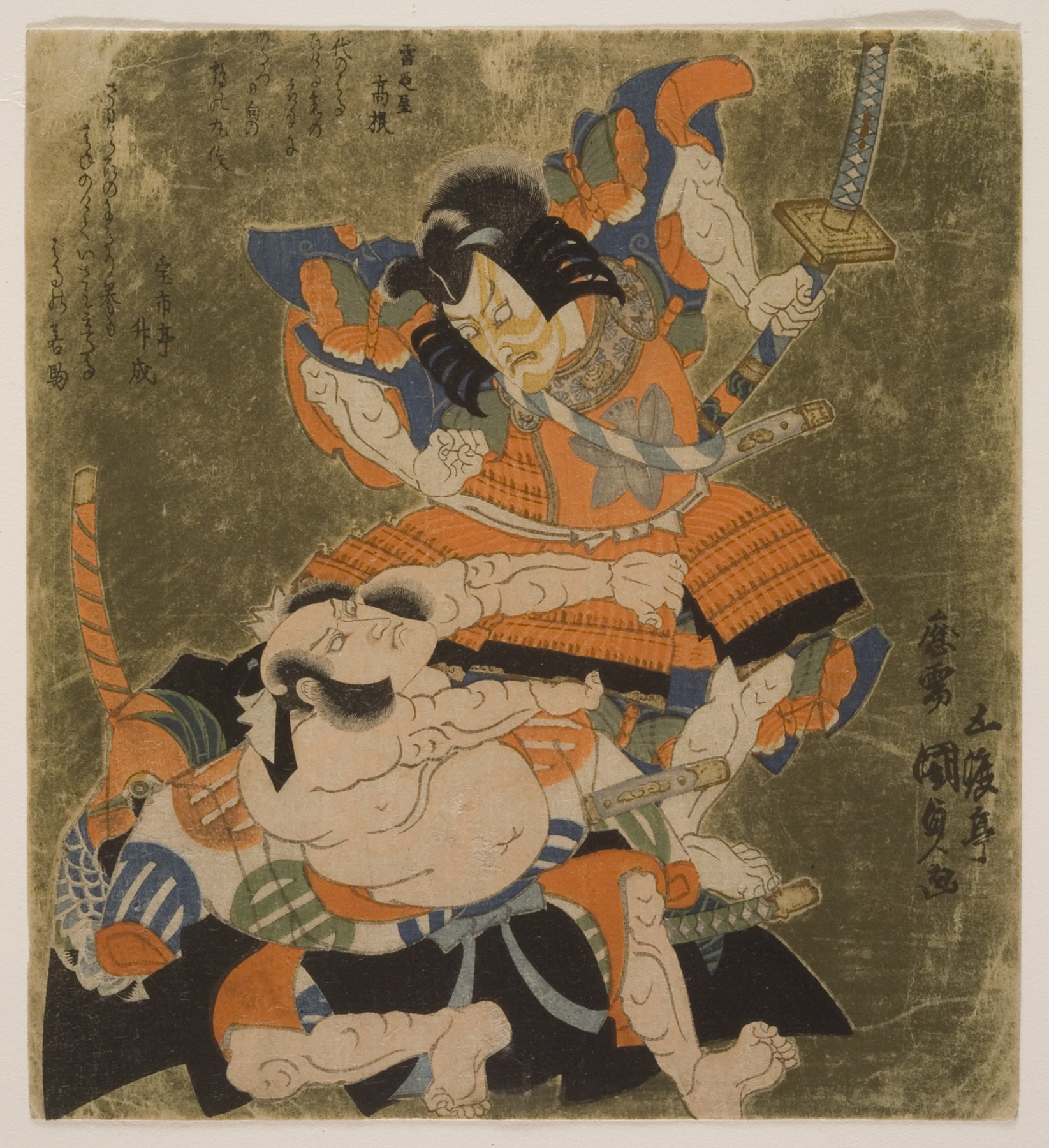
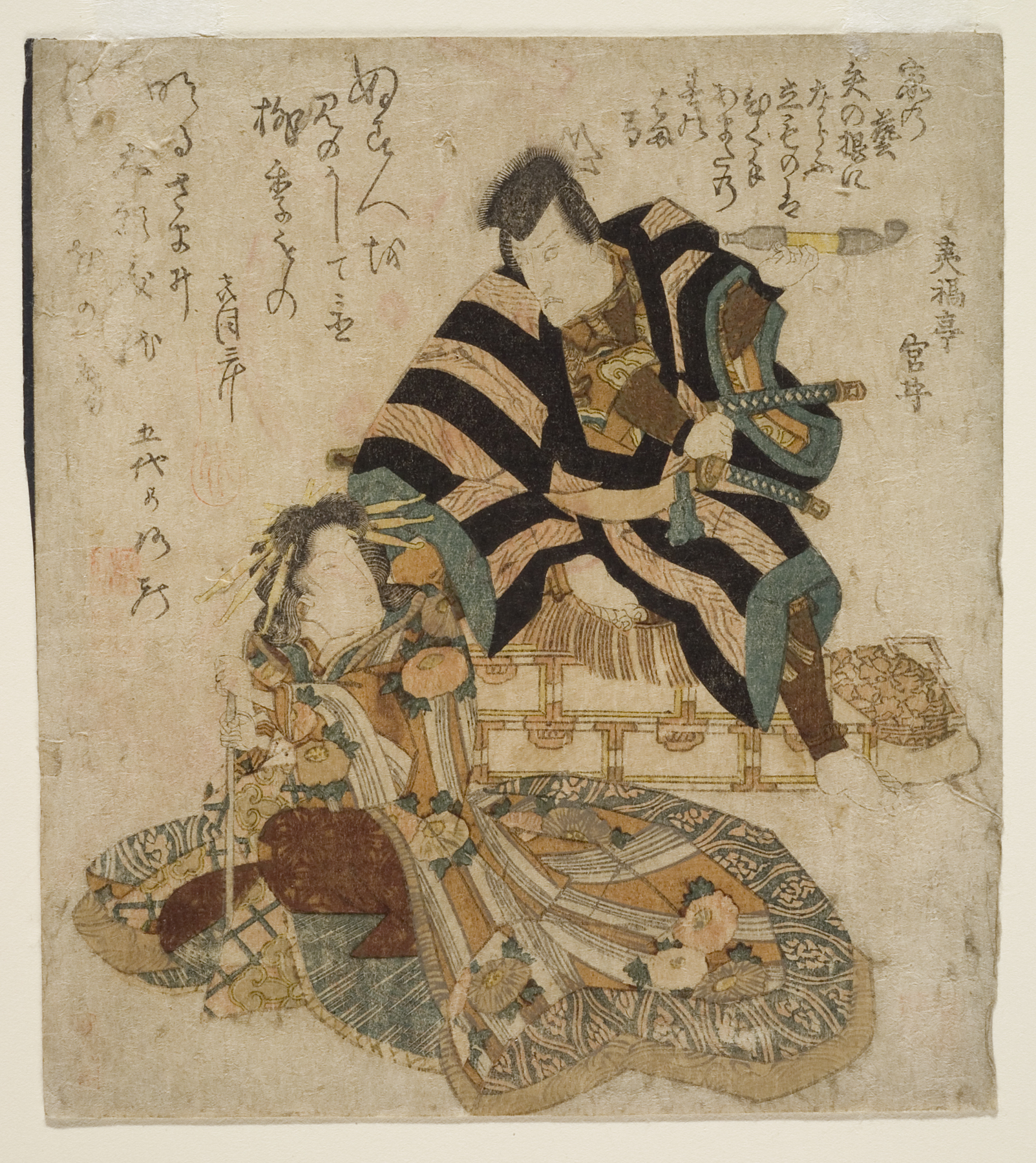
Utagawa Kunisada (1786–1864)
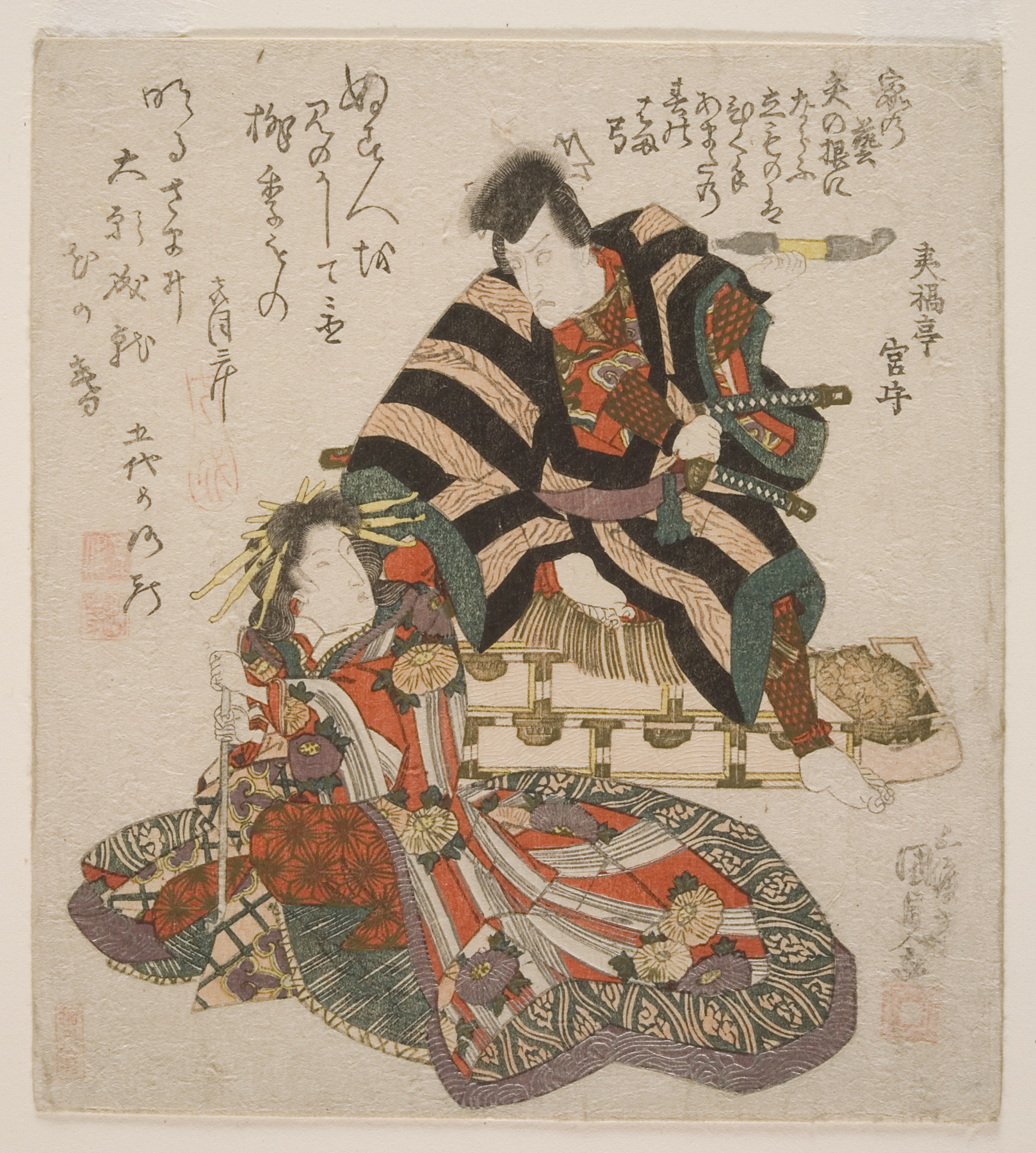
Ichikawa Danjūrō VII and Segawa Kikunojō V, 1823, Edo period (1600–1868)
Ryūryūkyo Shinsai (1764–1820)
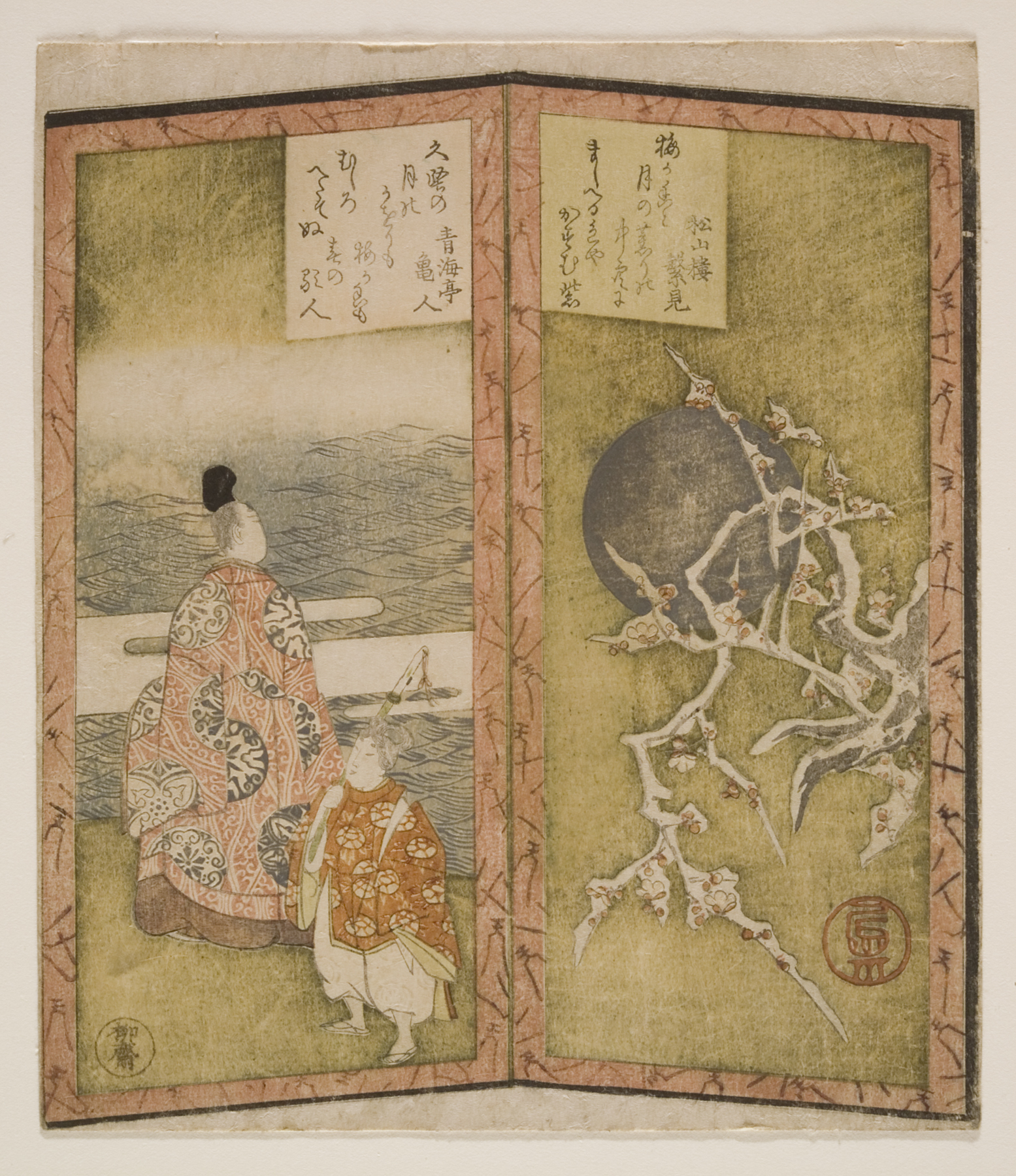
poet and plum tree, circa late 1810s, Edo period (1600–1868)
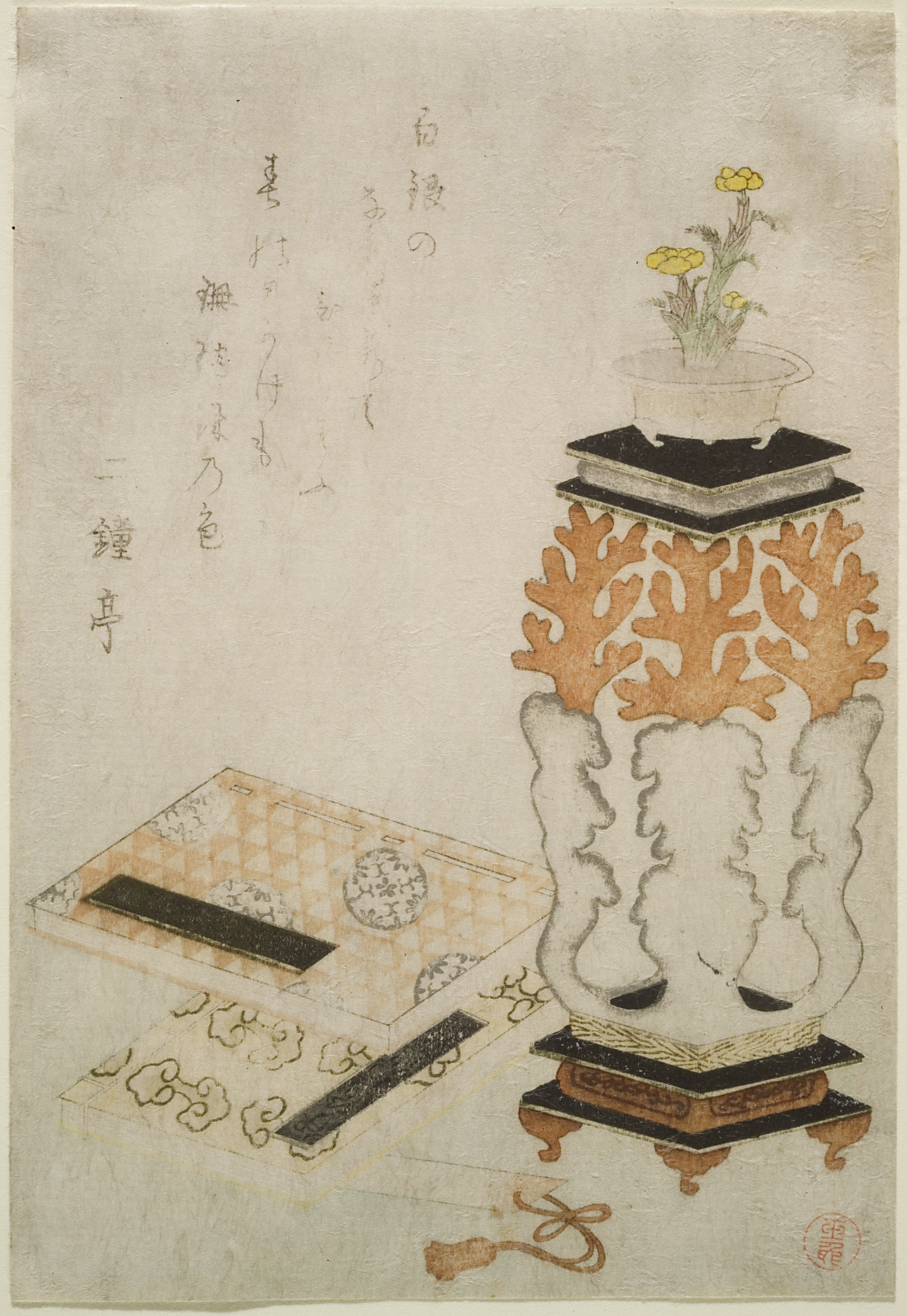
Kubo Shumman (1757–1820)
actor Sawamura Tanosuke II as the courtesan Shiratama, circa mid 1810s, Edo period (1600–1868)
Utagawa Kunisada (1786–1864)
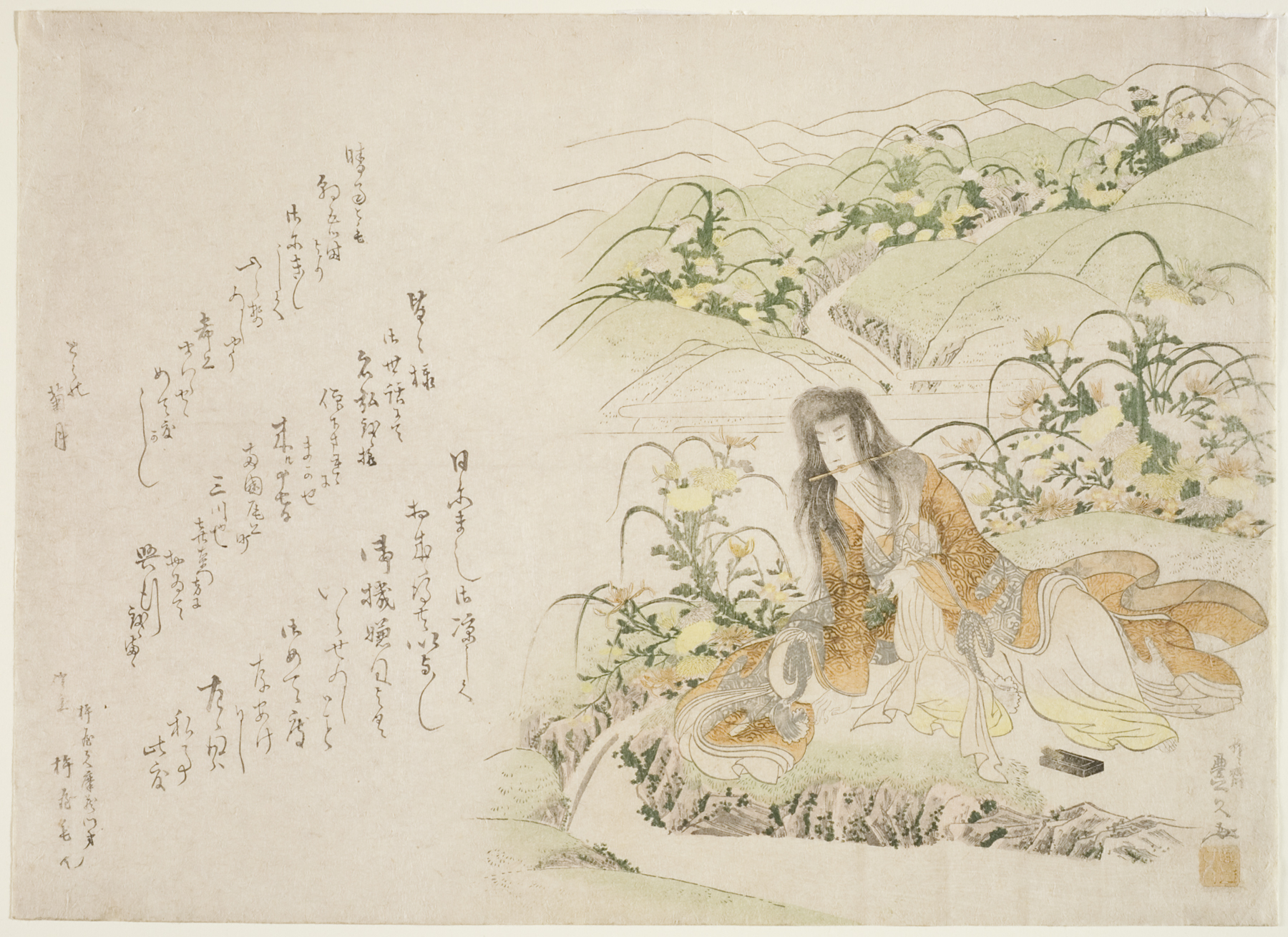
Toyohisa II (active circa 1830)
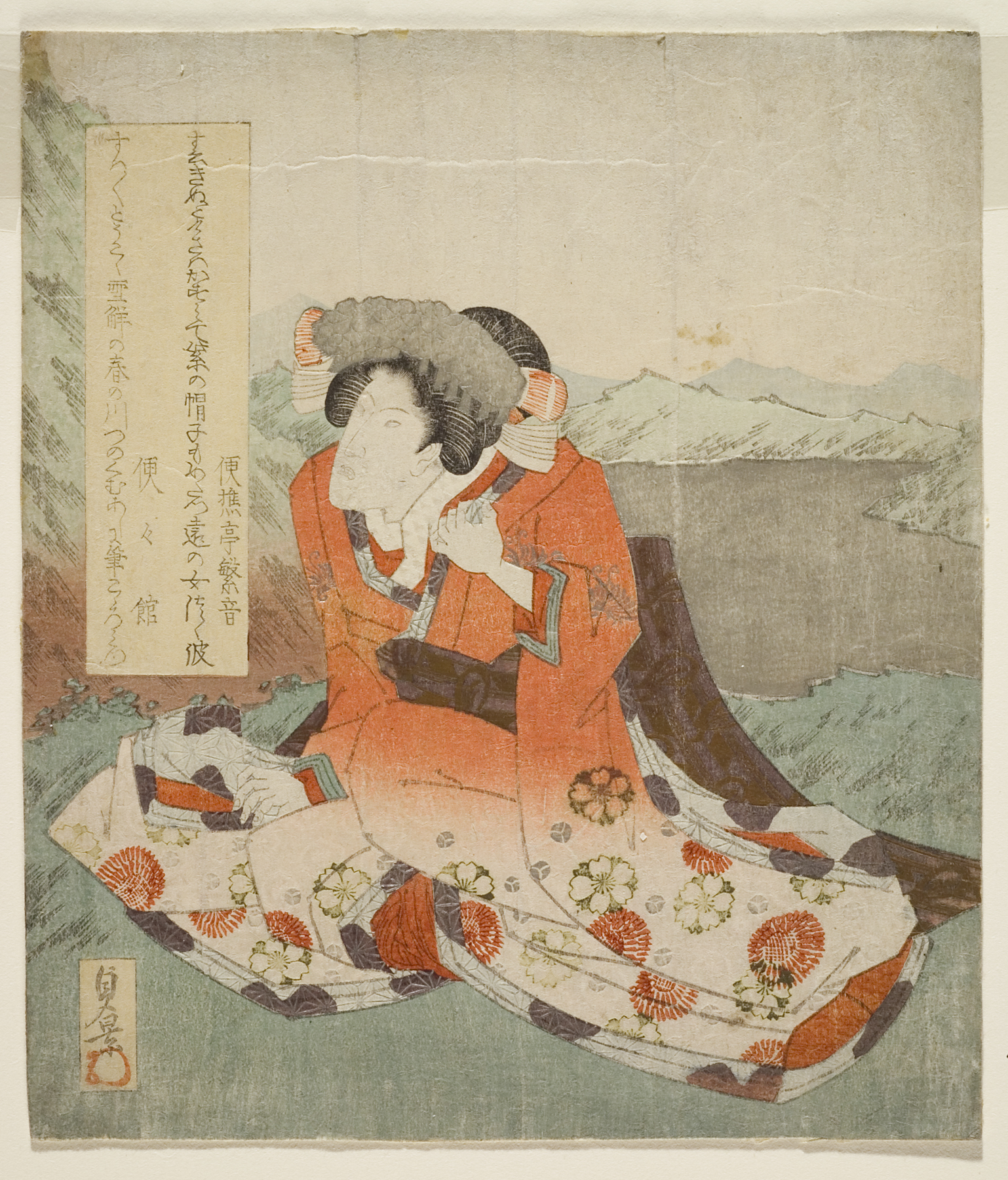
Kikujidō seated by a stream, 1830, 9th month, Edo period (1600–1868)
Kubo Shumman (1757–1820)
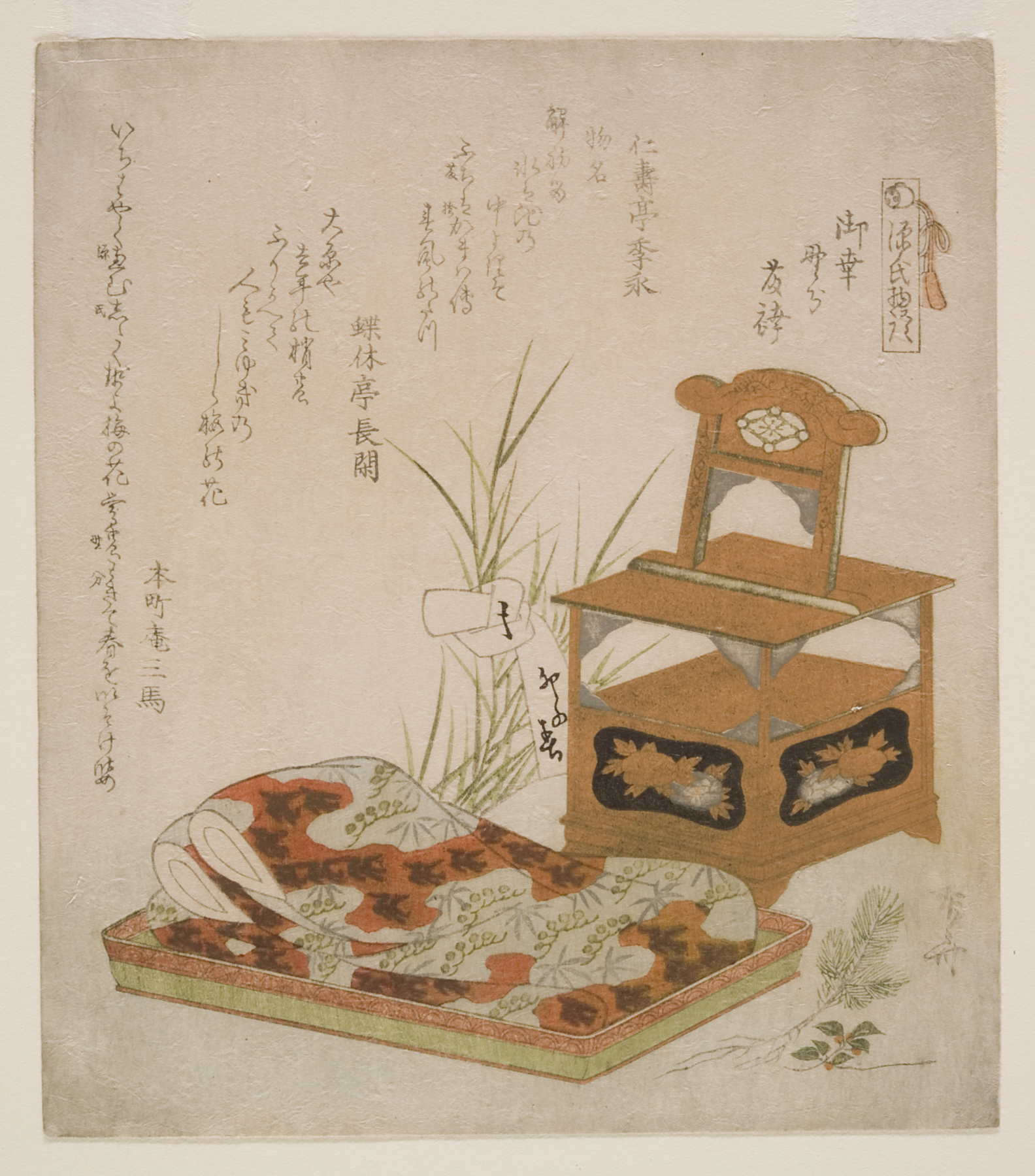
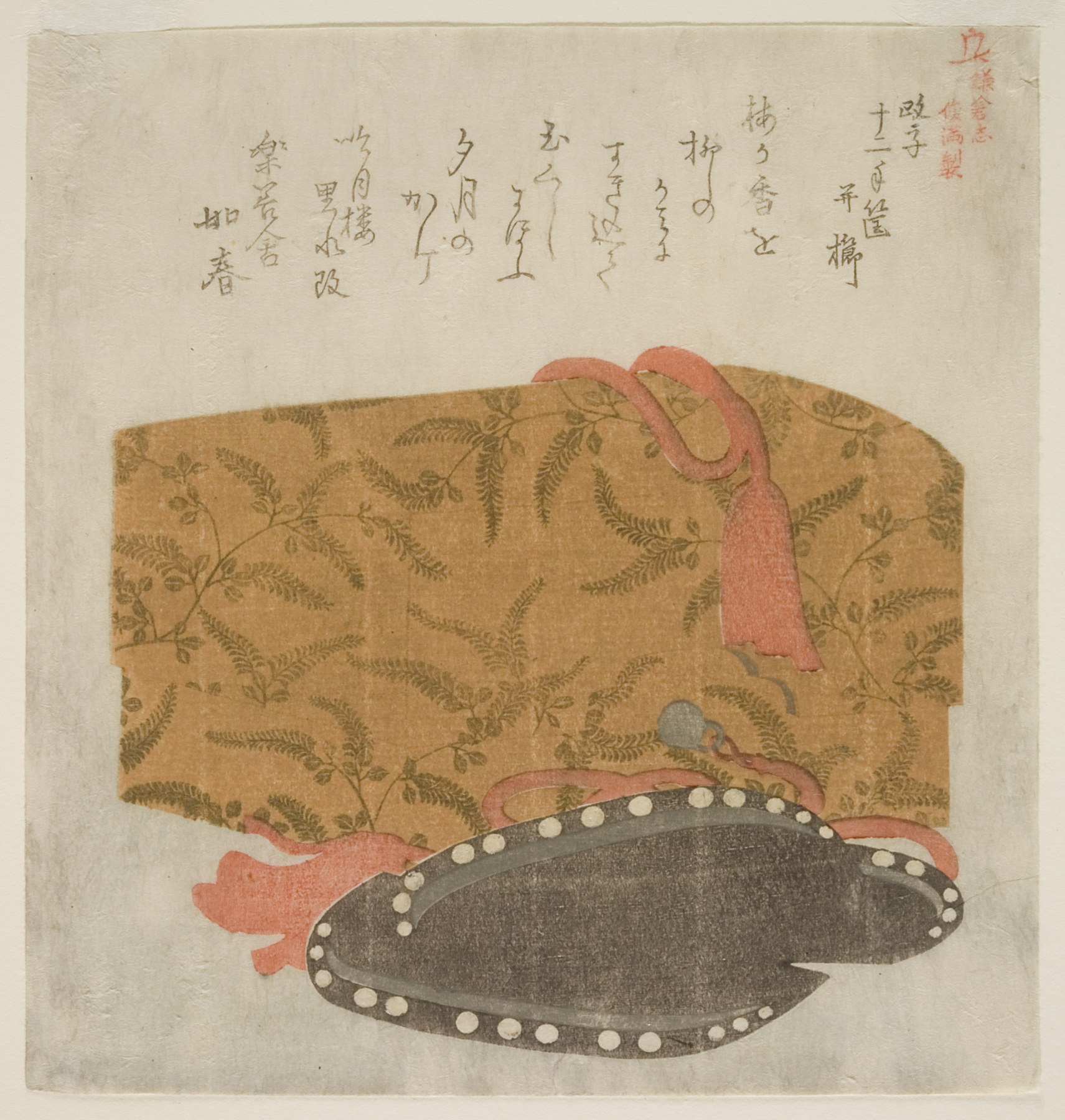
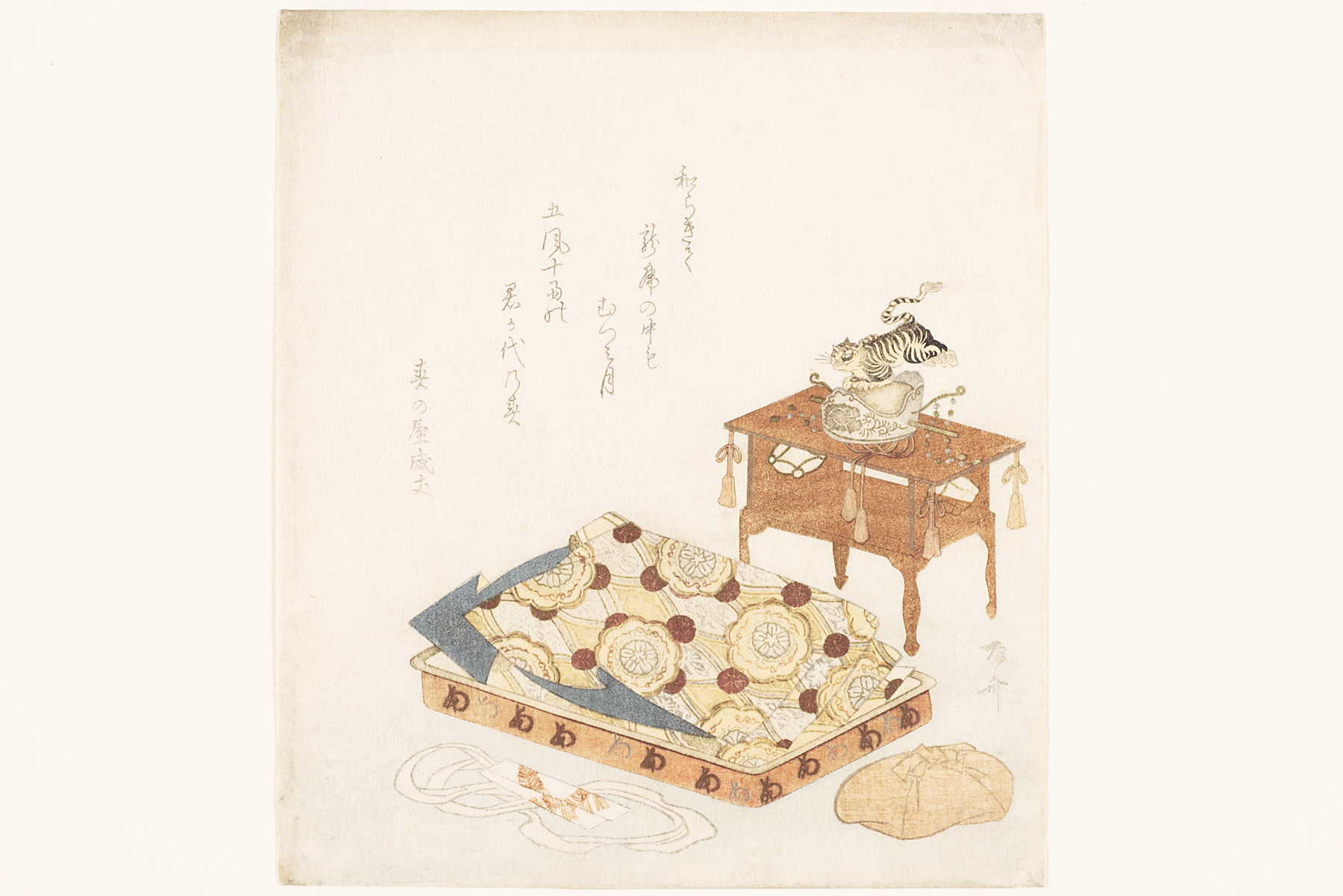
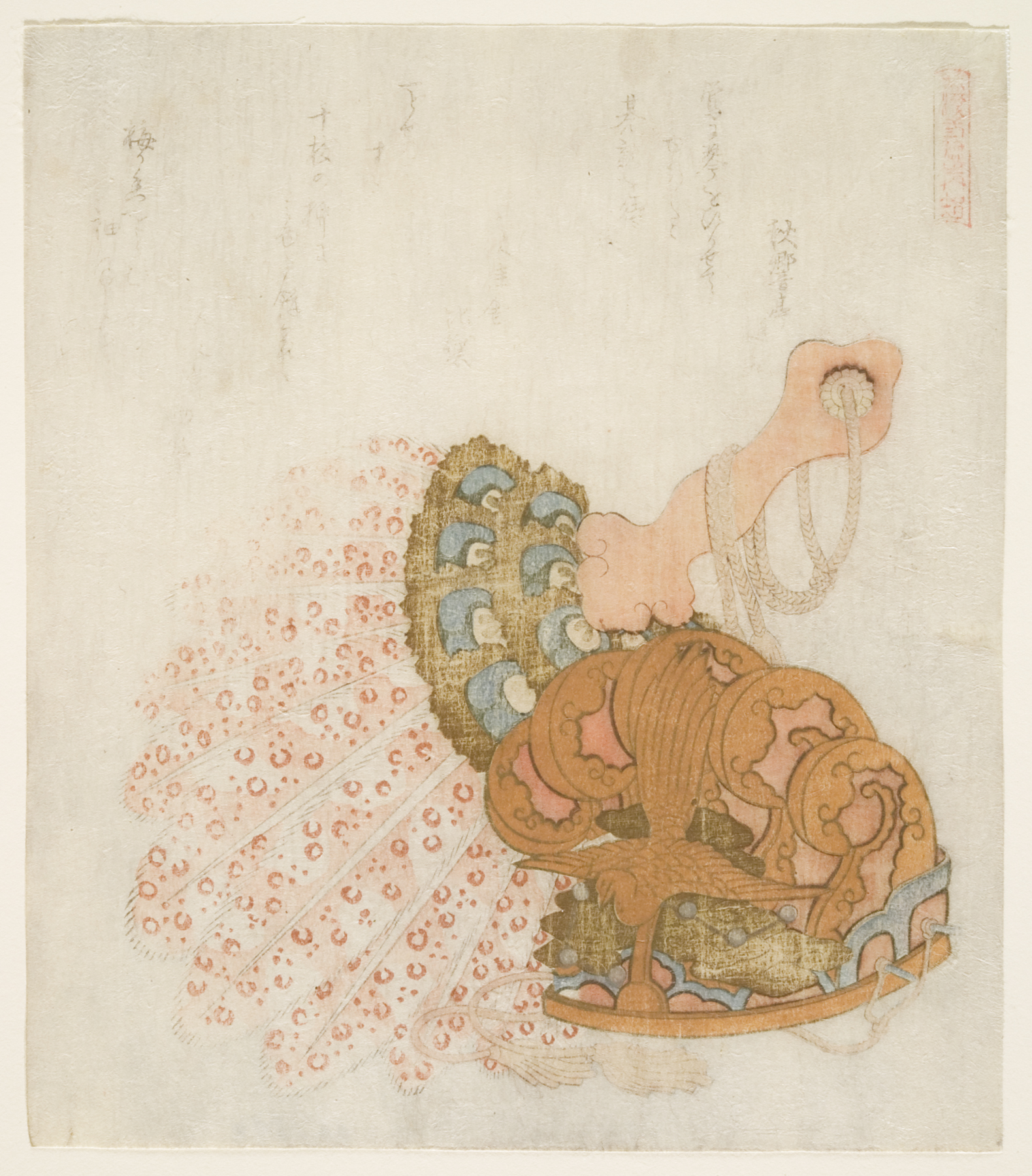
Ryūryūkyo Shinsai (1764–1820)
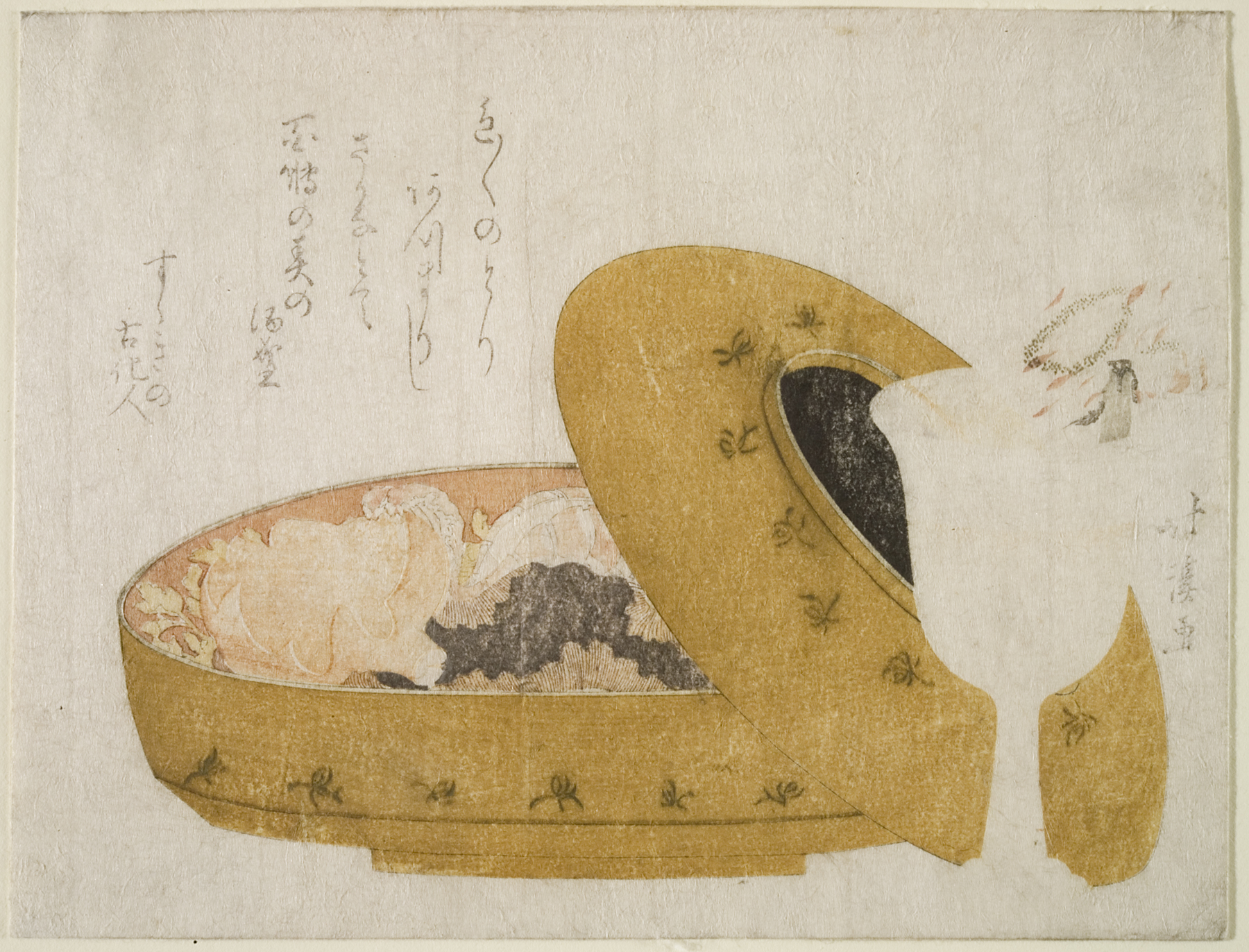
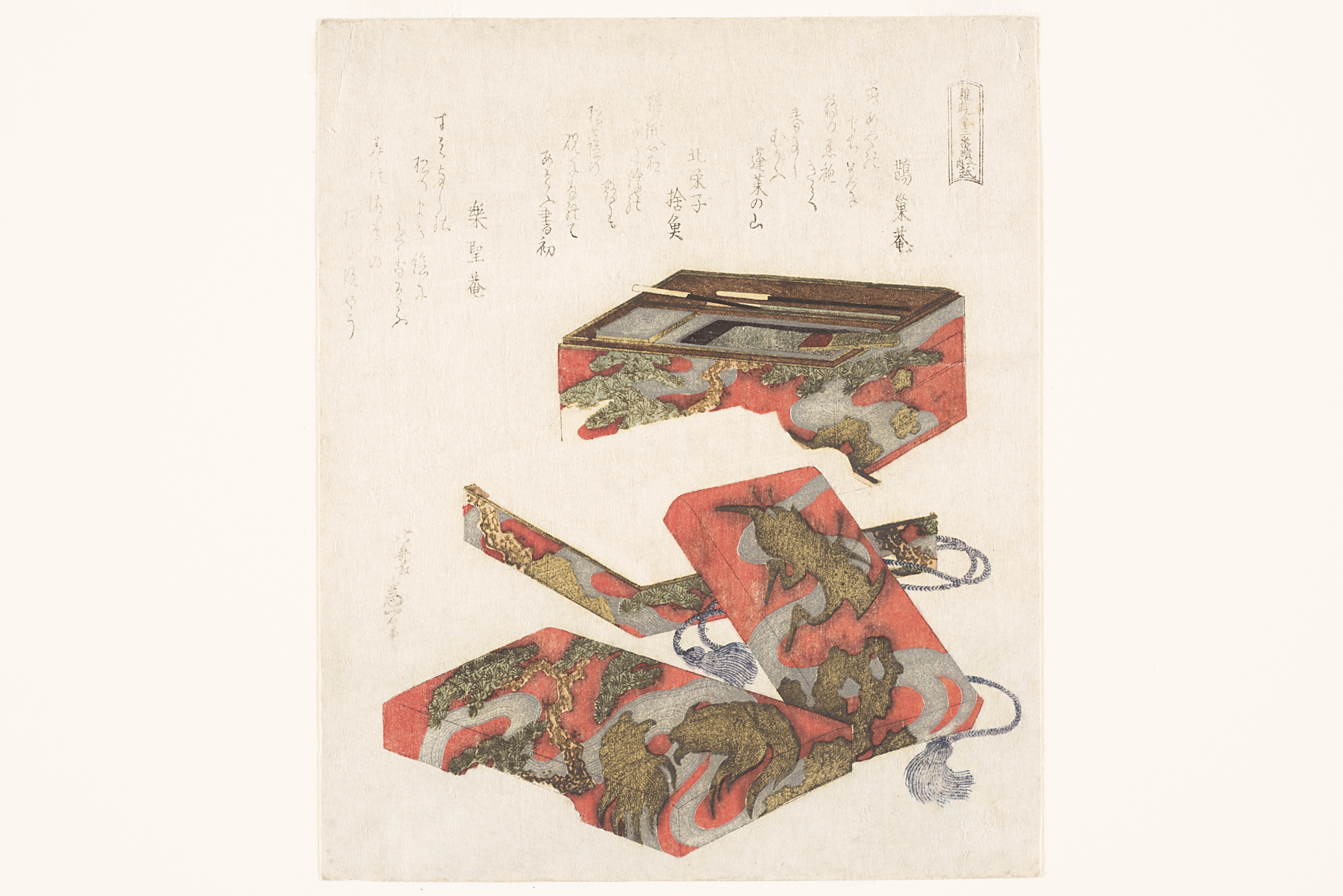
folded robe and crown, 1818, Edo period (1600–1868)
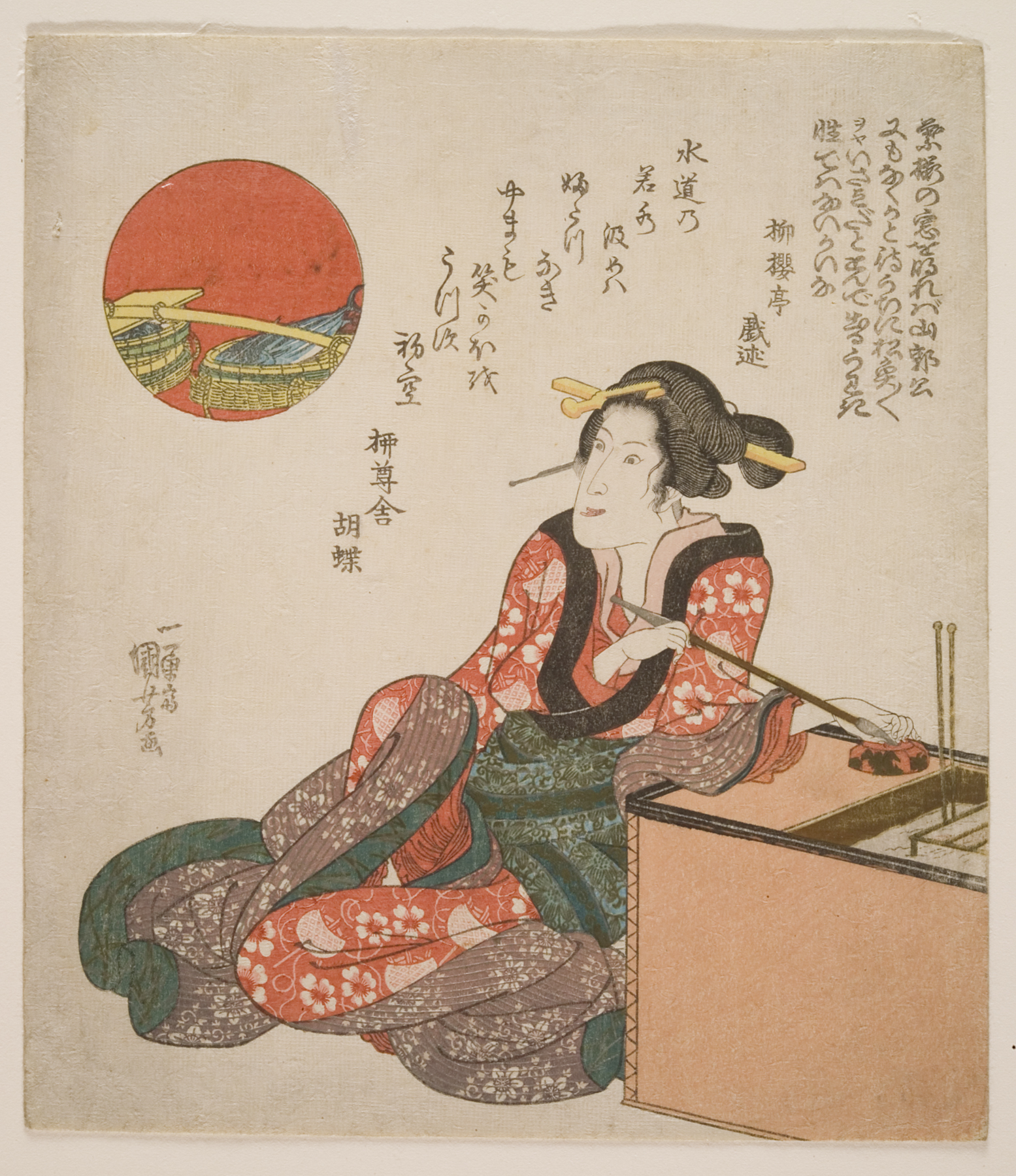
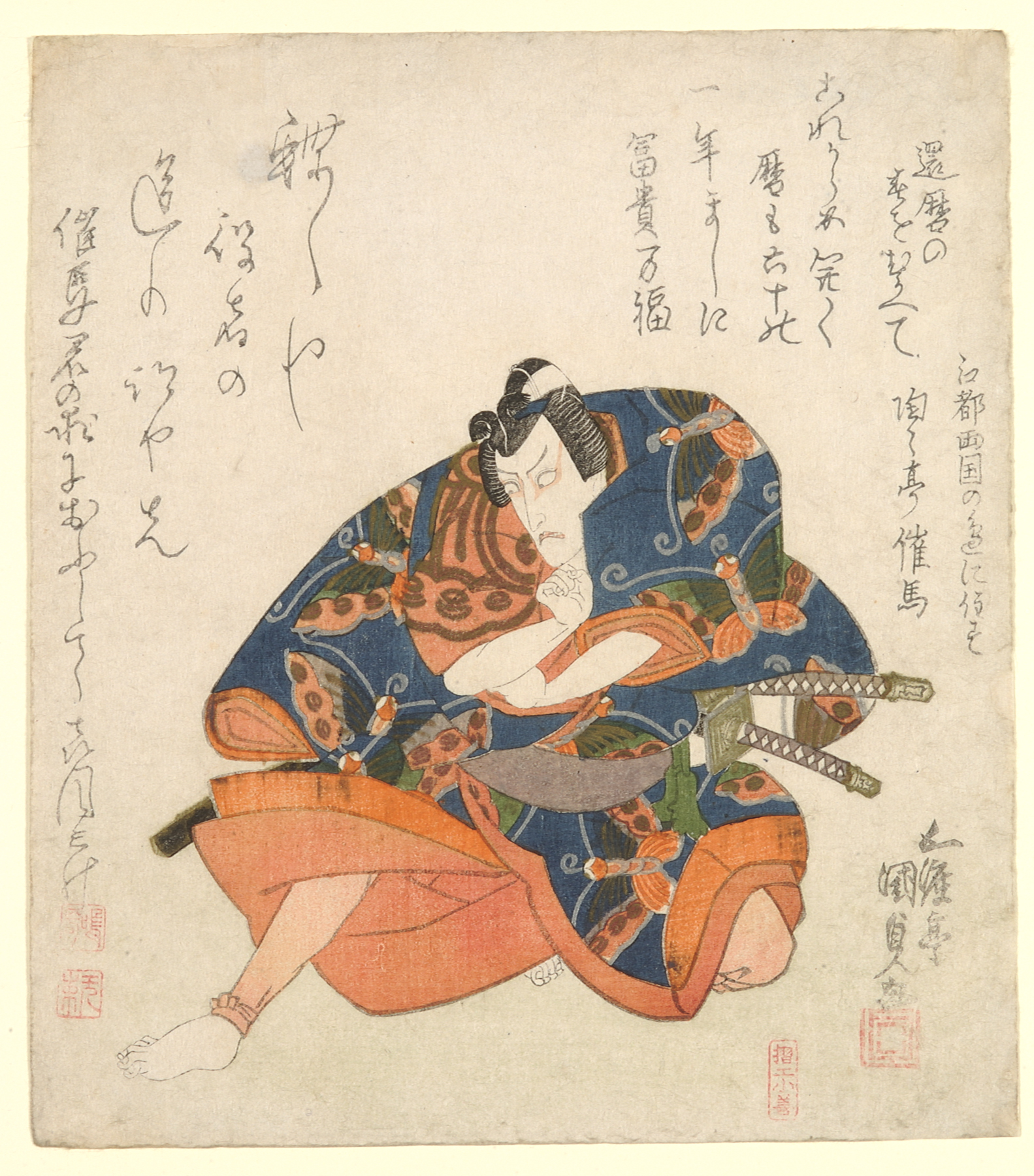
Utagawa Kuniyoshi (1797–1861)
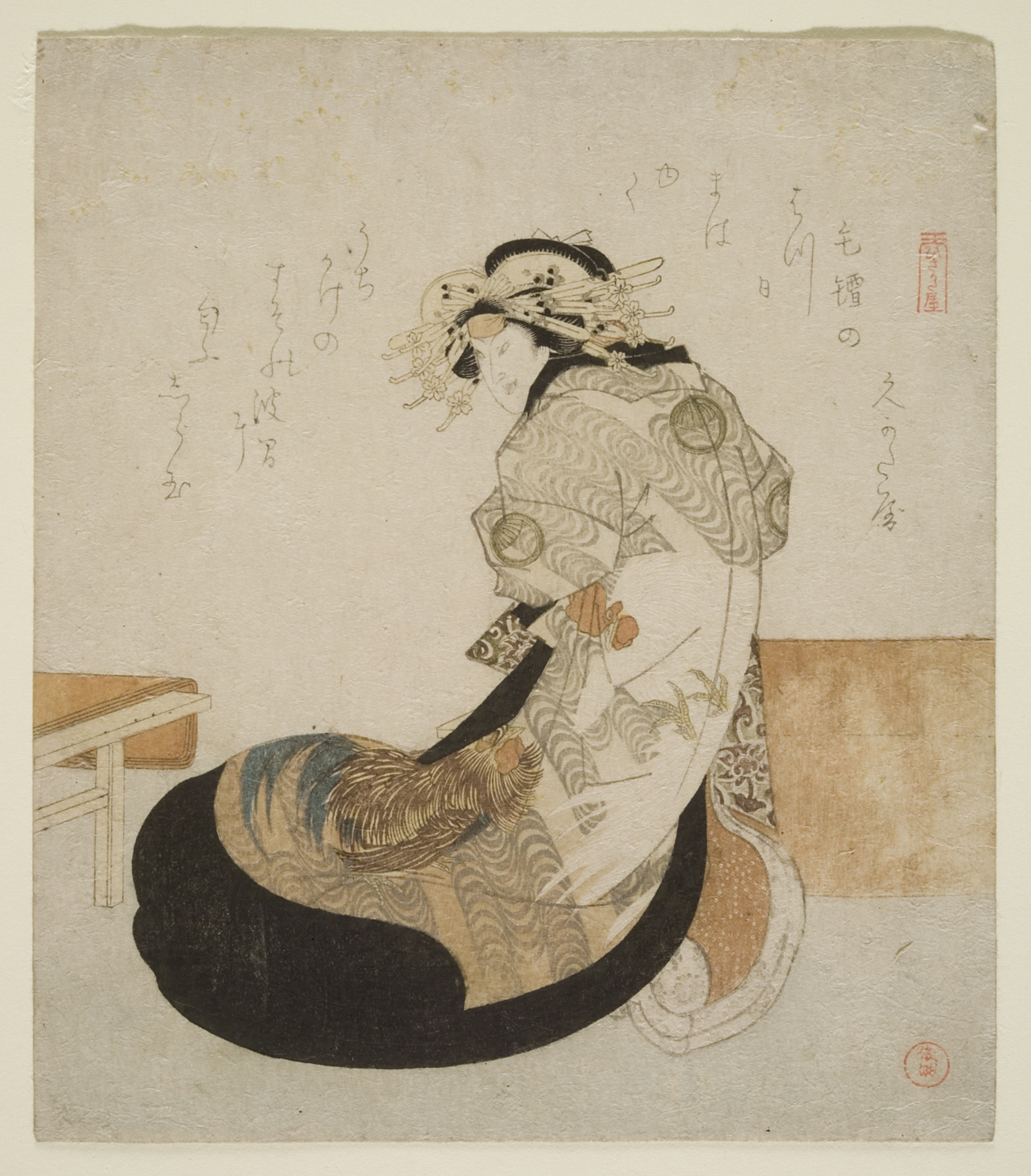
Iwai Hanshirō V seated by a brazier, circa 1825–1835, Edo period (1600–1868)
Utagawa Kunisada (1786–1864)
Ichikawa Danjūrō VII and Segawa Kikunojō V, 1823, Edo period (1600–1868)
Utagawa Kuniyoshi (1797–1861)
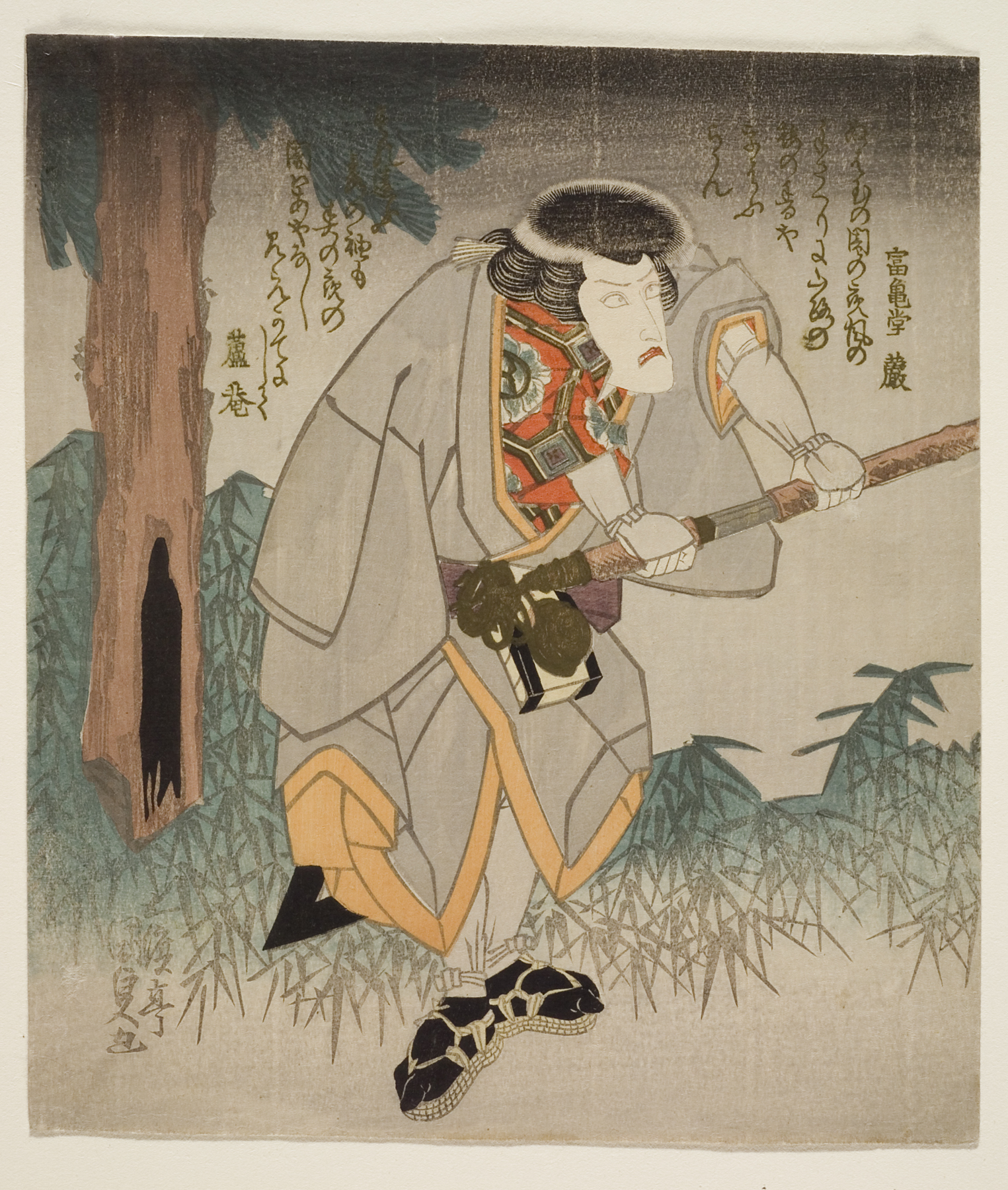
Ichikawa Ebizō V (Danjūrō VII), mid 1830s, Edo period (1600–1868)
Yashima Gakutei (circa 1786–1868, active 1815–1852)
Nō (Ability), circa late 1810s, Edo period (1600–1868)
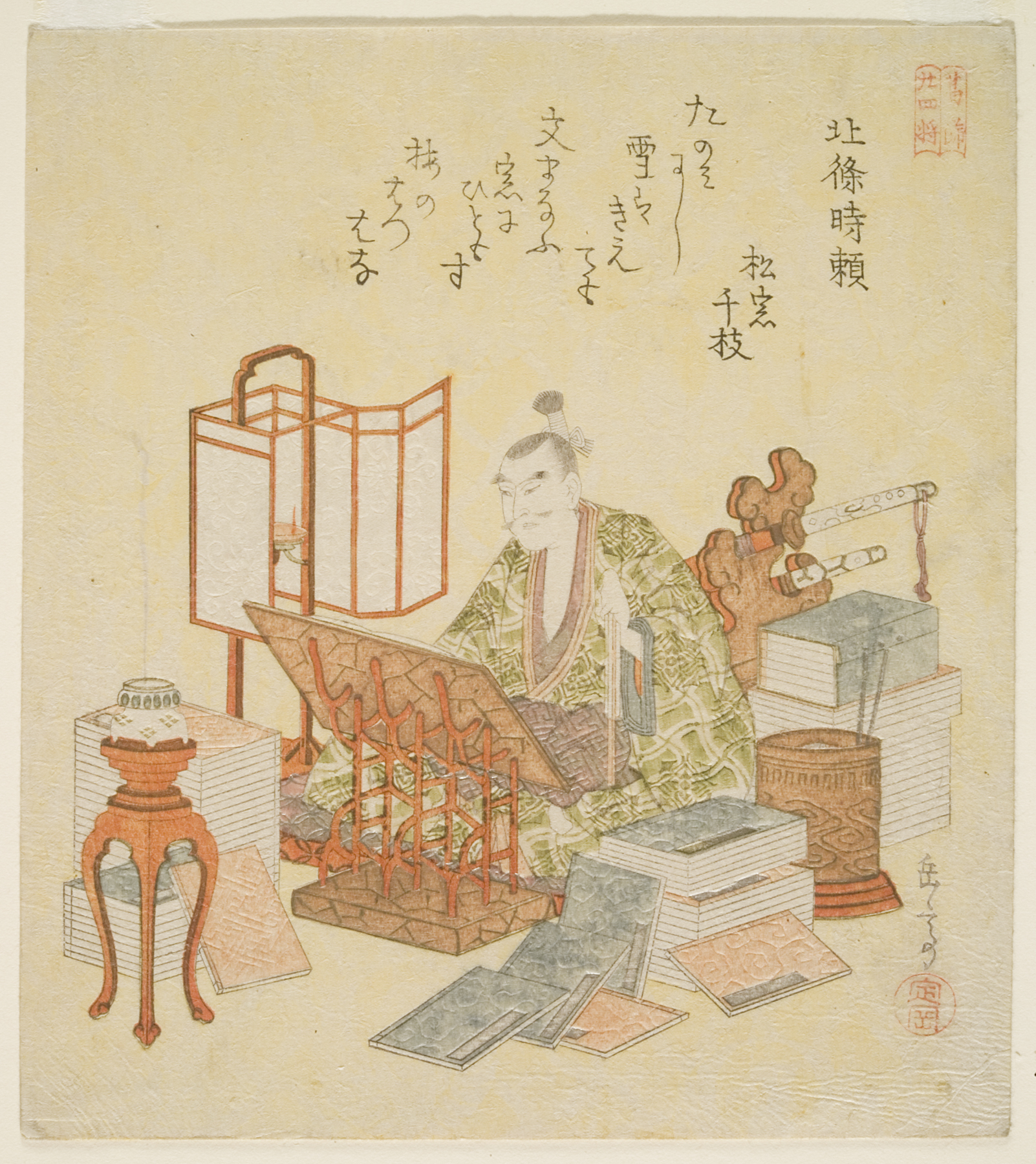
Yashima Gakutei (circa 1786–1868, active 1815–1852)
Hōjō Tokiyori, circa 1820, Edo period (1600–1868)
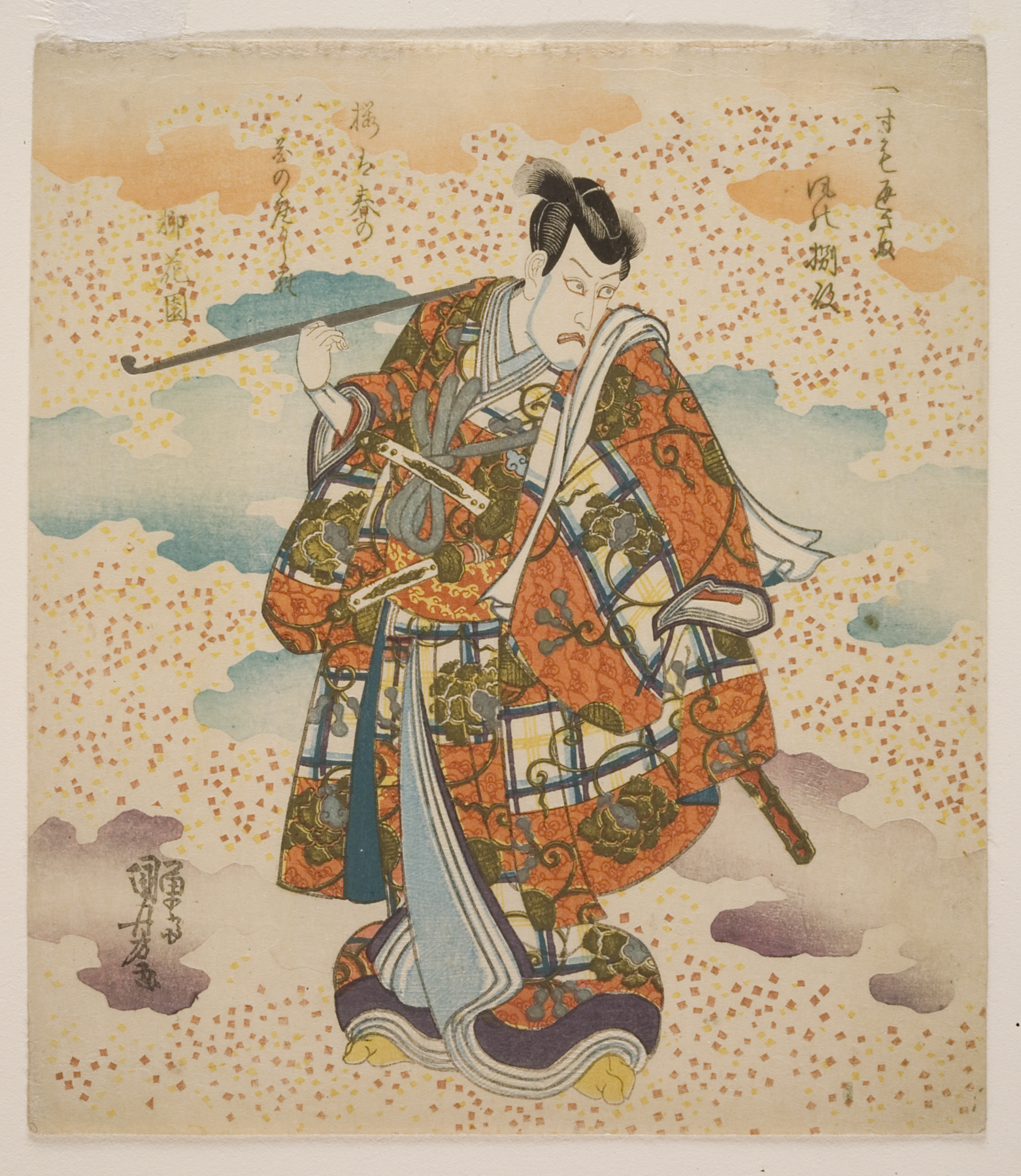
Utagawa Kunisada (1786–1864)
actor Ichikawa Danjūrō VII as Fuwa Banzaemon, 1827, Edo period (1600–1868)
Katsushika Hokusai (1760–1849)
Benkei and Chinese princess, 1820, Edo period (1600–1868)
Utagawa Kunisada (1786–1864)
Ichikawa Danjūrō VII as Soga no Gorō, 1821 or 1822, Edo period (1600–1868)
Totoya Hokkei (1780–1850)
Qingao riding a carp, circa 1820, Edo period (1600–1868)
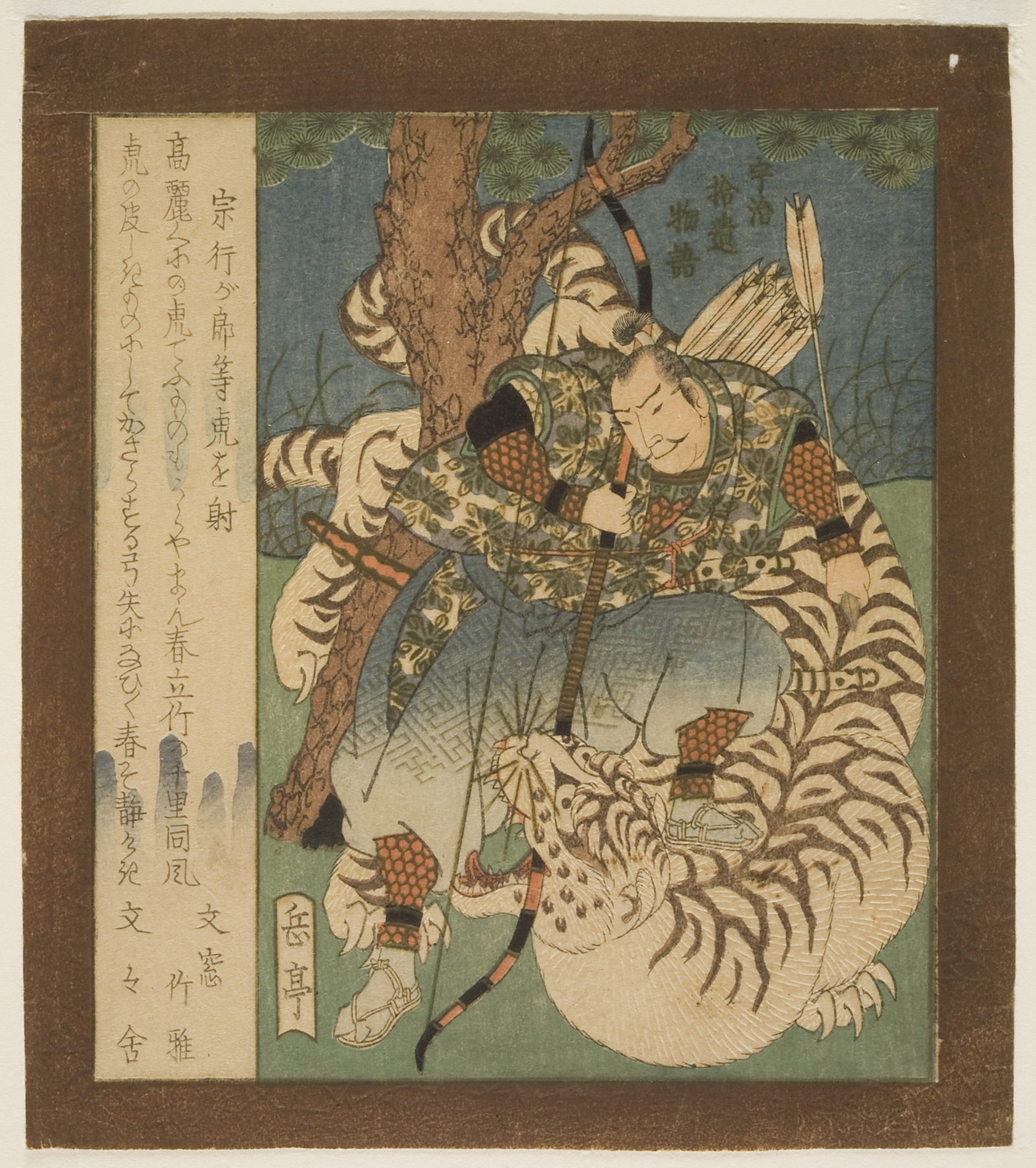
Yashima Gakutei (circa 1786–1868, active 1815–1852)
Muneyuki ga rōtō tora o utsu (Muneyuki's soldier slays a tiger), circa late 1820s, Edo period (1600–1868)
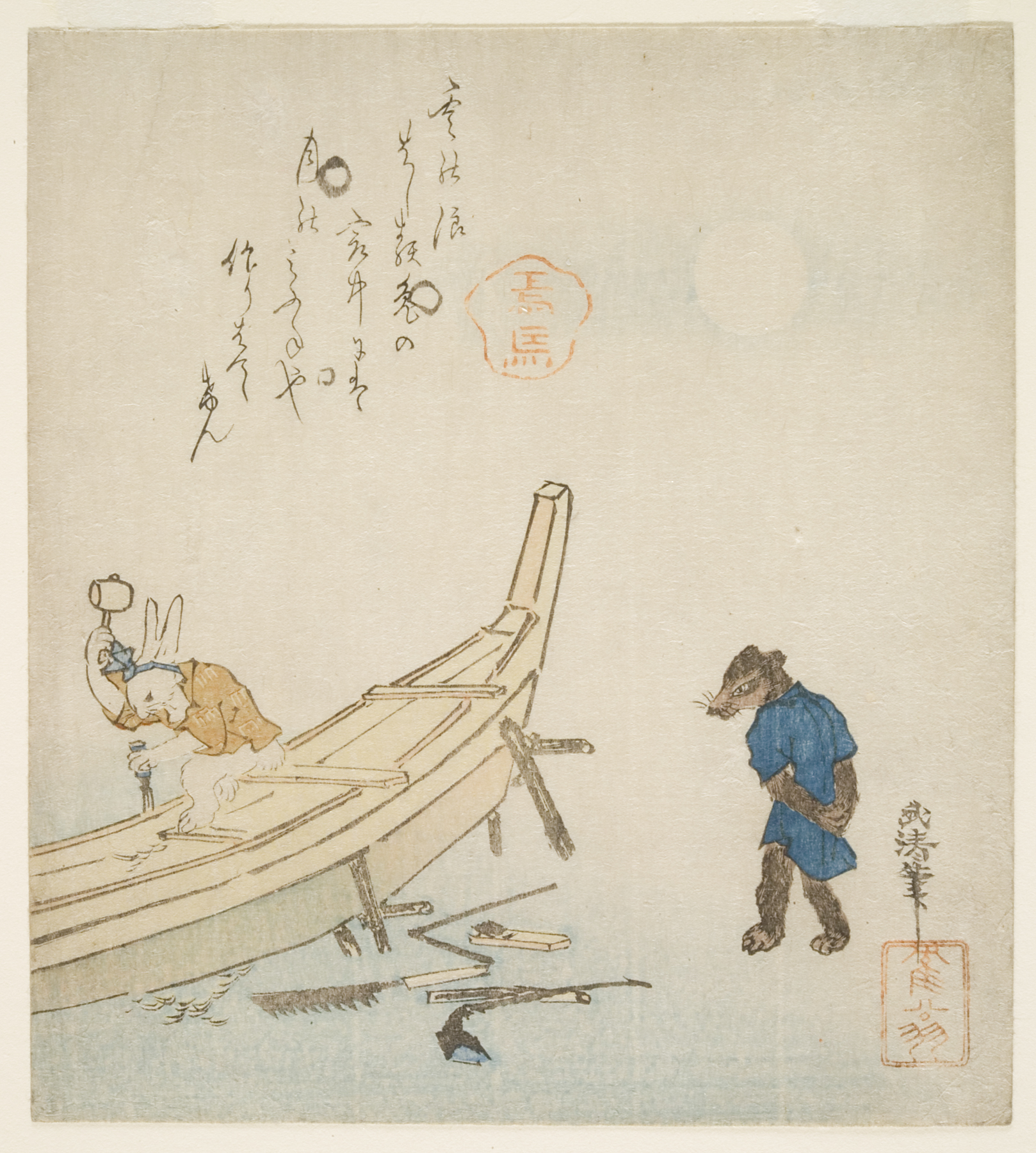
Kita Busei (1776–1856); Tatekawa Emba II (active early 1800s)
badger and rabbit, 1831, Edo period (1600–1868)
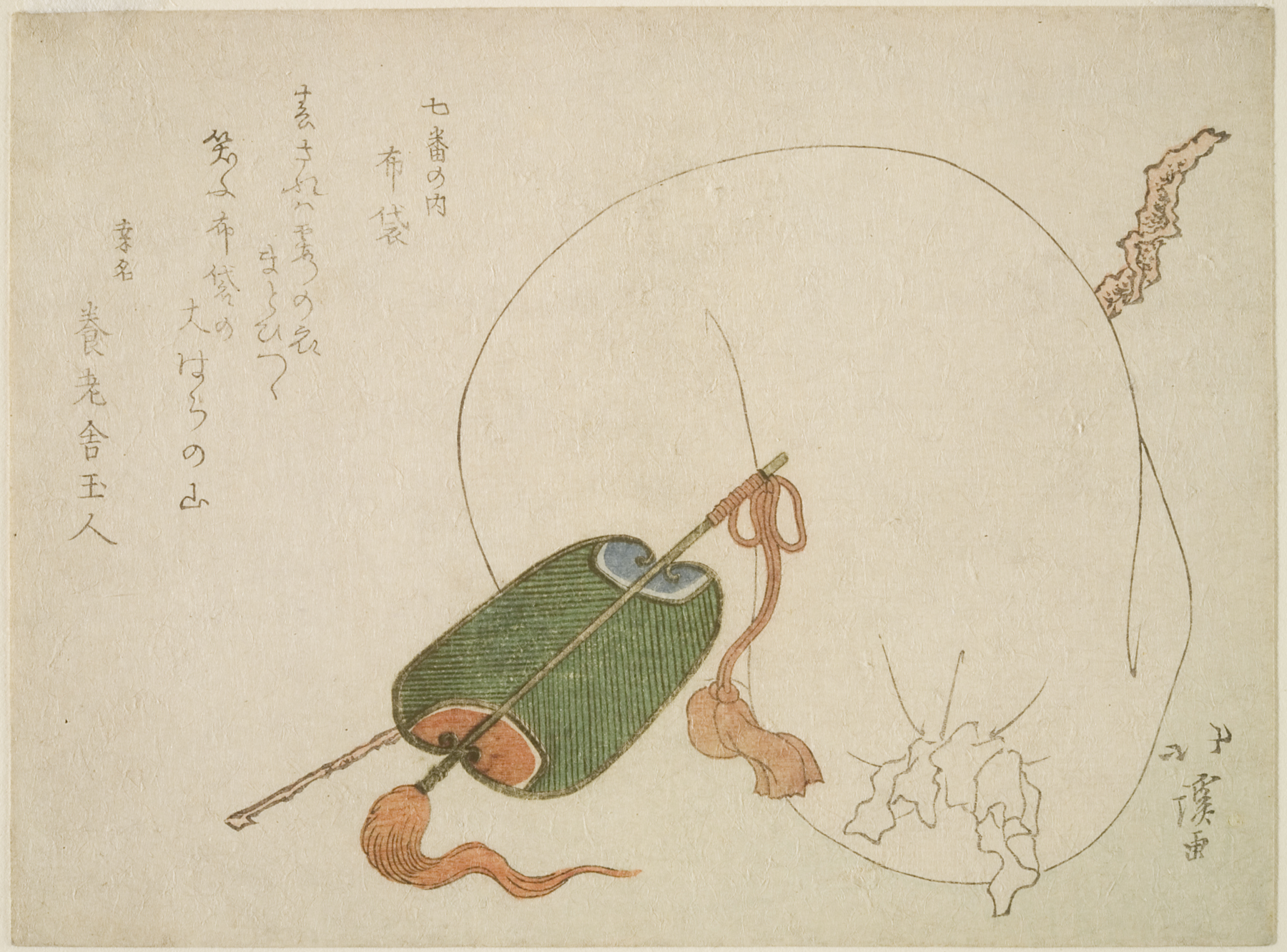
Totoya Hokkei (1780–1850)
Hotei, circa mid 1810s, Edo period (1600–1868)
Yokoyama Kazan (1784–1837)
Minister Hong bows to the heavenly teacher, 1829, Edo period (1600–1868)
Katsushika Hokusai (1760–1849)
Microscope, circa 1800–1805, Edo period (1600–1868)
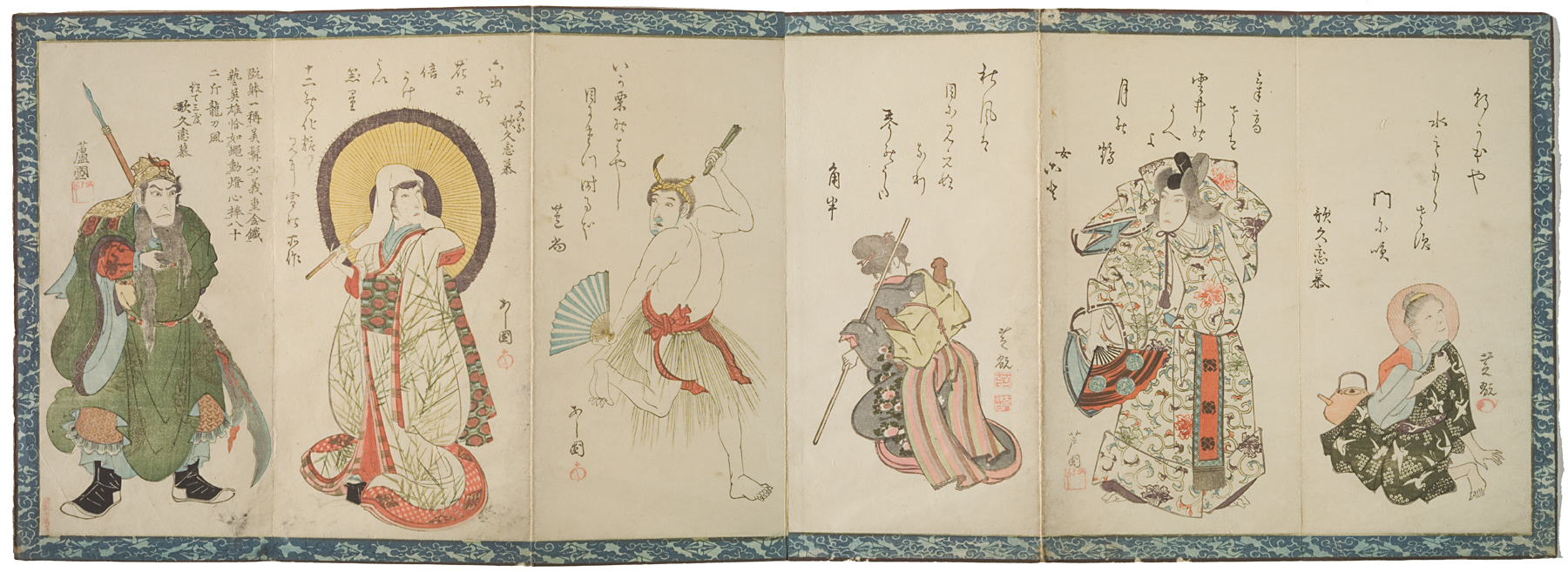
Asayama Ashikuni (circa 1775–1818); Nakamura Utaemon III (1778–1838)
Nakamura Utaemon III in six roles, 1817, Edo period (1600–1868)
Utagawa Kunisada (1786–1864)
actors Ichikawa Danjūrō VII and Bandō Zenji, 1823, Edo period (1600–1868)
Totoya Hokkei (1780–1850)
street dancers, 1811, Edo period (1600–1868)
still life, 1821?, Edo period (1600–1868)
Totoya Hokkei (1780–1850)
still life, 1813, Edo period (1600–1868)
Utagawa Sadakage I (active circa 1818–1844)
Segawa Kikunojō V as Yukihime, 1832, Edo period (1600–1868)
Katsushika Hokusai (1760–1849)
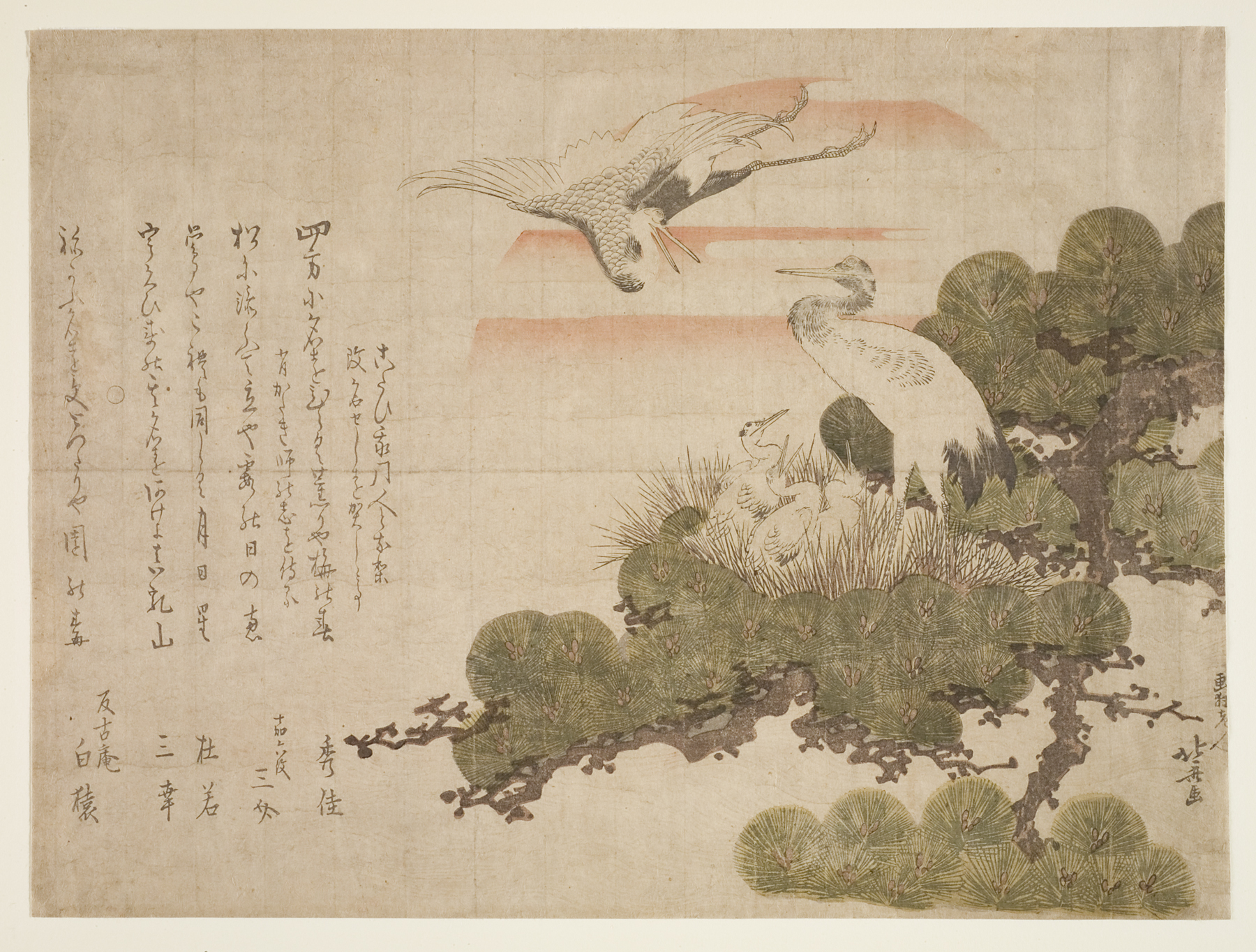
cranes in pine tree, circa 1805, Edo period (1600–1868)
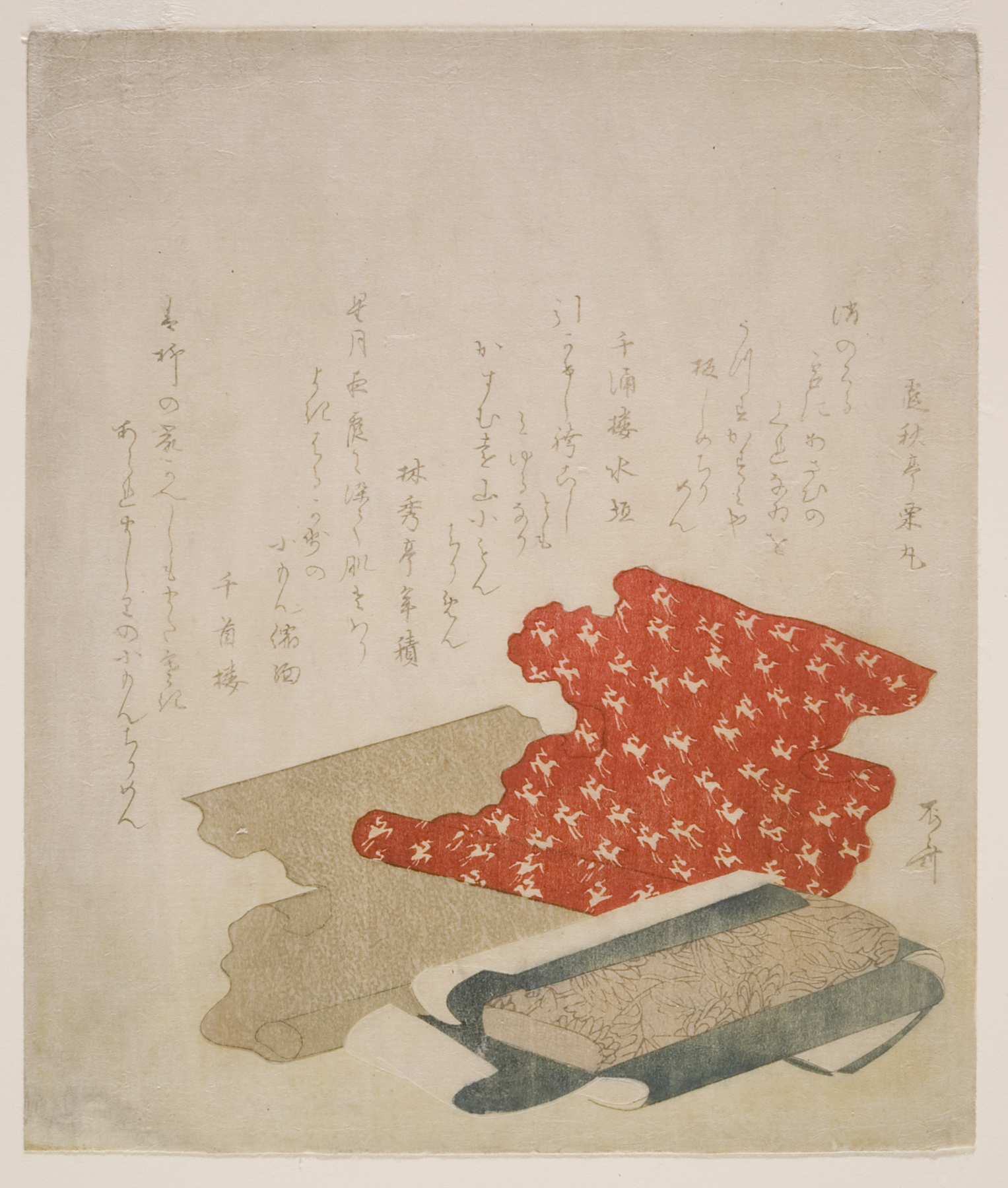
Ryūryūkyo Shinsai (1764–1820)
bolts of fabric, circa late 1810s, Edo period (1600–1868)
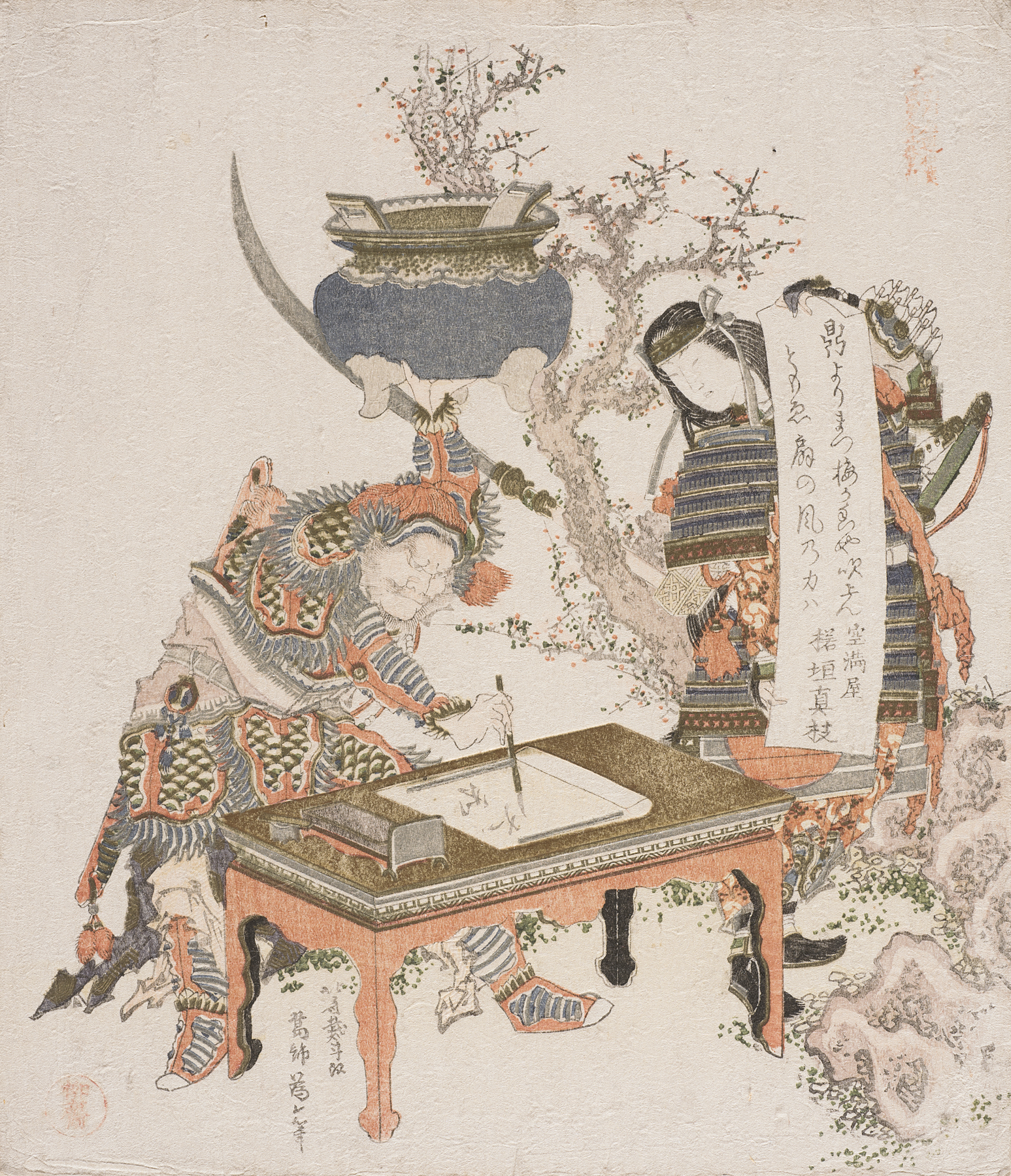
Katsushika Hokusai (1760–1849)
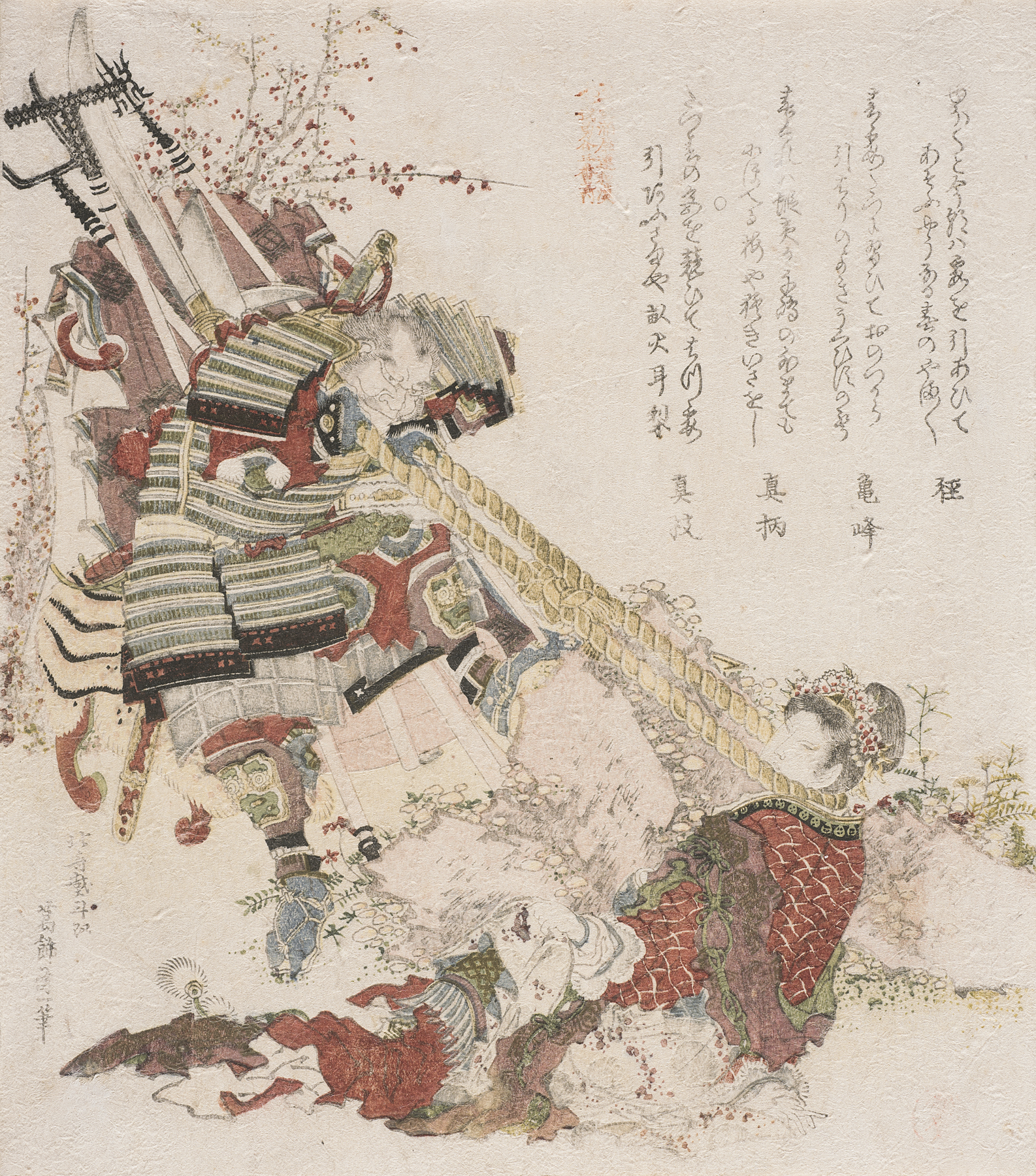
Tomoe Gozen and Xiang Yu, 1820, Edo period (1600–1868)
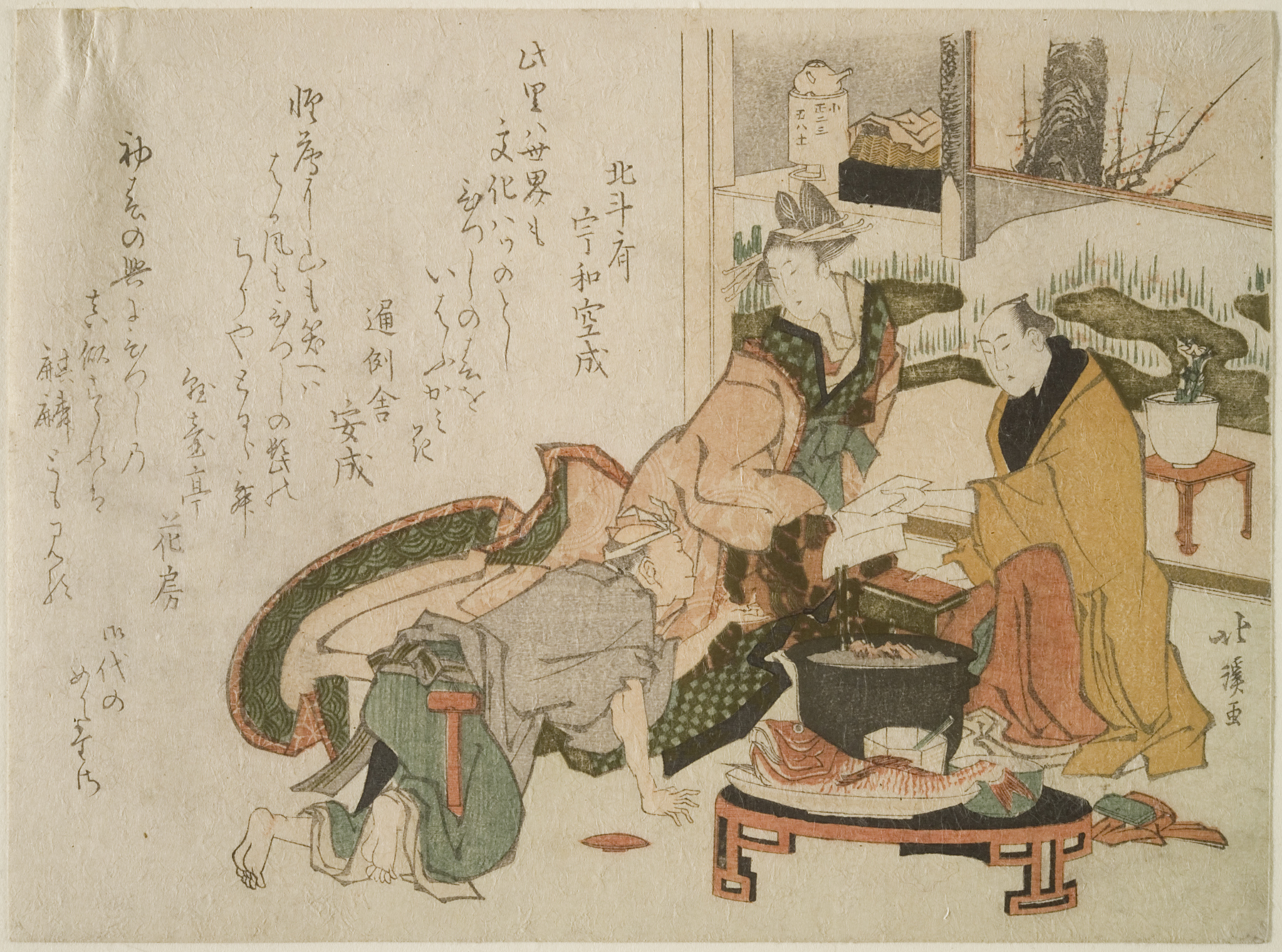
Totoya Hokkei (1780–1850)
courtesan, client, and entertainer, 1811, Edo period (1600–1868)
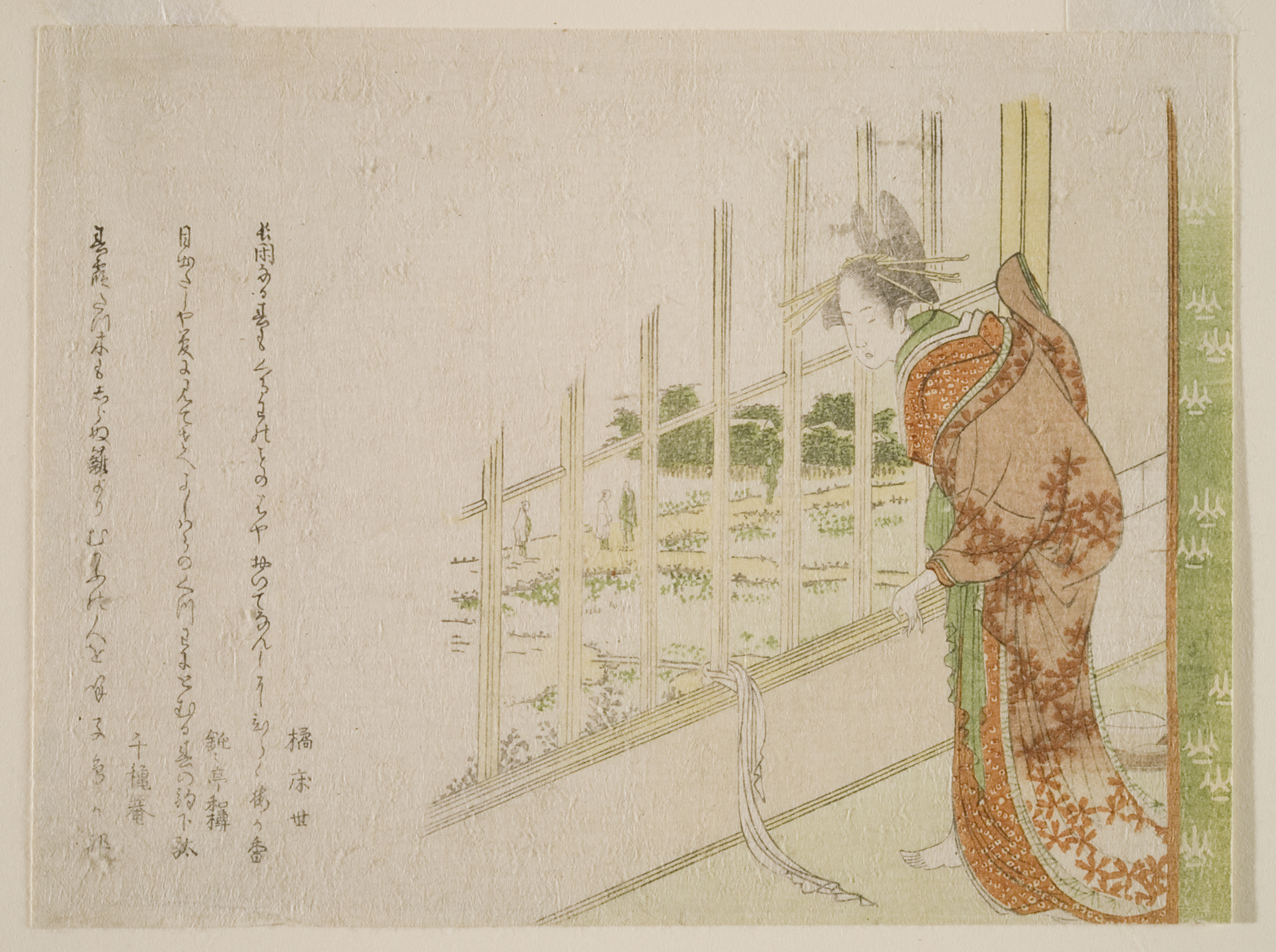
Katsushika Hokusai (1760–1849)
courtesan at window, circa late 1790s, Edo period (1600–1868)
Teisai Hokuba (1771–1844)
Yashima Gakutei (circa 1786–1868, active 1815–1852)
Ushiwaka and Sōjōbō, 1820s, Edo period (1600–1868)
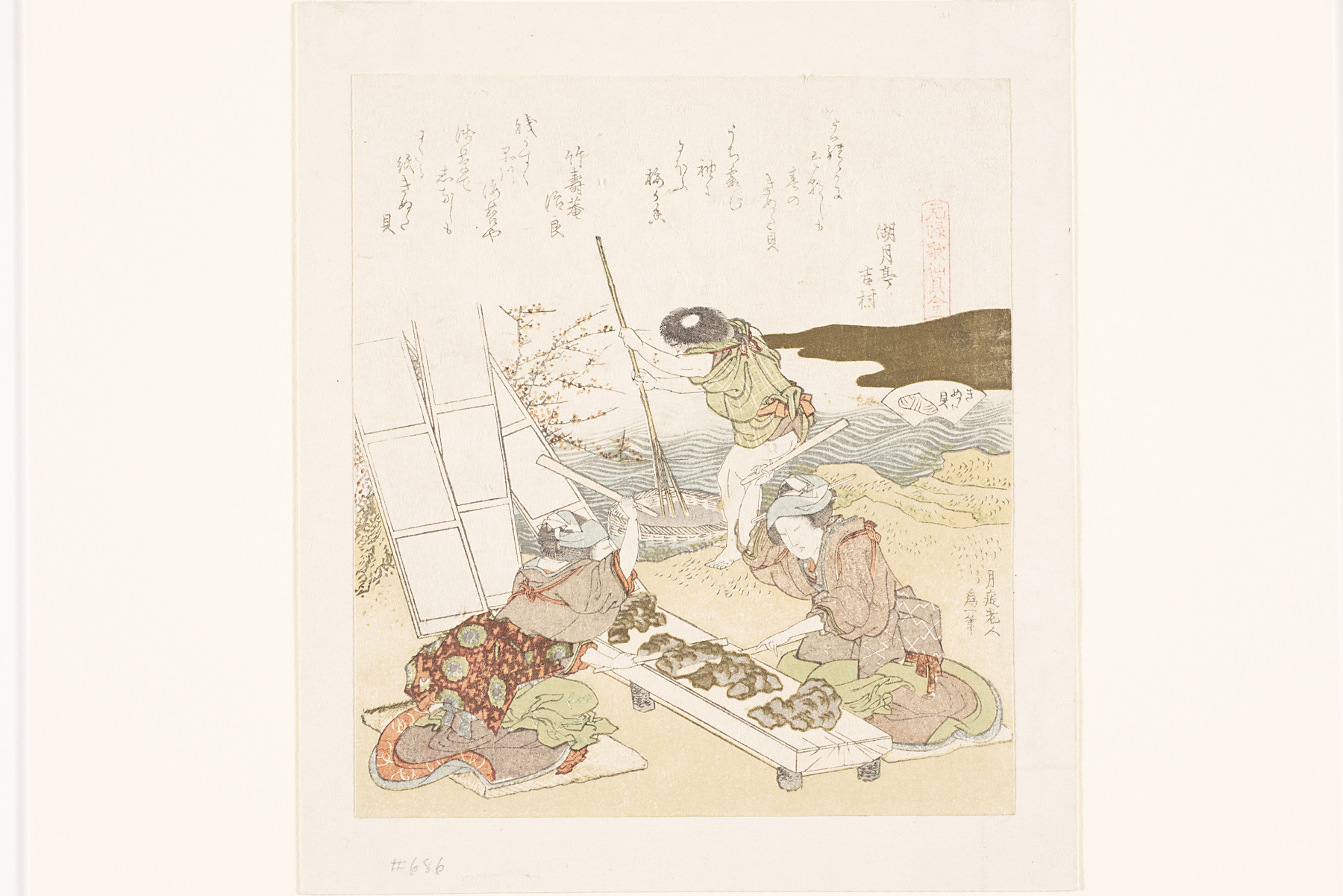
Katsushika Hokusai (1760–1849)
Kinutagai (The Pounding Block Shell), 1821, Edo period (1600–1868)
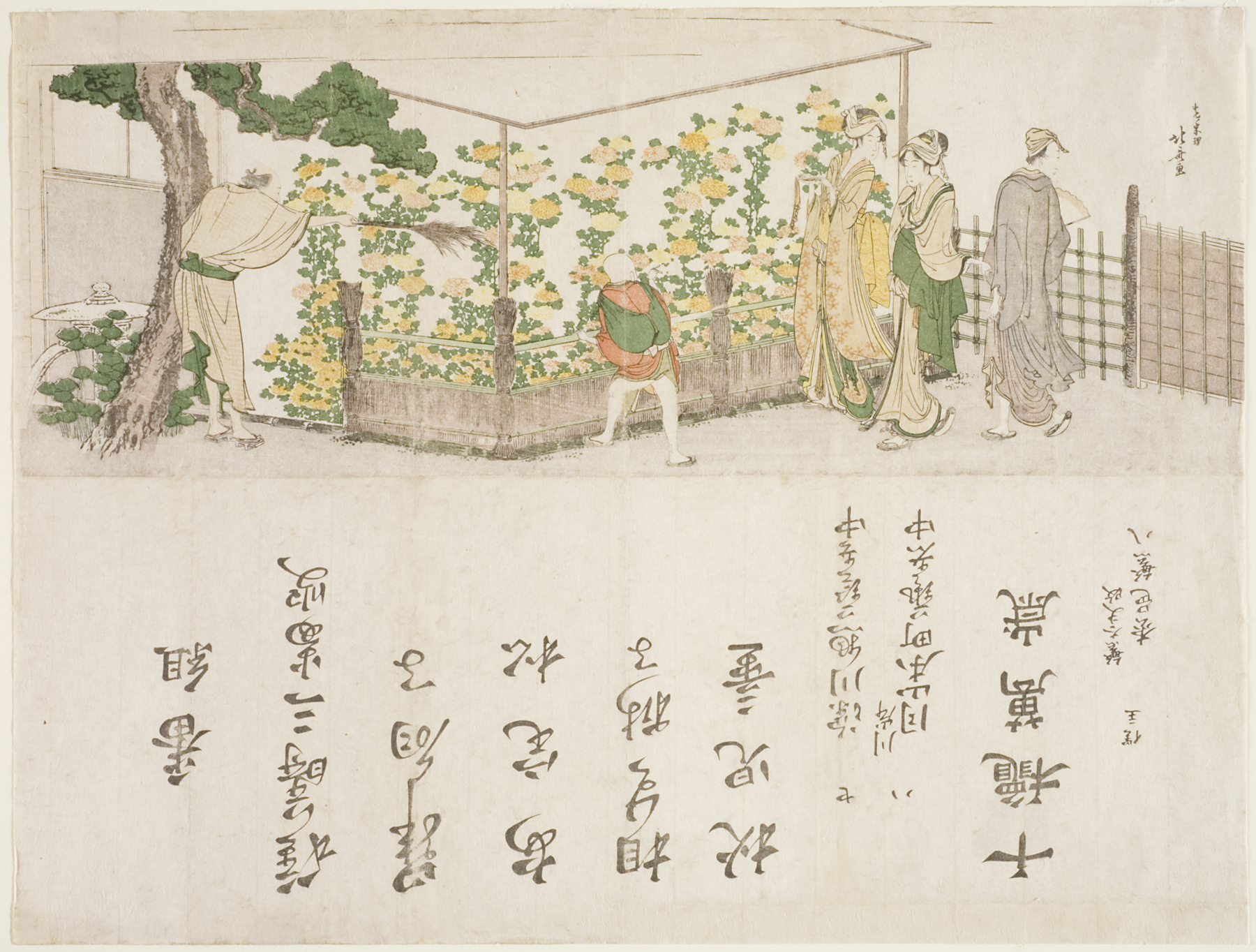
Katsushika Hokusai (1760–1849)
chrysanthemum display, 1799, Edo period (1600–1868)
Keisai Eisen (1790–1848)
Utagawa Kunisada (1786–1864)
Ichikawa Danjūrō VII and Bandō Mitsugorō III, 1827, Edo period (1600–1868)
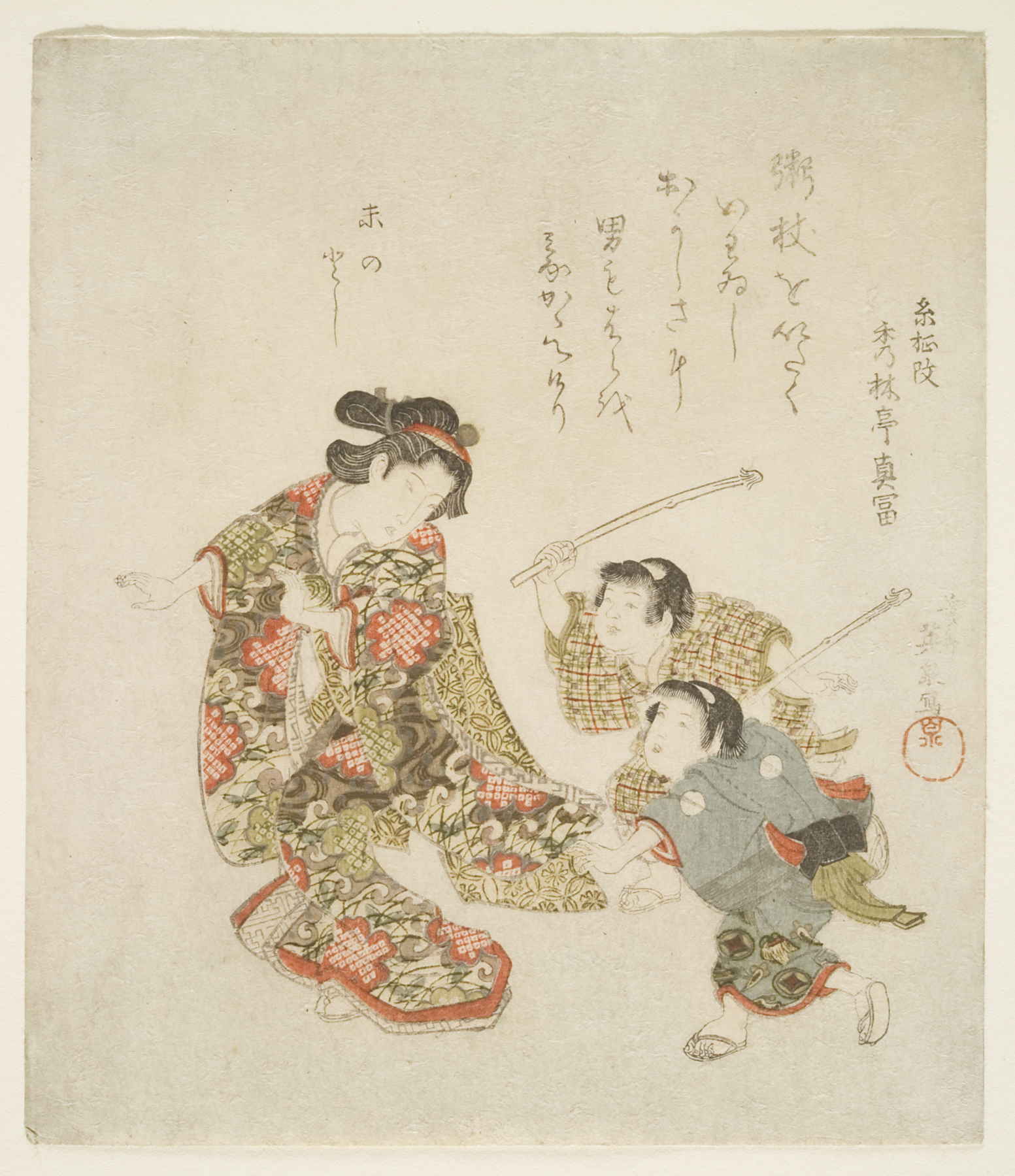
Keisai Eisen (1790–1848)
boys chasing a woman with sticks, 1823, Edo period (1600–1868)
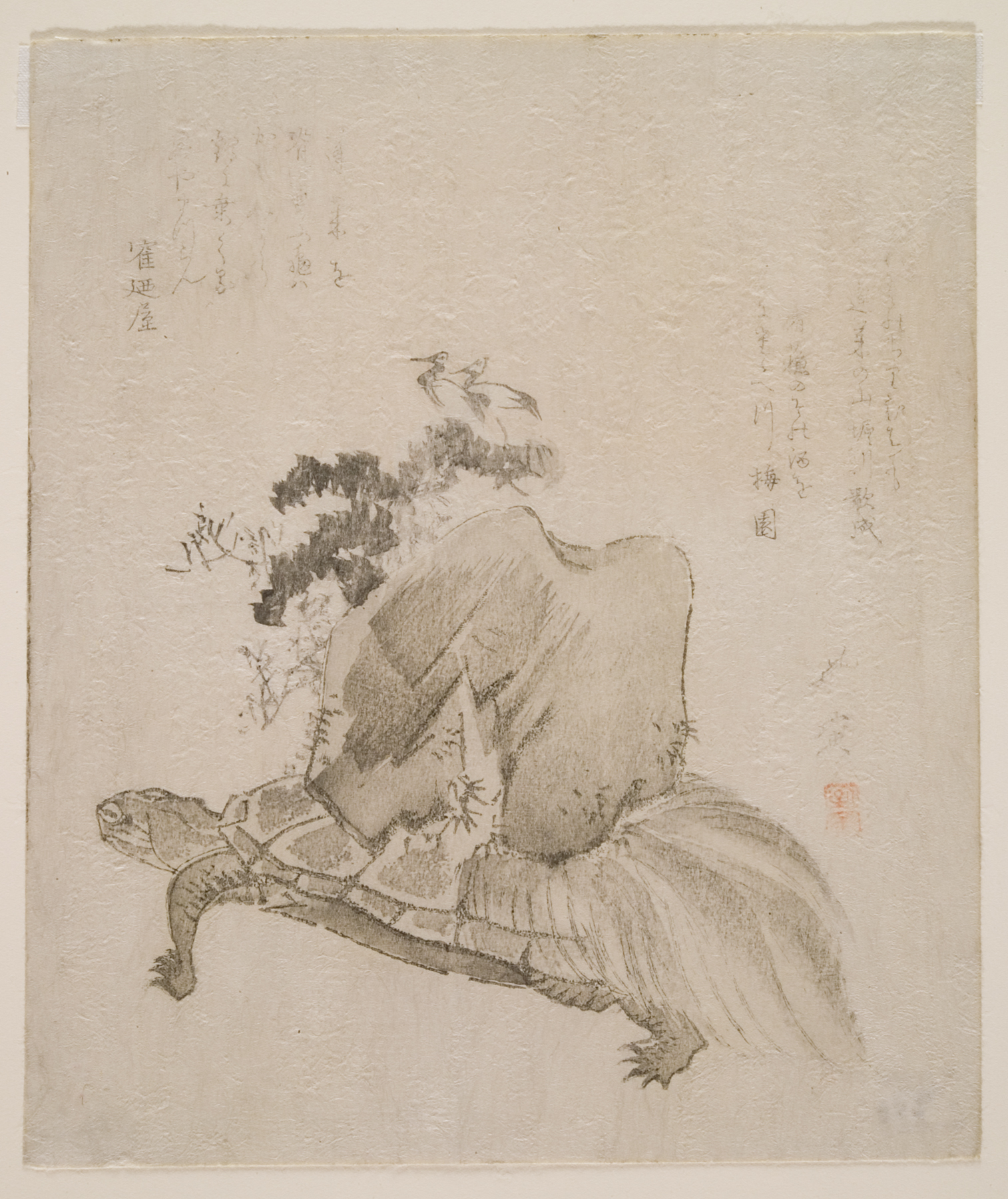
Nagayama Kōin (1765–1849)
tortoise carrying rock symbolizing Mr. Hōrai, early 1820s, Edo period (1600–1868)
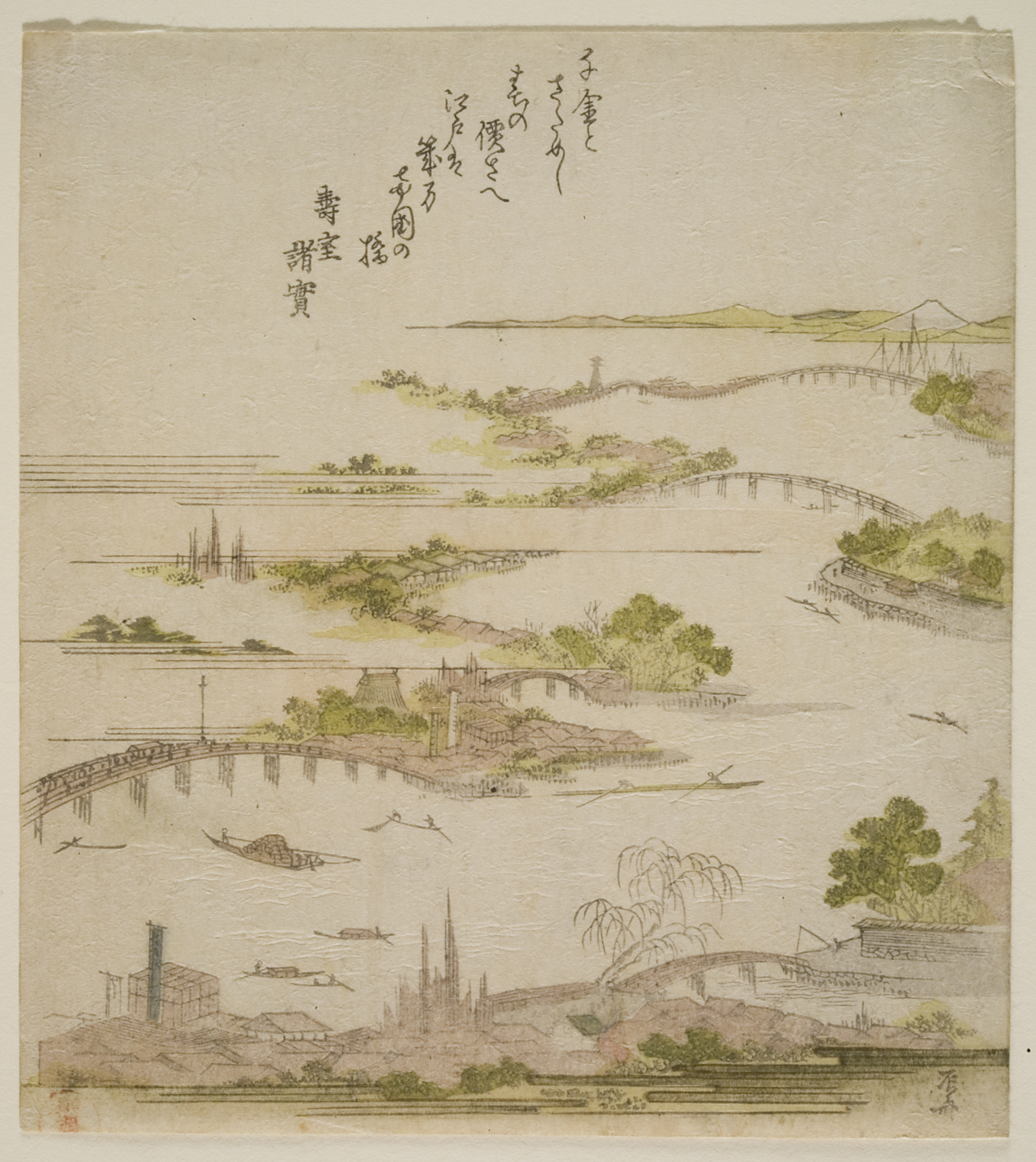
Ryūryūkyo Shinsai (1764–1820)
bird's eye view of the Sumida River, circa late 1810s, Edo period (1600–1868)
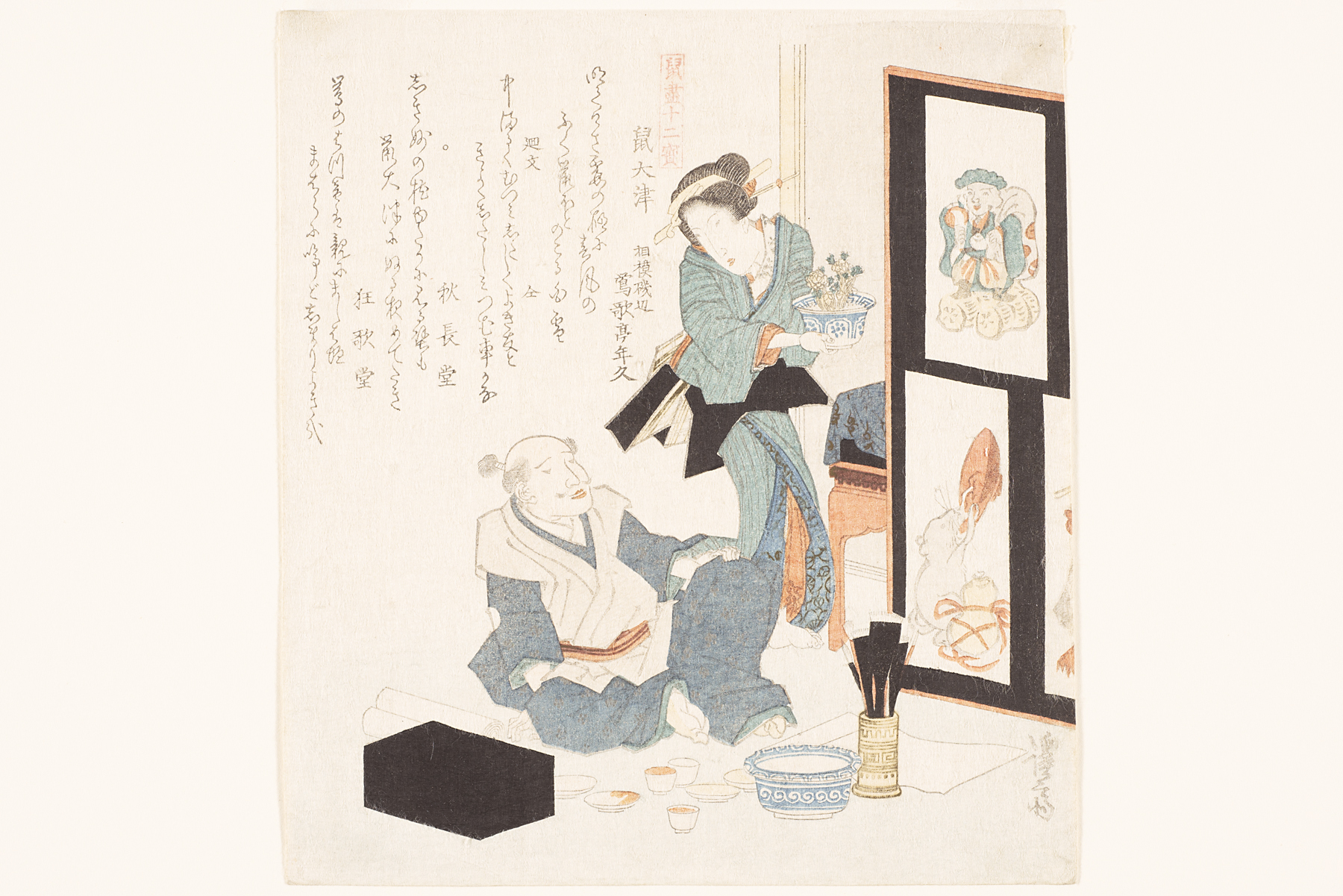
Keisai Eisen (1790–1848)
an ōtsu painting of a rat, 1828, Edo period (1600–1868)
Utagawa Kunisada (1786–1864)
Ichikawa Danjūrō VII and Segawa Kikunojō V, 1823, Edo period (1600–1868)
Yokoyama Kazan (1784–1837)
Minister Hong bows to the Heavenly Teacher, early 1890s, Edo period (1600–1868)
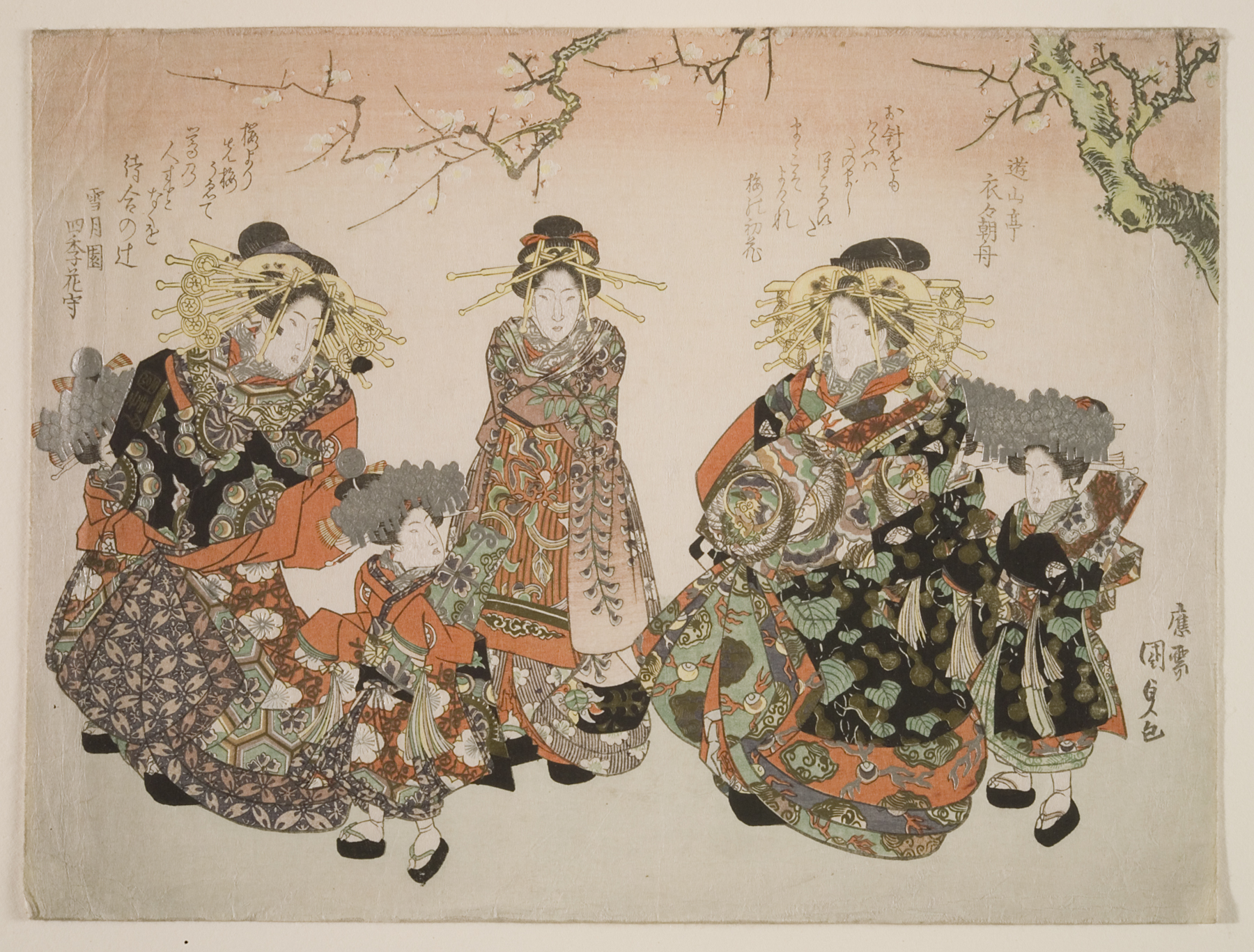
Utagawa Kunisada (1786–1864)
courtesans and attendants under a plum tree, circa 1820s–1830s, Edo period (1600–1868)
Yoshimi Shūri (active 1810s–1820s)
Kara monogatari (Stories of China), circa late 1810s, Edo period (1600–1868)
Katsushika Hokusai (1760–1849)
Kami (Paper), 1823, Edo period (1600–1868)
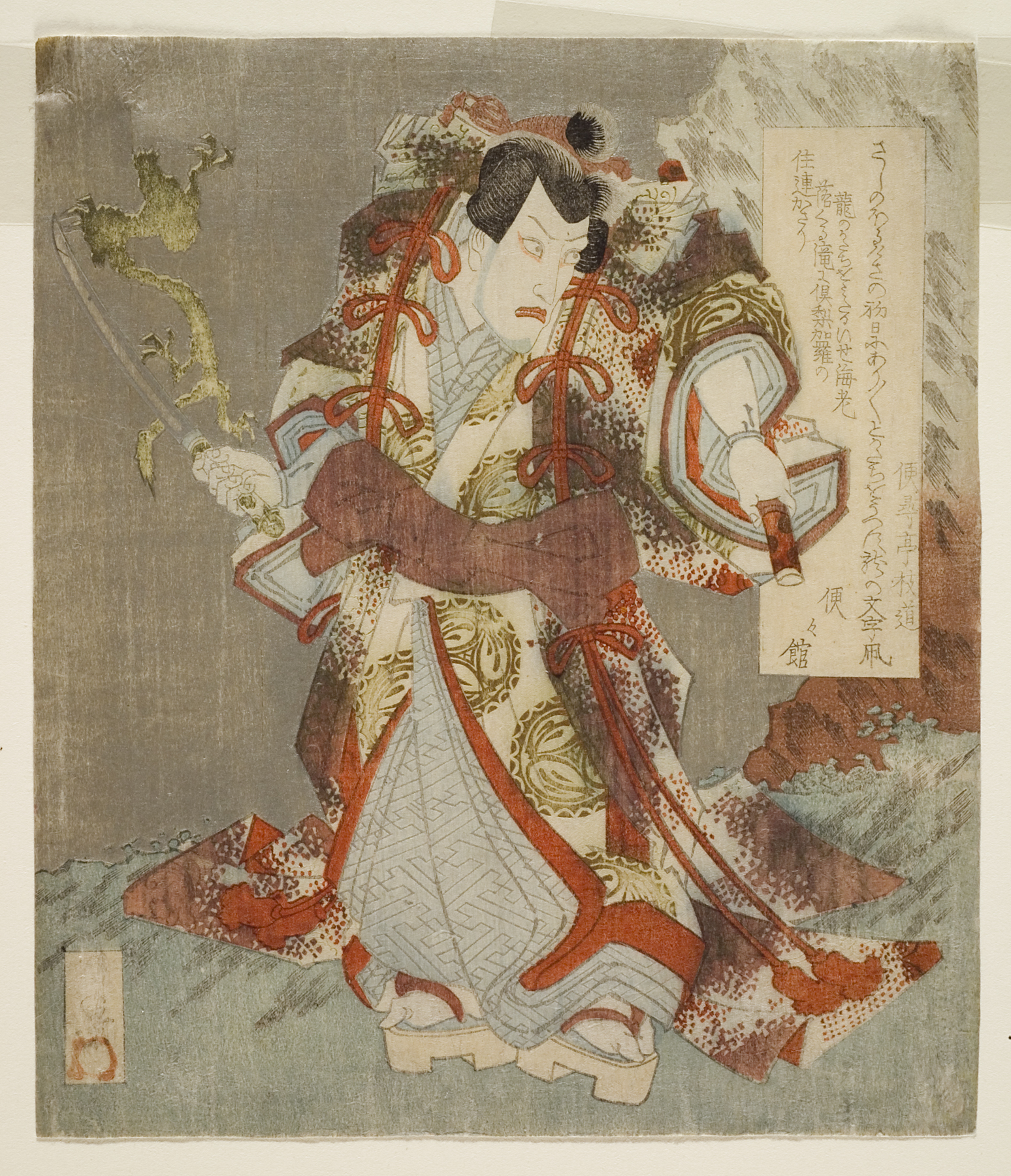
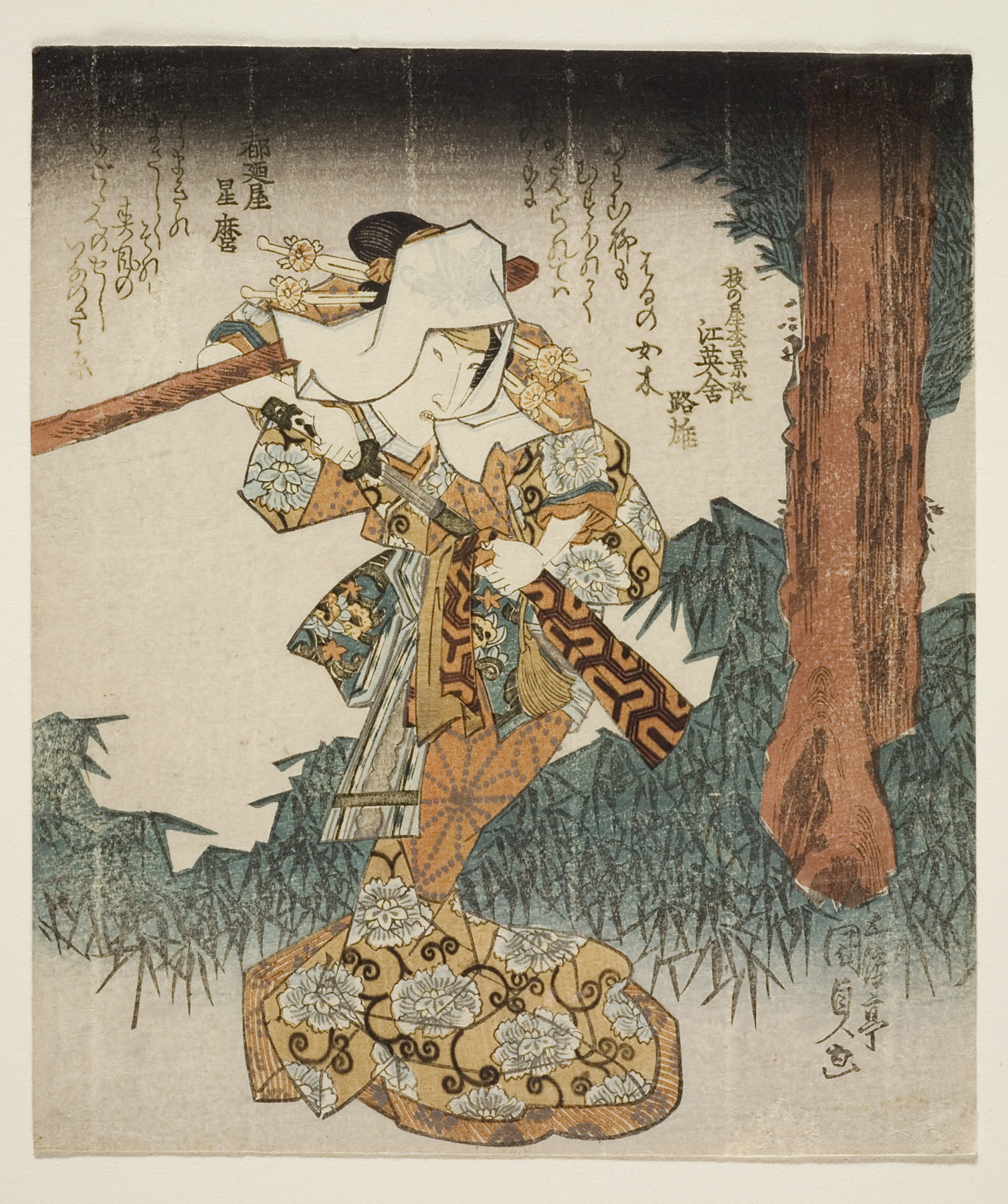
Utagawa Kunisada (1786–1864)
Segawa Kikunojō V drawing sword, circa 1823, Edo period (1600–1868)
Hishikawa Sōri (active 1790–1810)
woman and child, circa 1800–1805, Edo period (1600–1868)
Totoya Hokkei (1780–1850)
Yanagawa Shigenobu (1787–1832)
puppy with kite and ball, 1826, Edo period (1600–1868)